Art of Advent Day 24
By Toby Berryman
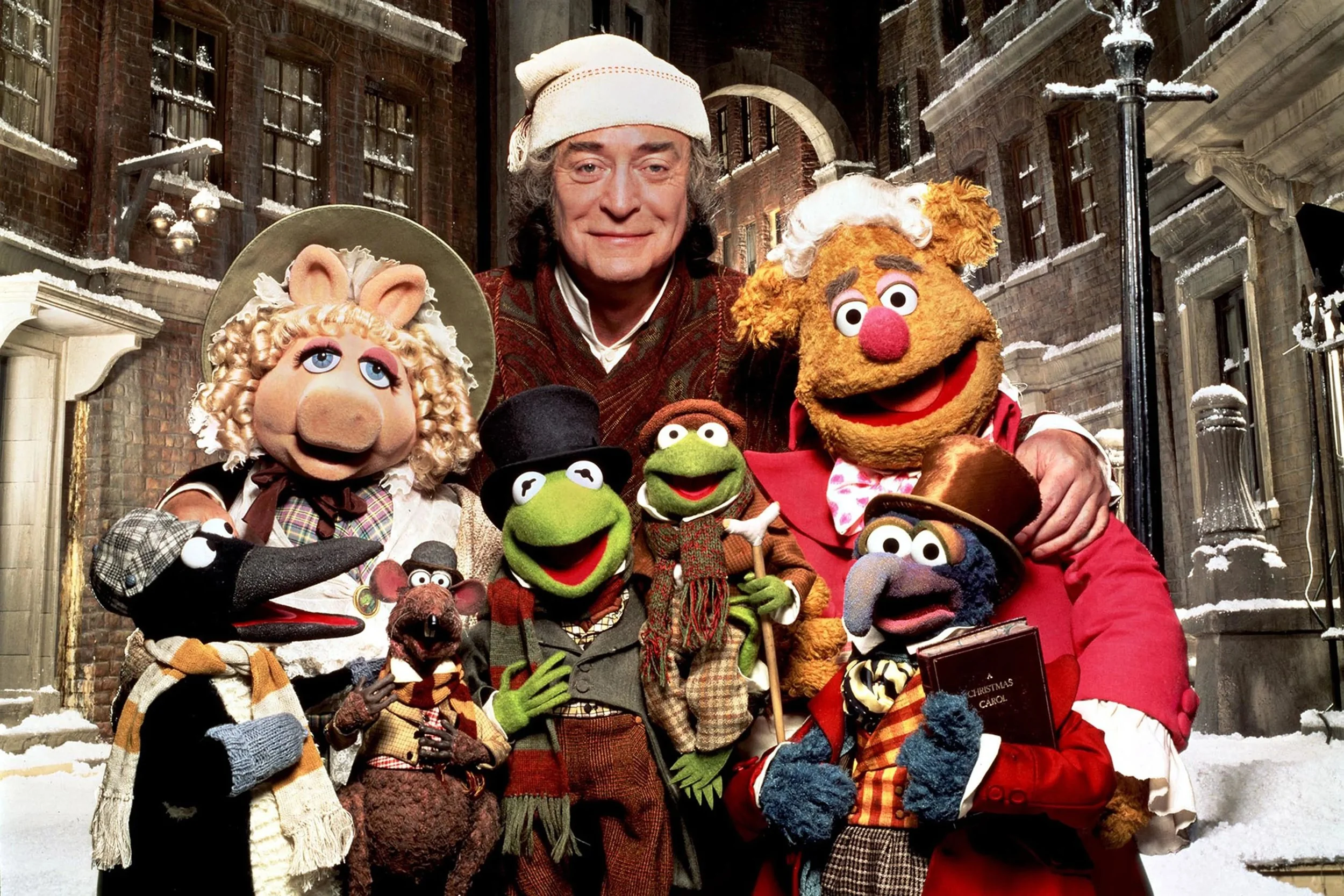
Sir Michael Caine and The Muppets, promotional photograph for ‘The Muppet Christmas Carol’, 1992.
Image courtesy of Walt Disney Pictures and Jim Henson Productions.
For one final time, I have the immense (and entirely self-appointed) privilege of closing out HASTA’s Art of Advent series and so, we end with a topic that any self-respecting art historical publication would be remiss to ignore during this festive season… the inimitable masterpiece that is 1992’s The Muppet Christmas Carol (dir. Brian Henson). Much as the beloved internet meme proclaims, ‘it’s Michael Caine in a Christmas film [etc.]’ and that it is, but ultimately The Muppet Christmas Carol is worthy of praise far beyond just the inspired casting of its miserly protagonist.
With a cast of dozens of handcrafted muppet characters, highly detailed muppet-sized costume designs, a multitude of elaborate Victorian inspired sets, and even some ambitious visual effects, The Muppet Christmas Carol truly is a sensory feast to rival even that enjoyed by the movie’s gluttonous Ghost of Christmas Present. In fact, TMCC is often considered one of our most faithful adaptations of Charles Dickens’ legendary novella (its addition of Jacob Marley’s brother Robert – yes, as in Bob – perhaps aside) and the movie’s legacy over a quarter-century after its release is one of fond nostalgia and ever increasing popularity. Only last week, I continued a recent family festive tradition by watching the film at a busy screening in London’s Prince Charles Cinema and we are certainly not the only enthusiasts who return to the Disney classic each and every year.
Alongside double Academy Award winner Sir Michael Caine as Scrooge (who delivers, in my humble opinion, one of his very best screen performances), each and every one of the Muppets is themselves cast as a character from the novel, whether that’s Kermit the Frog as Bob Cratchit, his nephew Robin as Tiny Tim, Fozzie Bear as Fozziwig [sic.], or even Sam Eagle as Scrooge’s schoolmaster. TMCC even hands an onscreen part to the novella’s narrator, oft-forgotten by big-screen adaptations, with The Great Gonzo performing as Charles Dickens himself and oftentimes liberating his speech directly from the original text. From the tale’s iconic opening ‘Marley was dead: to begin with’ through to a hilariously delivered reminder of ‘Tiny Tim, who did NOT die!’ (by way of a few legendary muppet-y script additions including the beloved ‘light the lamp, not the rat’ and ‘no cheeses for us meeces’), TMCC is surprisingly loyal to Dickens’ work.
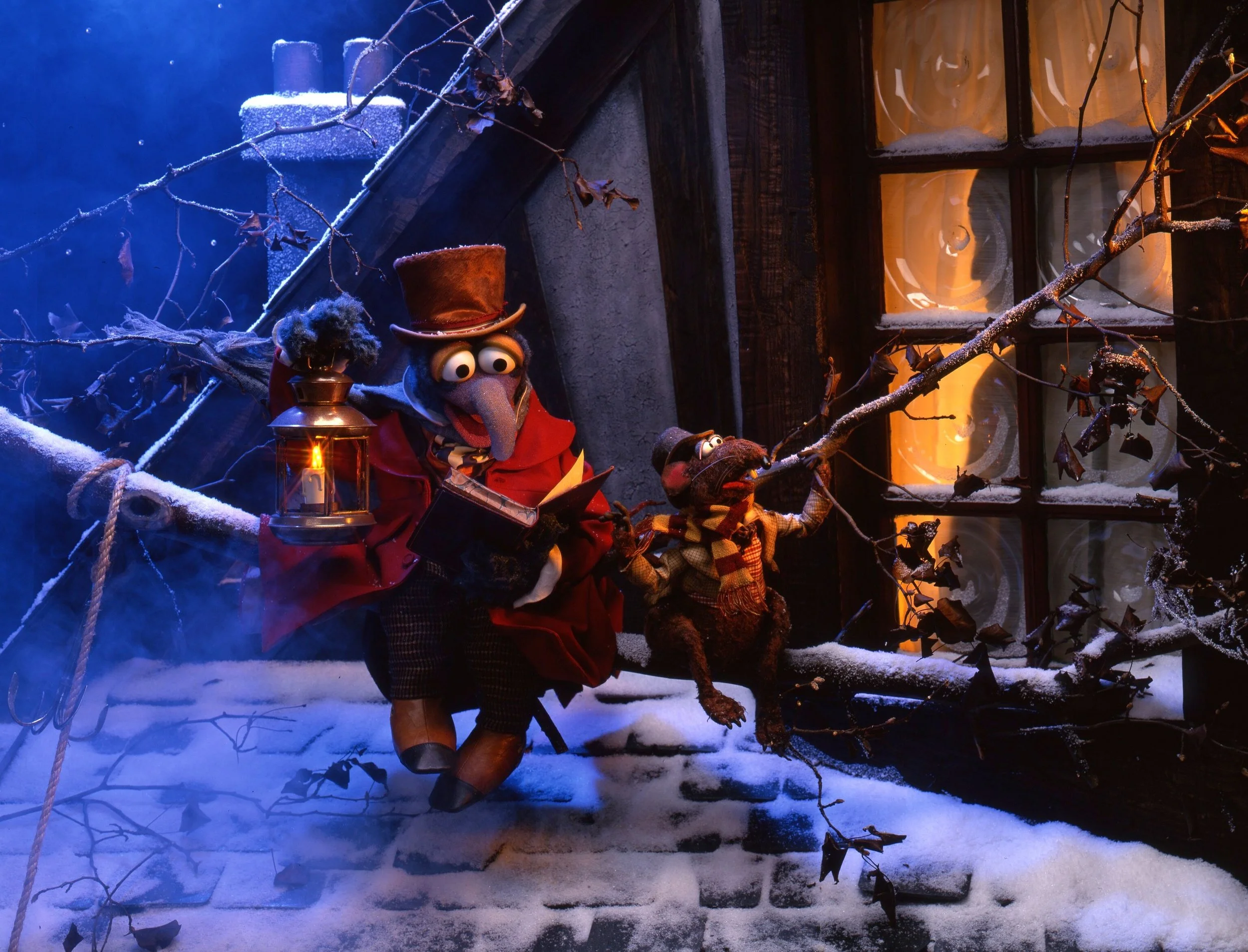
The Great Gonzo as Charles Dickens, accompanied by Rizzo the Rat, still from ‘The Muppet Christmas Carol’, 1992.
Image courtesy of Walt Disney Pictures and Jim Henson Productions.
Accompanied by his sidekick Rizzo the Rat, who serves almost as a Shakespearean fool, Gonzo leads audiences through the Dickensian prose with an occasional disruption of the fourth wall for timely comic effect. Caine famously promised to ‘play this movie like I’m working with the Royal Shakespeare Company’ and it is thanks to his steadfast attention to the dramatic role that TMCC is frankly able to suspend our disbelief for a mesmerising eighty-six minutes, integrating both puppet and human characters to great success. The film’s incredible puppeteering of course bears the trademarks of the late Jim Henson’s visionary work, but it is ultimately their union with his son Brian’s directing and John Fenner’s daring cinematography, Jerry Juhl’s witty screenplay, Val Strazovec’s magical set design, the costumes of Polly Smith, and most obviously Dickens’ own source material that makes The Muppet Christmas Carol such a triumph of the arts. From its bustling street sequences to the poignant tableau of Scrooge’s final vision, the film continues to be a work of great visual impact (even in our age of advanced CGI and AI imagery) and thus, whether this might be your first or your hundredth time, give Michael Caine and his muppets a chance to join your festive schedule this Christmastime.
For fear of being that little bit too cliché and allowing the hackneyed speech of Tiny Tim to conclude this piece, I give you all the words of Kermit the Frog (as Bob Cratchit, of course) on this Christmas Eve: ‘There’s magic in the air this evening, magic in the air. The world is at her best, you know, when people love and care. The promise of excitement is one the night will keep, after all there’s only one more sleep ‘til Christmas!’
Bibliography
Cosslett, Rhiannon Lucy. “A Meta-Masterpiece: Why The Muppet Christmas Carol is the Perfect Festive Film.” The Guardian, December 21, 2020.
Davis, Hugh H. “A Weirdo, A Rat, and A Humbug: The Literary Qualities of ‘The Muppet Christmas Carol’.” Studies in Popular Culture 21, No. 3 (April 1999): 95-105.
Dickens, Charles. A Christmas Carol. In Prose. Being a Ghost Story of Christmas. First Edition. London: Chapman & Hall, 1843.
Juhl, Jerry. The Muppet Christmas Carol Screenplay. 1992.