Alice Neel (1900-1984)
By Dane Moffat
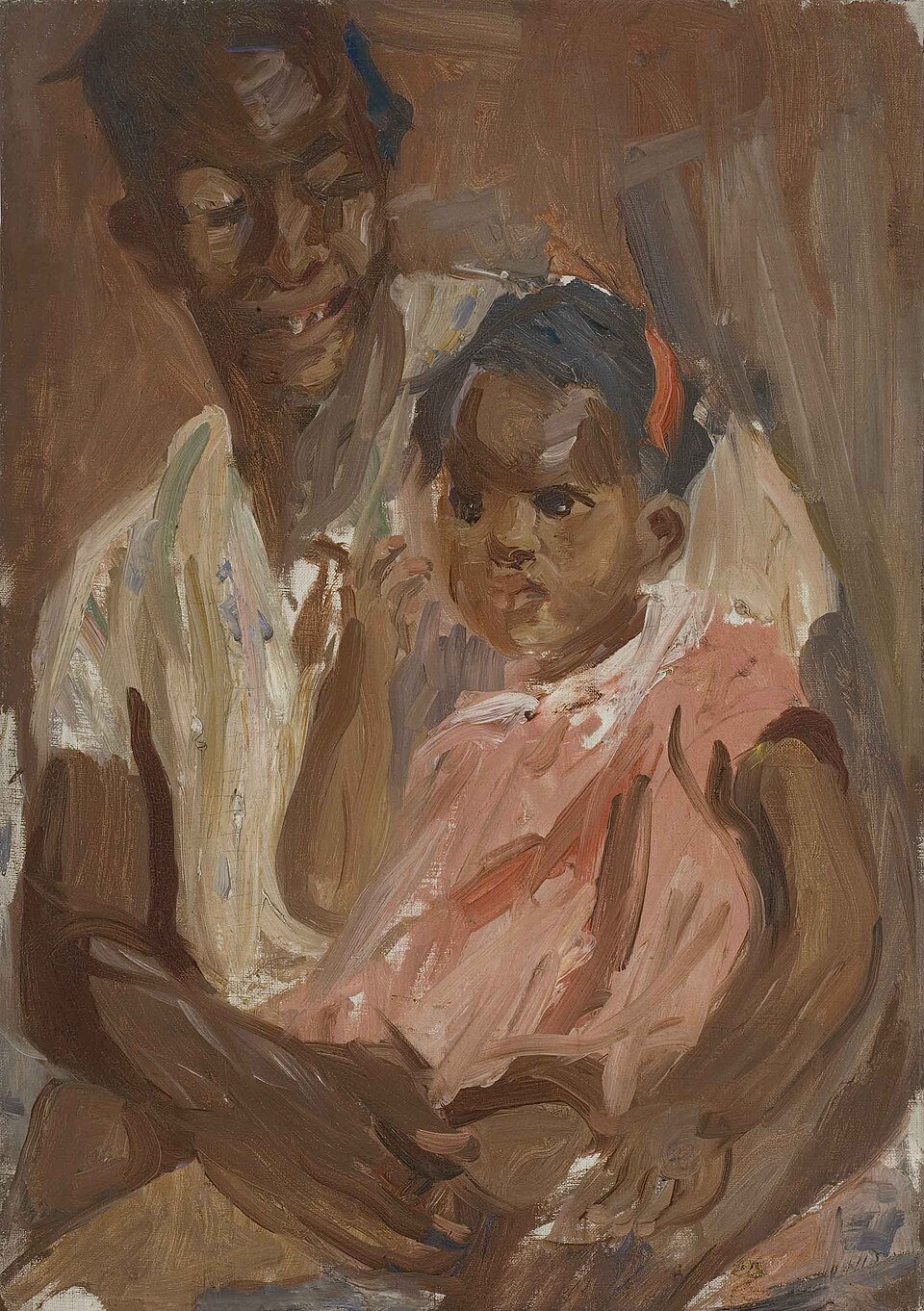
Alice Neel, Mother and Child, Havana, 1926, oil on canvas, 66 x 45.7cm.
Image courtesy of The Estate of Alice Neel (Wikimedia Commons).
Alice Neel was culturally recognised for her paintings of friends and family, poets and artists, lovers and strangers, yet I had not heard of her until I read Zhang Yueran’s Women, Seated last week. She appeared only briefly in the book, yet she was a major force in twentieth-century American portraiture and was awarded the 1976 International Women’s Year Award for her sustained commitment to women and art. Though I have gone too far ahead. Neel was born 28 January 1900 to a lower-middle-class family in Pennsylvania, the fourth of five children, during a time where women had limited opportunities and Neel herself had limited exposure to art. In 1918, she began a high-paying secretarial job for the Army Air Corps to support her family and later started night classes in art to support her own dreams.
Neel enrolled at the Philadelphia School of Design for Women (now Moore College of Art and Design) in 1921, financed by her personal savings and was later awarded a state-funded scholarship to complete her studies in Fine Art. A marker of Neel’s talent in figurative painting: she was awarded the Kern Dodge Prize for best life painting. At art school, she met her husband Carlo Enríquez, a fellow artist, and moved to Havana, Cuba, for one year where she had her first solo exhibition and daughter, Santillana del Mar Enríquez. Her daughter’s death, shortly before her first birthday, marked a prolonged engagement with motherhood, loss, and anxiety in her paintings. Neel later gave birth to a second daughter and two sons.
They moved back to America before Santillana’s death, though her husband was often absent and moved back to Cuba with their second daughter, Isabetta. Neel thus began an intense summer of painting which culminated in a mental breakdown and suicide attempt following the departure of her husband and daughter. She briefly stayed in a sanatorium and was encouraged to continue her art practice as part of her rehabilitation. Neel and Enríquez split in 1934 without a formal divorce or annulment; they never saw each other again. After their separation, Neel began relationships with Kenneth Doolittle and John Rothschild; Doolittle slashed over 350 of Neel’s paintings, watercolours, and drawings in a fit of rage.
Across the 1930s and 1940s, Neel became one of the first artists to join the Works Progress Administration (which hired jobseekers to fulfill public works projects) and the Public Works of Art Project. She was terminated and reinstated from both projects numerous times for the paintings that were ‘so inappropriate they were considered useless.’ The content of her paintings often focused on female nudes, particularly of pregnant women, and children. Neel’s paintings were expressionistic with strongly accentuated lines and stylised poses.
The artist was questioned by the Federal Bureau of Investigation for her intermittent involvement with the Communist Party in the early 1950s. According to her sons, she asked if they would sit for portraits; they declined. Towards the end of her life, she was included in several women’s art shows and a career retrospective at the Whitney Museum of American Art, the latter she considered a triumph. Neel passed away in 1984 surrounded by her family and was buried near her studio in Vermont.
Bibliography
Alice Neel. “Bibliography.” Accessed January 27, 2026. https://www.aliceneel.com/about