Russia Steals Ukrainian Art from a Museum in the Occupied City of Kherson
By Katriona Hannah
On the 31st of October, through the back gates of Kherson Regional Art Museum, the Russians began carrying paintings to a van waiting outside. Some of those paintings will later resurface carelessly stacked in a corridor at a museum in the Russian-occupied Crimea. The crime continued throughout the next few days as members of the Russian occupant regime together with several collaborators loaded precious works of art into vans which looked more suited to carry building materials.
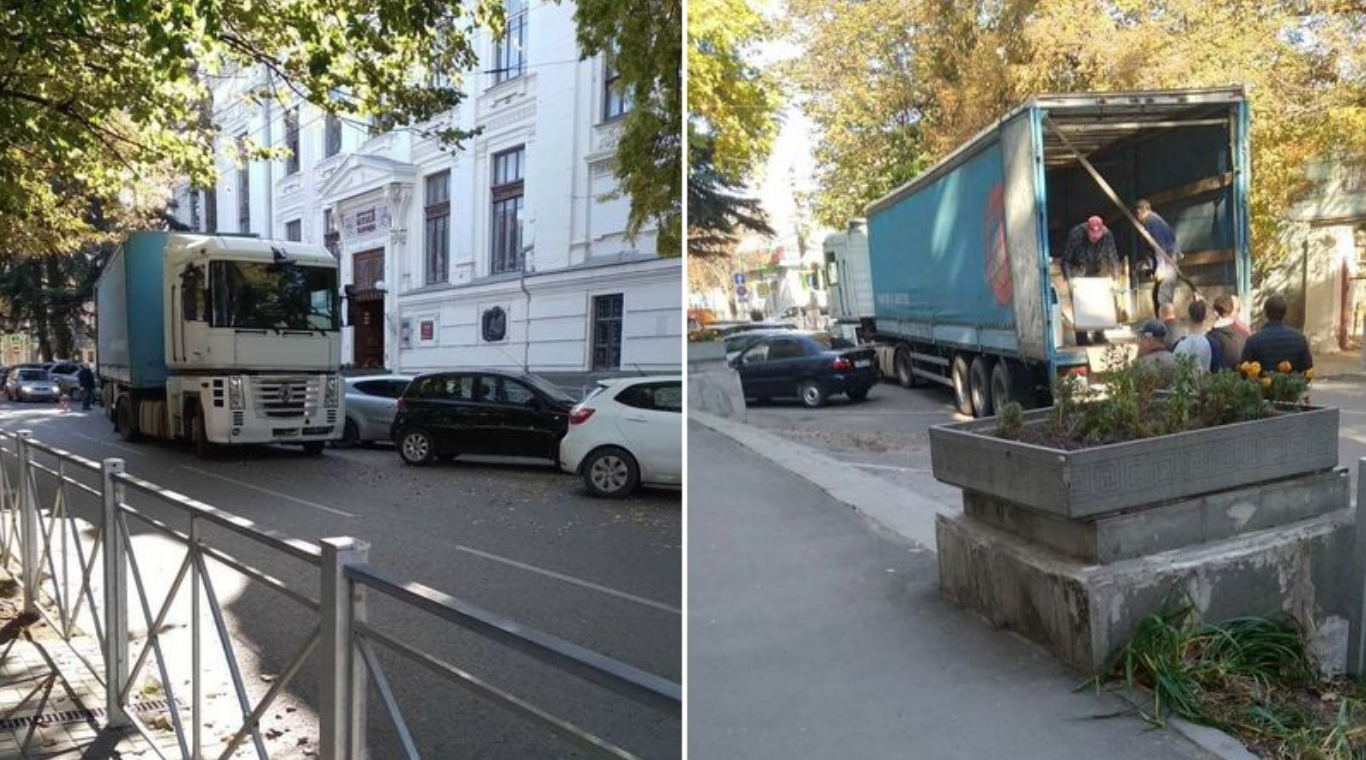
Ukrainian art being loaded onto vans destined for Crimea. Credit: Tatiana Khudiakova/tverezo.info
The museum representatives stated in a Facebook post that the looted art wasn’t even adequately packaged. In the few photos that appeared online, the paintings can be seen wrapped in scraps of fabric, cling film, a single layer of bubble wrap or simply left unpackaged altogether. From the 31st of October to the 3rd of November the occupants managed to steal the most valuable artworks by Ukrainian and European artists from the 17th to the 20th century, essentially stealing what they haven’t managed to destroy or burn - as they did with Maria Prymachenko’s paintings in early March. “They grabbed everything they saw, everything their hands could reach,” one witness states. According to the museum officials, five vans and two buses were used to drive stolen artworks to the Crimean Peninsula. A woman living next to the museum wrote in a statement to Novaya Gazeta: Europe that “they treat washing machines [which are among the most popular objects that Russian soldiers loot] with more care than they treat art.”
The artworks have recently resurfaced at the Central Museum of Tavrida in Simferopol. Some of the paintings have already been identified through several photographs in which the objects of Ukraine’s cultural heritage can be seen haphazardly stacked against the wall in a corridor or on top of each other. The Kherson Regional Art Museum’s collection consists of more than 10,000 artworks and, at the moment, it remains unclear how many of them were stolen, although one thing remains certain: The most valuable objects are no longer in Kherson.
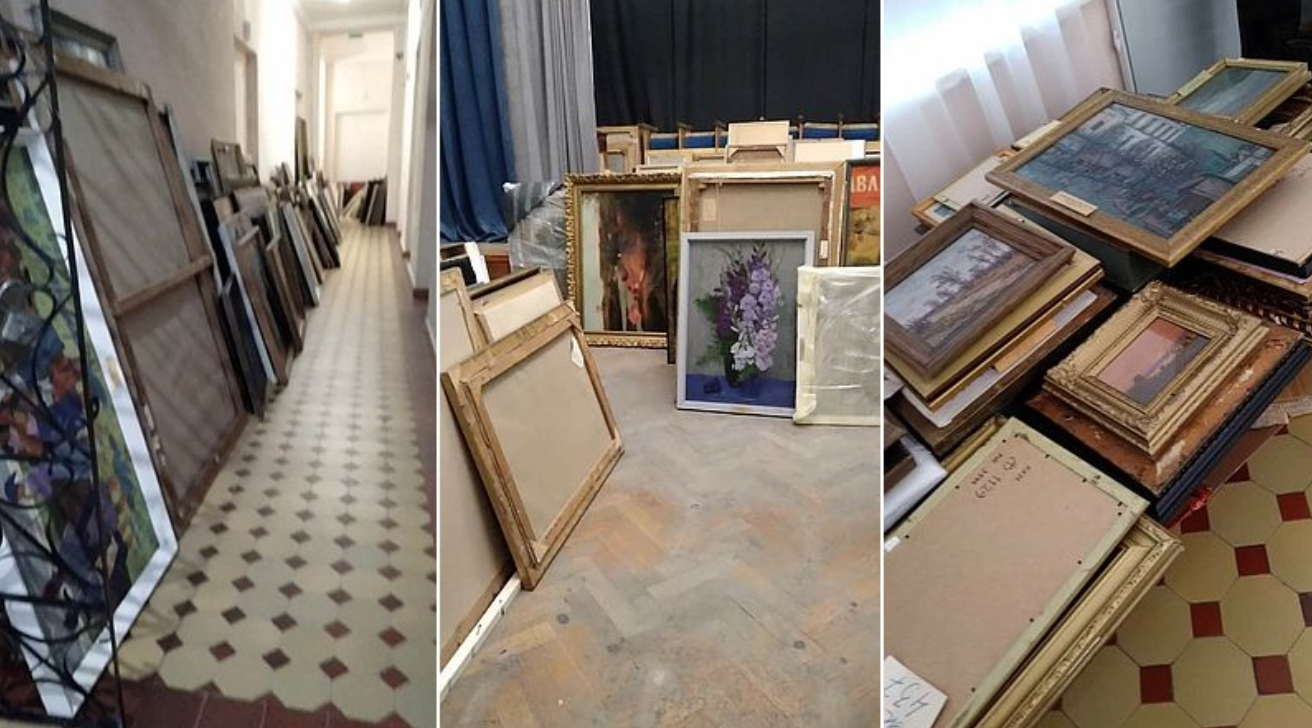
Paintings from Kherson’s Art Museum resurfaced in a Crimean museum. Credit: Tatiana Khudiakova/tverezo.info
This act is yet another chapter in Russia’s continued tradition of stealing Ukrainian cultural objects. From the Ostromir Gospels written in Kyiv during the age of Kyivan Rus and now located in St. Petersburg, to ancient mosaics from the St. Michael's Golden-Domed Monastery, which were taken to Moscow during the soviet occupation of Ukraine to the priceless paintings by Arkhip Kuindzhi which were stolen from a museum in Mariupol at the start of the full-scale invasion. When one googles Kuindzhi (a Ukrainian artist of greek heritage, born in Mariupol) the first mention calls him a Russian artist. This reflects that cultural theft doesn’t only happen on a physical level.
This devastating news leaves numerous questions about the fate of the objects of Ukraine’s cultural heritage, their undoubtedly complicated return home and the immense possibility of numerous works of art being lost or destroyed. But it also raises the ever-important topic of imperialist regimes stealing and consequently appropriating the culture of those they have colonised and how the art world can and should respond.
Bibliography
Херсонський Художній Музей. Kherson Regional Art Museum (@art.museum.ks.). ‘Херсонський художній музей розграбований російськими окупантами.’ ‘Kherson Art Museum looted by Russian occupants.’ Facebook, 4 November 2022, https://www.facebook.com/art.museum.ks/photos/a.891758677548780/5575259039198697.
Ольга Васильева. Olga Vasilieva. ‘«Всей семьей переселимся в одну комнату и будем дышать» 4 ноября. Херсонский дневник. Что сегодня происходит по оба берега Днепра — глазами самих херсонцев,’ ‘“The whole family has moved into one room and is scared to even breathe” 4 November. Kherson Diary. What is happening today on both banks of Dnieper - through the eyes of khersonians,’ 4 November 2022, 09:01 a.m. https://novayagazeta.eu/articles/2022/11/04/vsei-semei-pereselimsia-v-odnu-komnatu-i-budem-dyshat?utm_source=facebook.com&utm_medium=social&utm_campaign=deti--kotorye-uehali-po-programme-ozdo