By Daphne Richard
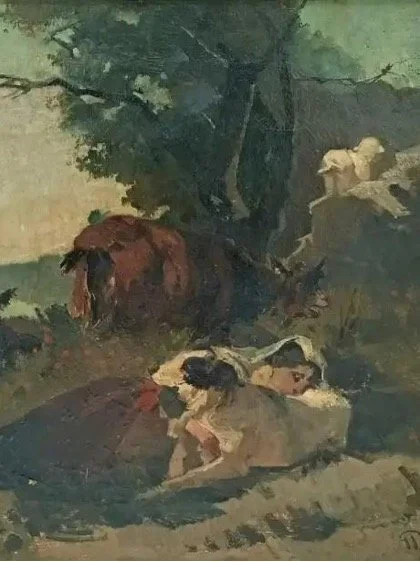
Filippo Palizzi, Riposo della Pastorella (The Rest of the Shepherdess), 19th century, courtesy of Carabinieri Command
The use of AI in the art industry is widely contested, but what happens when it helps us find stolen art? In 2026, during a routine scan of various internet databases and e-commerce websites, the Stolen Works of Art Detection System (Swoads), an AI detection software developed by the Carabinieri Command for the Protection of Cultural Heritage in Italy, found a painting stolen in 1972 in a heist that bankrupted the gallery it was taken from. The painting was Filippo Palizzi’s Riposo della Pastorella (The Rest of the Shepherdess), dating from the 19th century. Following authentication by the Feltre Gallery of Modern Art, the gallery from which it was originally stolen, the painting’s provenance and rightful ownership were traced.
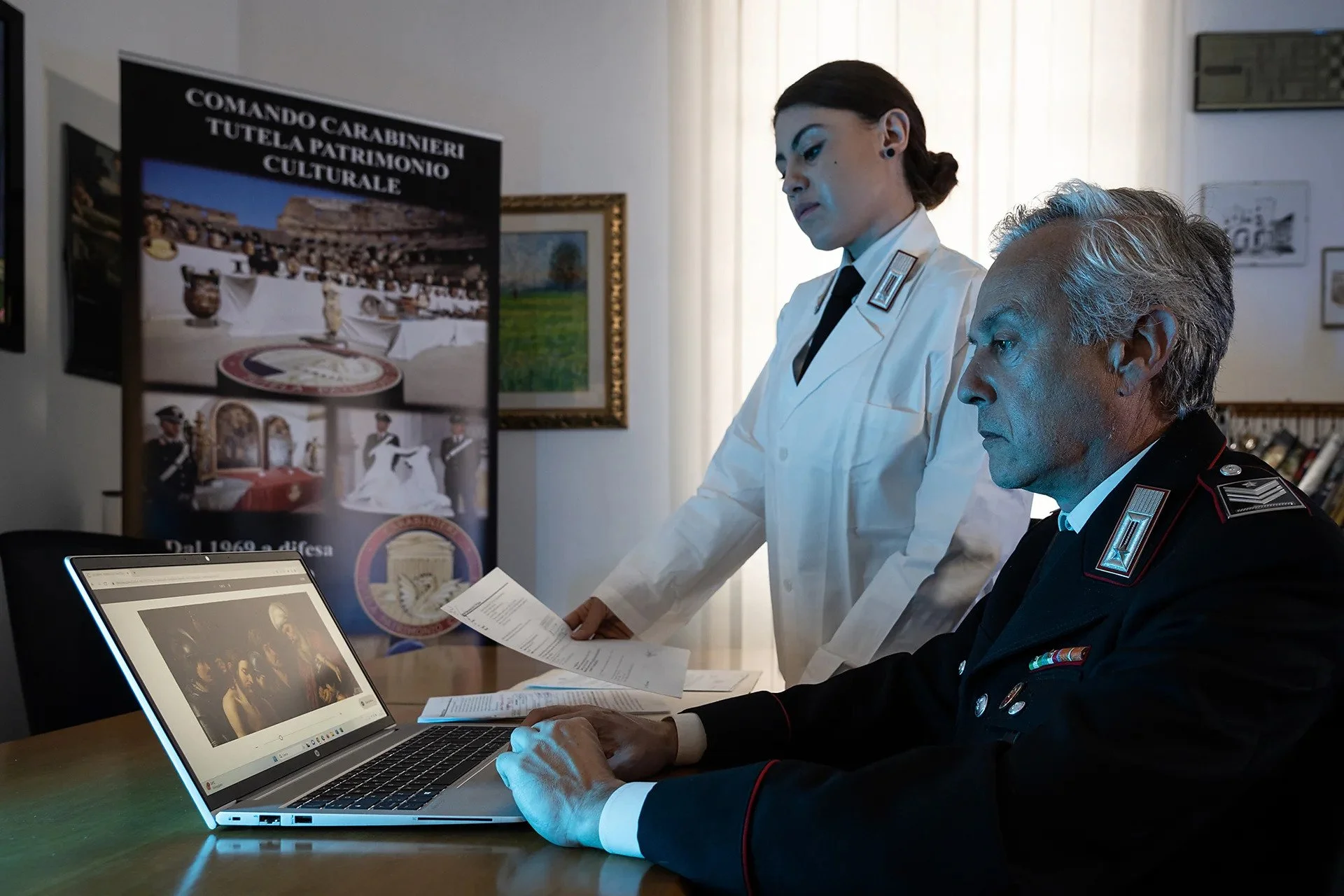
Image of the Carabinieri Command, courtesy of the Carabinieri Command for the Protection of Cultural Heritage.
Since Swoads was introduced in November 2023, the software has found roughly £170m worth of stolen and looted objects, from around 300 plundered sculptures to a whopping 165,000 smaller artefacts such as coins, manuscripts, and medals. The Italian police have built a vast database of stolen artworks containing more than one million records. The collection, started in 1969, includes everything from paintings stolen from churches to illegally excavated objects from the Greek and Roman eras. Before Swoads, attributing stolen artworks was a tedious and clumsy process. Officers would routinely visit auctions, antique shops, and galleries, take information back, and search for keywords in either their physical database or their online repository. Lieutenant Colonel Salvatore Rapicavoli oversaw and advised the development of Swoads in 2020. He claims that “regardless of whether it makes sense or not, it recognises it because it’s part of a whole that was stolen.” Unlike a person, the AI never gets bored of filtering through records that may not have been updated in decades, with unclear photographs or vague keywords. Rapicavoli believed that a system capable of instantly scanning the internet and matching the sum of a work’s records would be far more effective.
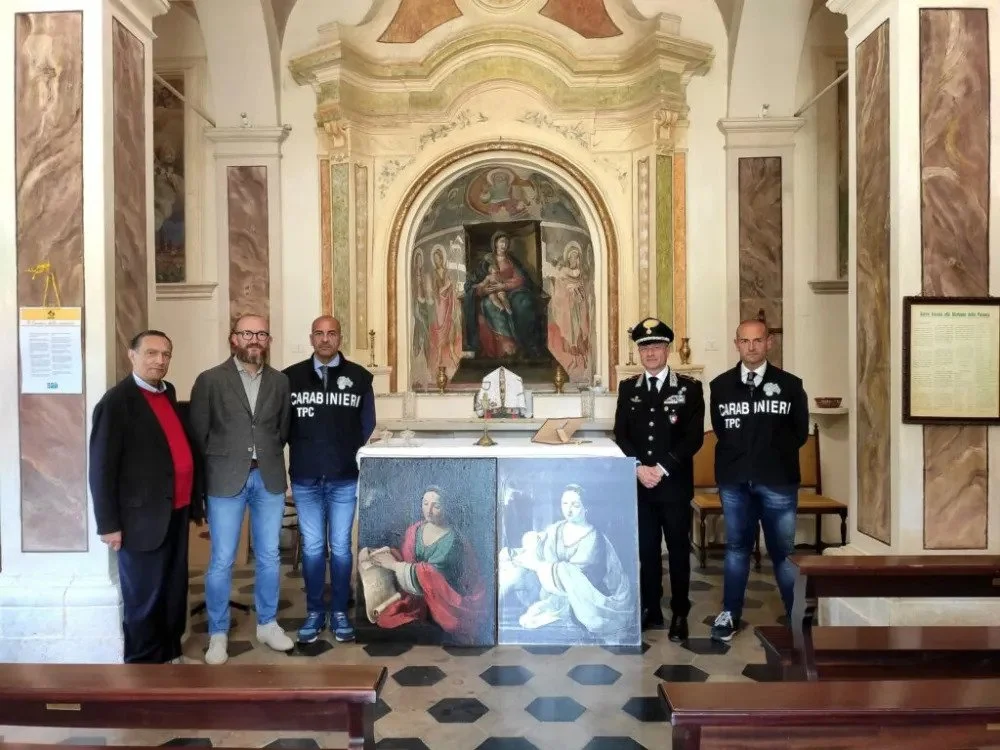
Image of the painting of Saint Agnese returning to the Diocese of Sulmona-Valva in May 2025, Courtesy Diocese of Sulmona-Valva
Swoads is clearly very effective online, but how does it measure up to physical sightings? Police officers still visit antique shops and gallery viewings looking for matches, but rather than relying only on their records, they now scan and upload images into the AI. In October 2024, at the annual antiquities fair in Parma, Italy, an officer spent a day photographing antiquities and paintings, and a hit came back. Closer investigation revealed a match with a painting of Saint Agenese stolen from a small church in Sulmona, roughly 500 kilometres from the fair. At some point, the work had been painted over, with the lamb replaced by a scroll and the halo replaced by a laurel. The piece hardly recalled the information in their database. However, by combining existing records with Swoads’ ability to recognise patterns, colours, and composition, the painting was flagged. While the perpetrator(s) of this robbery remain unknown, this ability to catch works has begun to bridge that gap, returning artworks to their proper owners and homes.
The ability to attribute works at such a large scale has been a success for the Carabinieri Command, but will it replace human detectives? Most likely not. Rapicavoli says the AI still has issues that require immense training. Images can be unclear, and an AI cannot find missing artworks that lack clear imaging, let alone catch thieves. Timothy Carpenter, former head of the FBI’s Art Crime Team, acknowledges that these systems cannot differentiate copies from authentic works. While AI may flag works in a way that would normally be far more time-consuming, human teams are still required to follow up on these leads and find experts to authenticate and attribute the work. What’s more, the AI cannot build genuine criminal cases from its finds. AI finds itself at a very interesting crossroads, with more and more countries developing systems similar to Italy’s. Yet until it can follow up and investigate a claim, art crime units will remain in full swing.
Bibliography
Italian Academy Foundation, Inc. “How AI Helped Italian Police Find a Painting Stolen 20 Years Ago | Italian Academy Foundation, Inc.” Italian Academy Foundation, Inc. | Bringing Italian Cultural Realities to US Audiences Since 1947, November 4, 2026. https://italianacademyfoundation.org/11/how-ai-helped-italian-police-find-a-painting-stolen-20-years-ago/.
“Just a Moment…,” n.d. https://theprint.in/feature/ai-found-a-painting-stolen-in-1972-how-italy-is-using-tech-to-recover-missing-art/3085138/.
Miller, Leigh Anne. “ARTnews.com.” ARTnews.Com, October 30, 2026. https://www.artnews.com/art-news/news/italian-police-ai-identify-stolen-art-antiquities-1234804277/.
Quaglia, Sofia. “A Painting Went Missing 20 Years Ago. Police Tracked It Down With the Help of AI.” BBC Future, October 28, 2026. https://www.bbc.co.uk/future/article/20261027-this-painting-went-missing-20-years-ago-police-tracked-it-down-with-the-help-of-ai.
Qdpnews. “Restituito Al Comune Il ‘Riposo Della Pastorella’, Dipinto Rubato Nel 1972,” April 11, 2026. https://www.qdpnews.it/comuni/bellunese/restituito-al-comune-il-riposo-della-pastorella-dipinto-rubato-nel-1972/.