
Light and Space at the Dia Beacon
By Ava Palermo
Just north of New York City, along the banks of the Hudson River, Dia Beacon offers a museum experience that feels fundamentally different from the crowded galleries of Manhattan. Housed within a vast former Nabisco box-printing factory, the museum presents large-scale works of Minimalist and conceptual art in a setting that privileges space, light, and contemplation. Visiting Dia Beacon is less like moving through a traditional museum and more like entering a carefully choreographed encounter with perception itself.
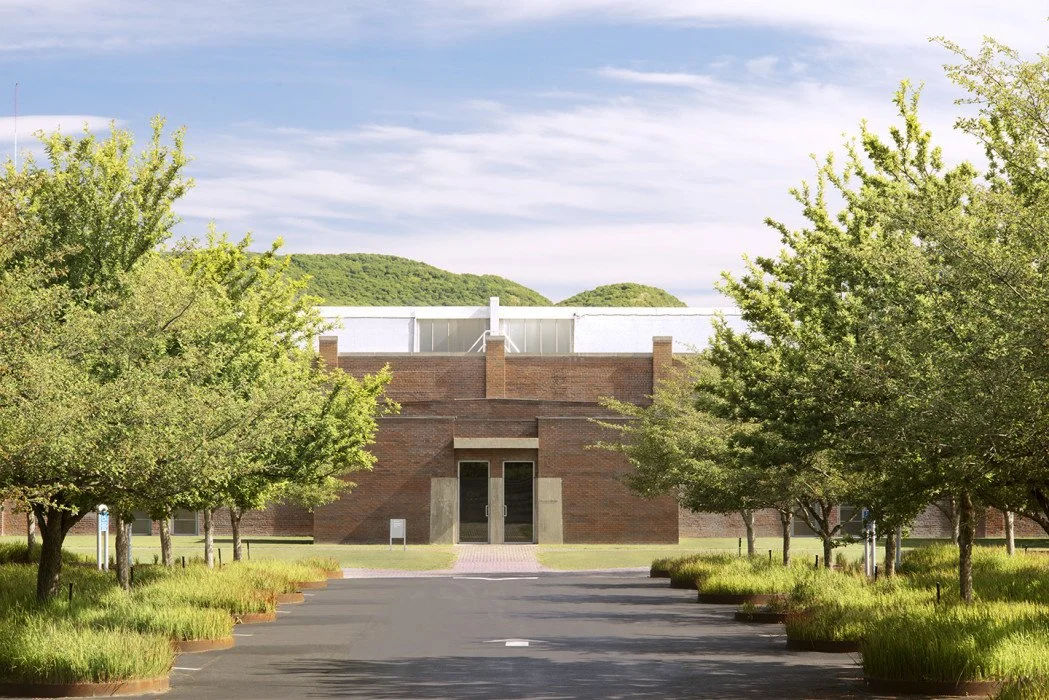
Dia Beacon Museum, 2003, former Nabisco factory converted into museum space, Beacon, New York. Image courtesy of Dia Art Foundation.
Opened in 2003 by the Dia Art Foundation, the museum was conceived specifically to display monumental artworks that could not easily be accommodated within conventional gallery environments. The building’s industrial architecture has been preserved and adapted to emphasise natural light. Skylights stretch across the ceilings, allowing daylight to shift across the galleries throughout the day. As a result, the artworks appear subtly different depending on the hour and weather, reinforcing the museum’s emphasis on the viewer’s sensory experience.
One of the most striking installations within the museum is Richard Serra’s Torqued Ellipses (1996–2000). These immense curved steel sculptures form a sequence of towering corridors that visitors are invited to walk through. The experience is at once physical and psychological. As one moves through the sculptures, the curved walls alter one’s sense of balance and spatial orientation. What initially appears solid and imposing gradually becomes something far more fluid and immersive.
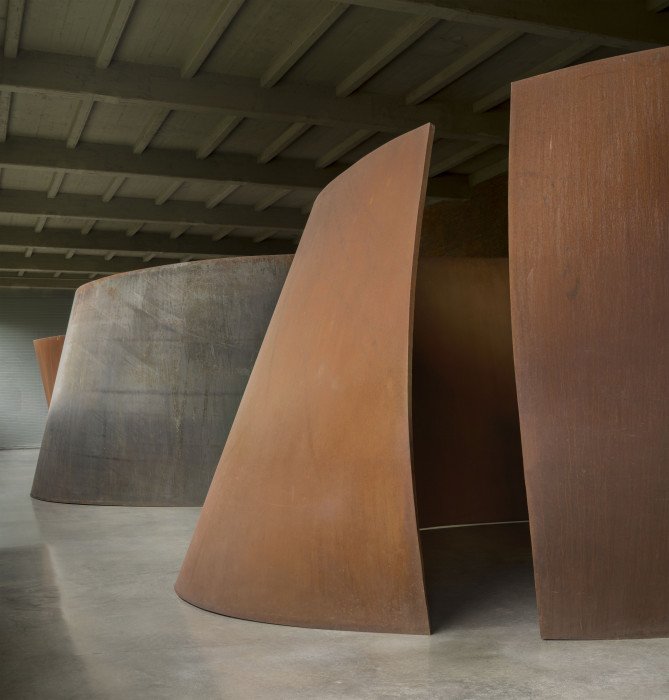
Richard Serra, Torqued Ellipses, 1996–2000, weathering steel installation. Dia Beacon, Beacon, New York. Image courtesy of Dia Art Foundation.
Serra’s work demonstrates how Minimalist sculpture can engage the body as much as the eye. The sculptures are not objects to be observed from a distance; they must be experienced through movement. Walking through the towering steel structures creates a sensation of shifting perspective, as though the surrounding architecture itself has begun to bend.
Elsewhere in the museum, artists such as Donald Judd and Dan Flavin explore similar ideas through very different materials. Judd’s geometric aluminium works emphasise precision and repetition, while Flavin’s fluorescent light installations transform entire rooms into fields of coloured illumination.
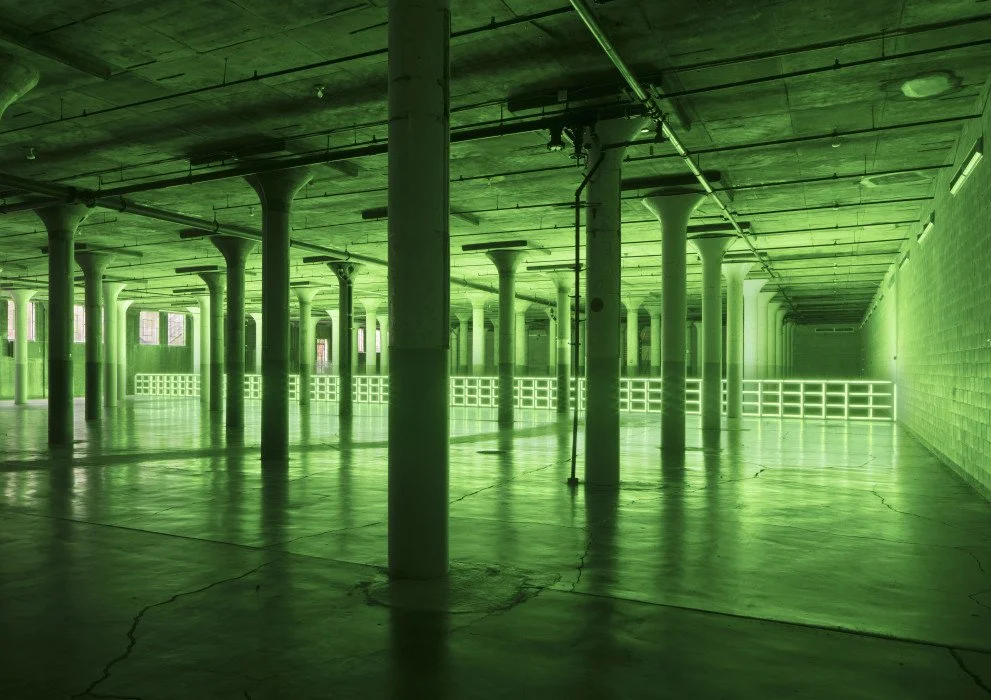
Dan Flavin, Untitled (to you, Heiner, with admiration and affection), 1973, fluorescent light installation. Dia Beacon, Beacon, New York. Image courtesy of Dia Art Foundation.
Flavin’s installations are particularly striking in the context of Dia Beacon’s architecture. The coloured lights interact with the museum’s natural illumination, creating subtle shifts in atmosphere throughout the day. In these moments, the distinction between artwork and environment begins to dissolve. The gallery becomes part of the artwork itself.
This emphasis on spatial experience reflects the broader ambitions of Minimalist art during the mid-twentieth century. Artists associated with the movement sought to reduce visual form to its most essential elements while simultaneously heightening the viewer’s awareness of space and perception. Rather than presenting art as symbolic representation, Minimalism invites viewers to confront the physical reality of objects and environments.
Dia Beacon’s curatorial approach reinforces this philosophy by dedicating entire galleries to individual artists. Unlike traditional museum displays, where numerous works compete for attention within a single room, Dia Beacon allows each installation to unfold gradually across expansive spaces. This approach encourages slower forms of looking and deeper engagement.
The pace of the museum stands in stark contrast to the frenetic atmosphere of many major museums. Visitors are not pushed along predetermined paths or crowded into narrow corridors. Instead, the galleries feel open and contemplative, offering space to pause and reflect. One finds oneself moving more slowly, becoming increasingly aware of how light, sound, and architecture shape the experience of viewing art.
Equally significant is the museum’s location. The journey to Dia Beacon requires leaving the city behind, travelling along the Hudson River by train or car. This transition from urban density to quiet industrial landscape forms an integral part of the experience. By the time visitors enter the museum, the rhythm of the city has already begun to recede.
In this sense, Dia Beacon offers something increasingly rare within contemporary museum culture: an environment designed for sustained attention. The artworks do not demand immediate interpretation or emotional response. Instead, they unfold gradually, revealing their complexity through prolonged observation.
The museum ultimately demonstrates how profoundly context shapes our experience of art. By situating large-scale Minimalist works within an architectural environment defined by light and openness, Dia Beacon allows these artworks to exist in a manner that feels both natural and expansive.
Leaving the museum, one carries with them a heightened awareness of space and perception. The experience lingers not because of any single artwork, but because of the subtle ways in which the museum reshapes the act of looking itself.
Bibliography:
Dia Art Foundation. Dia Beacon. Beacon, NY: Dia Art Foundation. https://www.diaart.org.