
Building Blocks of Appreciation: Glasgow's Architectural Aesthetics
By Megan Waugh
After the devastating fire at Forsyth House in Glasgow, the remnants and ashes served as woeful reminders of just how meaningful architecture remains in this country. Glaswegians saw not just the soot of a violent fire, but the absence of a beloved visual presence. Our buildings do more than frame our streets; they stand as physical messages of the sentiments with which we herald our pride. As a particularly innovative and creative country—particularly in skills and trade—Scotland’s history is one that speaks volumes. While the people of our past may no longer be here to interact in the present, we share a space with them in the way we each traverse past the same buildings, taking in the same sights and weaving through the same roads. So, how does Glasgow’s historical legacy maintain a particular potency through its architecture?
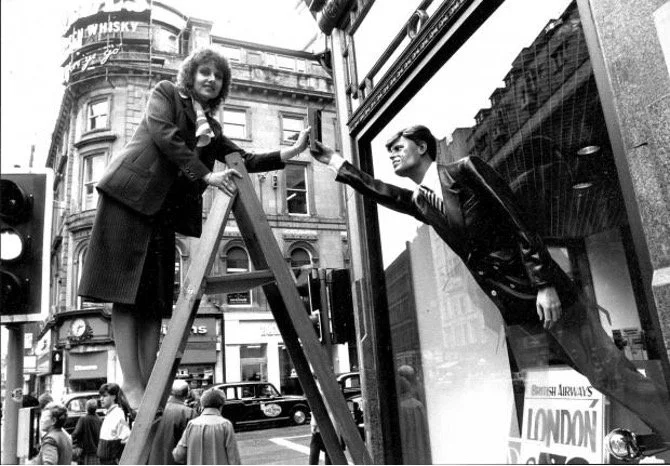
BA Sales Agent Caroline Rew on Gordon Street in 1985. Image courtesy of The Herald.
When the city was first flourishing in the eighteenth-century, its origins upheld a definitively unique approach to its formation. Unlike most other cities, who were organised through civic enterprise or a master plan, Glasgow was made up of sprouting and jutting tobacco streets and a web of intermingling private enterprises, forming a labyrinthine structure. Its key areas were not ruled out by straight streets and uniform squares, but enclosed through the pillars of existing churches, tightly woven terraces and looping archways. This thrifty generativity came to form a visual landscape just as vivacious and carnivalesque as the personalities which inhabited it.
Perhaps most personable of all Glasgow’s buildings are its characteristic tenements. Lanky, abundant, and domestic -- these structures took the definition of ‘home’ to the next level. Even if you don’t reside within one, they are so characteristic of the city that they herald homeliness and belonging to their every spectator. At first honey-coloured, then various shades of red and brown, tenements set Glasgow’s hearth aglow, and their warmth is certainly radiant. These colours were not incidental, however. The late-Victorian era saw the opening of quarries in Dumfriesshire which offered cheap machine-cut red sandstone. Additionally, new innovation in technology, with the elevator lift and refinement of steel construction, allowed for buildings to tower higher and higher.
However, this rainbow of innovation did not cement the buildings’ suitability for living. It soon became clear that the council’s intent to house the surges of workers coming to the city was not being considered properly. The cramped nature of their housing led to health issues and widely poor standards of living. A first surge of renovation in the nineteenth-century built revised versions of tenements, and then in the 1970s and 80s, many were demolished altogether. Their replacement came in the form of an abundance of high-rise block flats which, while they were more suited for most facets of health, neglected one important factor: aesthetics.
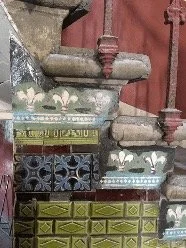
Bolton Drive Tenement Close Interior. Image courtesy of South Glasgow Heritage and Environment Trust.
It was only when this replacement began that tenements shed their reputation for degradation to become a coveted form of art. In 1972, Glasgow West was designated the first Conservation Area in the city; 'an area of special architectural or historic interest, the character or appearance of which it is desirable to preserve or enhance.’ Features of architectural consideration, such as experimental window spacing, decorative cornicing, and bay window designs, all became increasingly appreciated. Additionally, even practical elements like attention to ventilation and natural lighting showed potent consideration in the tenements’ designs. Such elements were not mere creative fancy, but supposedly a demonstration of concern against overtly monotonous, homogenous streetscapes.
Today, it is considerations like these which have proved to be more than decorative play, embodying the tailoring of a unique artistic and visual identity. Glasgow’s creativity is reflected in the buildings it is made of—so it is no surprise that the loss of Forysth House was felt so greatly. Union Corner’s great dome would not have been the postcard-featurette that it was if it were not for this daring feat of artistic innovation. Today, we reap the benefits of motions against bland and boring building blocks. Let’s hope that in our architectural efforts, we do not forget one facet of improved living: aesthetic appreciation.
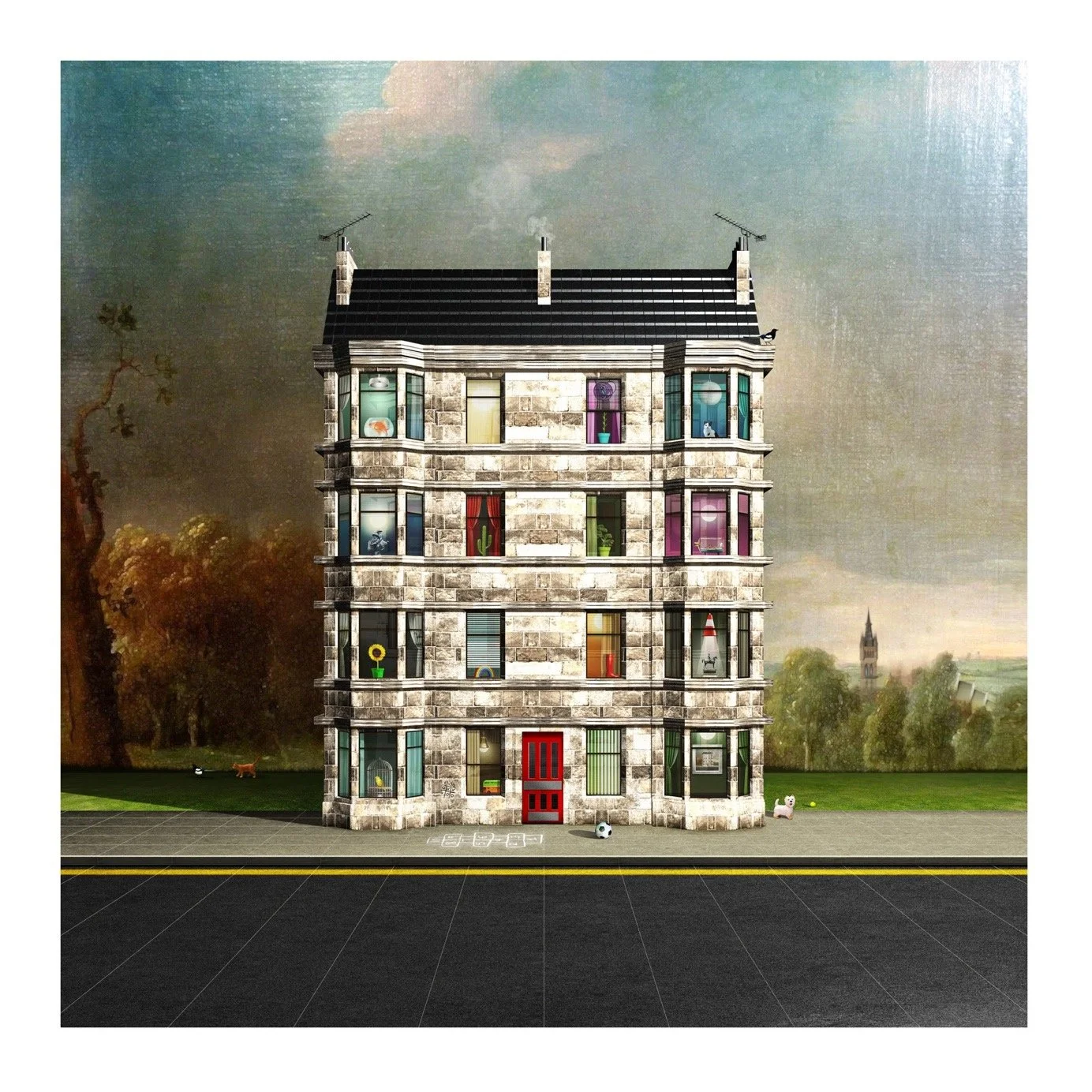
Michael Murray, Glasgow Tenements, digital mixed media, Courtesy of Michael Murray Art.
Bibliography:
McKean, Charles. “Glasgow: How the Energy of the City Reflects in Its Architecture.” RSA Journal 139, no. 5413 (1990): 914–25.
Robinson, Peter. “Tenement Improvement in Glasgow: A Quiet Revolution, 1968–80.” Architectural Heritage 21, no. 1, (2010): 75-92.