Art of Advent Day 7
By Hanna Yoon
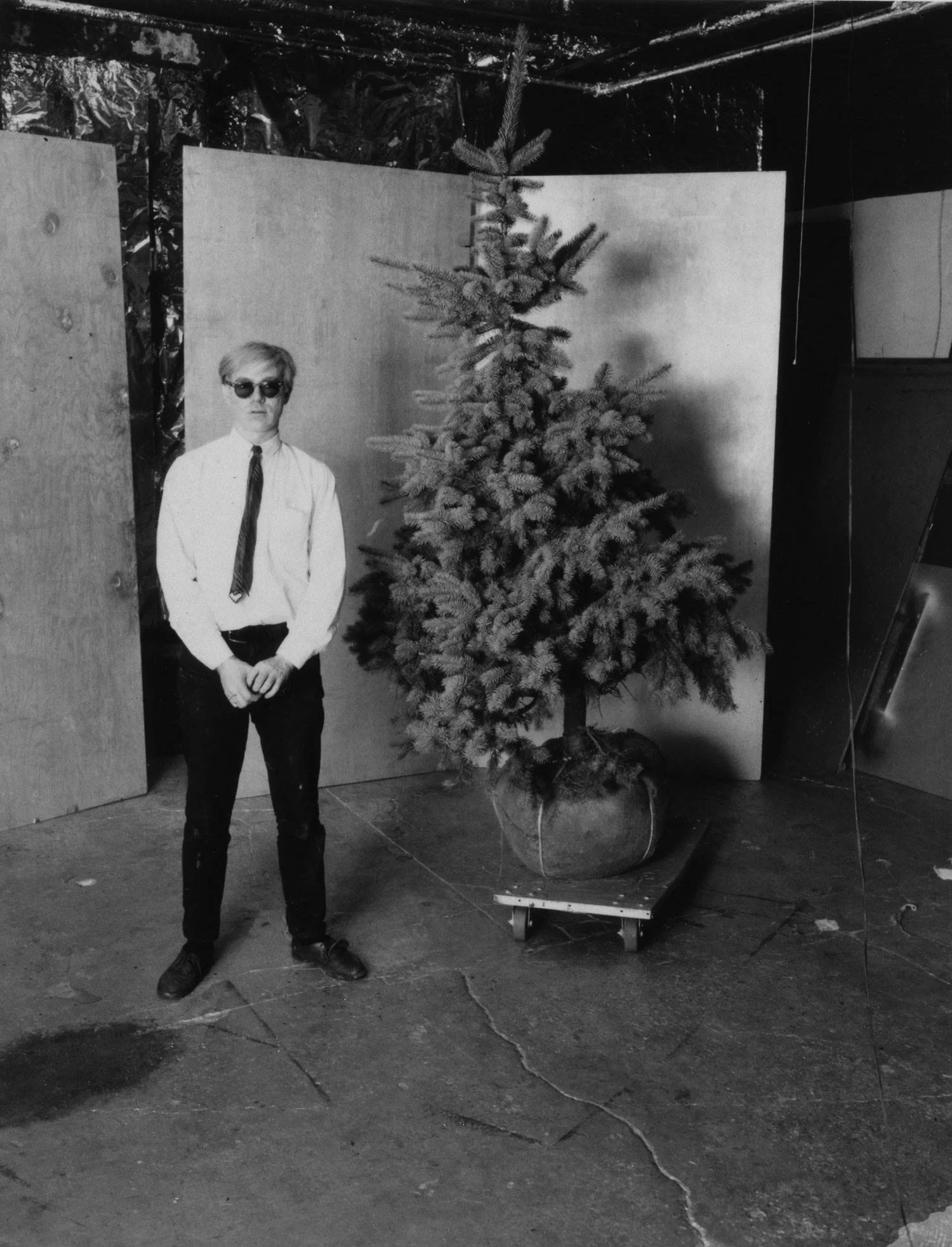
Unknown Photographer, Andy Warhol and his Christmas Tree in the Factory, 1964.
Image Courtesy of The Andy Warhol Foundation.
It’s curious how a figure once rooted in folklore has become one of capitalism’s most cherished mascots. Now, Santa Claus fully belongs to us – to our fantasies, our anxieties and our insatiable appetite for wonder polished into consumer desire. Few artists understood this better than Andy Warhol, lover of Christmas and genius in the commercialised desire of modern society. Confronting the question – when did Santa stop coming down the chimney and start climbing up the corporate ladder?
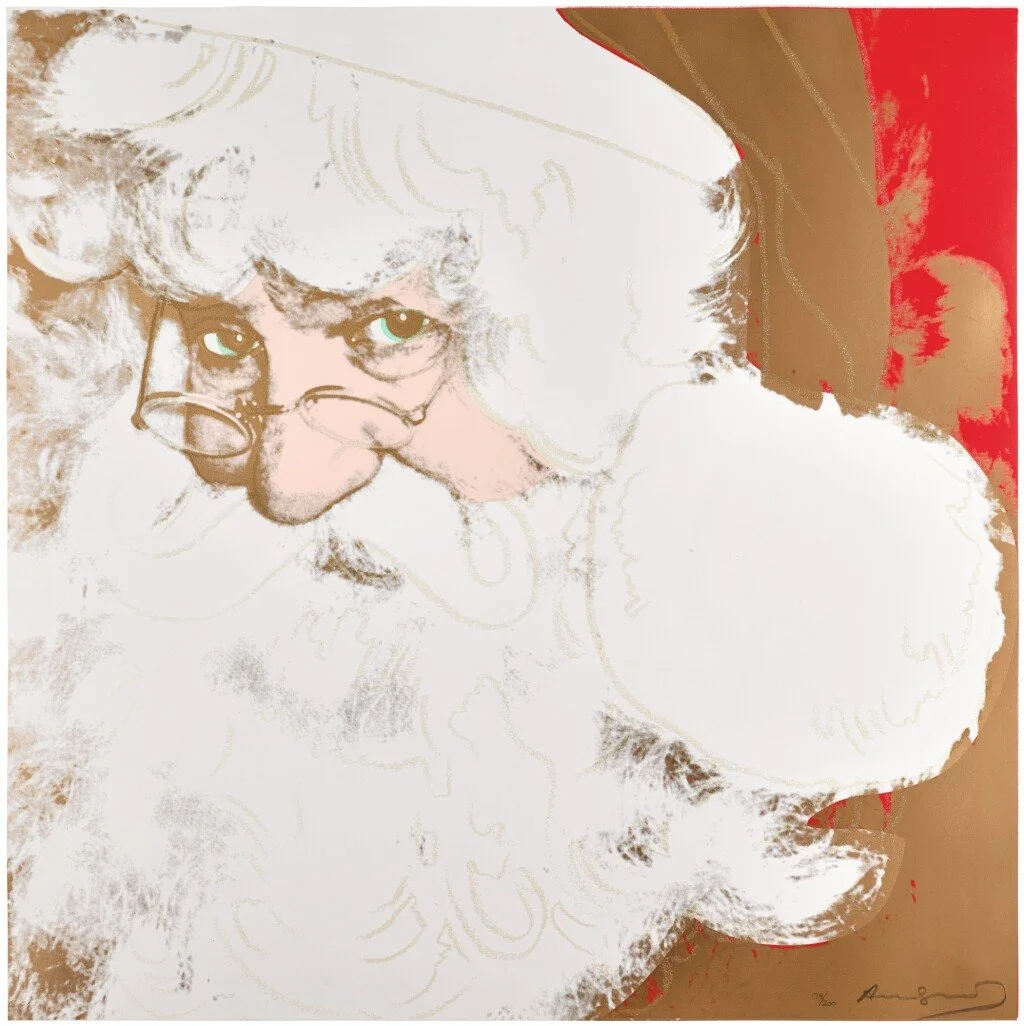
Andy Warhol, Santa Clause (from the Myths Series), 1981, Screenprint with Diamond Dust, 96.5 x 96.5cm.
Image courtesy of Christie’s.
Warhol’s Santa, from his 1981 Myths series, feels less like a character and more like a commodity unwrapped. He gleams with the seductive sheen of mass reproduction, looking the viewer directly in the eyes. The jolly old man becomes a logo – repeated, flattened, and sealed behind the screenprint’s synthetic surface. Warhol diagnoses Santa – the image we are left with is not a portrait but a mirror reflecting our own seasonal desires, each one slicked and brighter than the last.
Standing before Warhol’s Santa, one feels both amused and unsettled. The rosy cheeks and twinkling eyes – once symbols of generosity – now vibrate with Pop Art artificiality. Mythology collapses into marketing. It is as if Warhol had taken the ‘Coca Cola’ Santa, already a masterpiece of twentieth-century advertising, and pushed it to its logical conclusion: a figure emptied out and filled again with consumer longing. This is no surprise, as society’s relationship with consumption had long fascinated Warhol. His Campbell’s Soup Cans (1962) made clear that the icons of everyday life could be elevated to the status of fine art, while remaining tethered to the machinery of mass desire. In Santa, this tension becomes almost painfully explicit – the holiday spirit is rendered as a gleaming commodity, where even parents (thanks to Santa’s mythic wish list) can’t help wondering if love now must come gift-wrapped.
And yet, there is something endearingly human behind the gloss. Warhol’s Santa, like so many of his icons, is a figure caught in the crossfire of worship and consumption. His smile is both comforting and complicit. The commercialisation of Christmas does not destroy that myth – it preserves it, embalming it in the bright varnish of Pop. Warhol shows how Santa’s power lies not in the North Pole but in the cultural imagination that refuses to let him fade. In this Advent season, his flowing visage reminds us that every celebration carries its own price tag.
Bibliography
Christies. 2025. “ANDY WARHOL (1928-1987).” Christies.com. https://onlineonly.christies.com/s/andy-warhol-myths/andy-warhol-1928-1987-9/247630.