Sarah Lucas (1962-Present)
By Adamantia Selekou
Sarah Lucas was born on 23 October 1962. After leaving school at sixteen, Lucas spent her late teenage years travelling and undertaking temporary jobs. During her time as an employee at a children’s play centre, she was encouraged by a colleague to pursue art. She began assembling her portfolio soon thereafter at the Working Men’s College in 1982. Her subsequent studies at the London College of Printing (1983–84) and Goldsmiths College (1984–87) laid the foundations for an artistic practice distinguished by its intrinsic rebelliousness, unselfconscious psychological depth and uncompromising honesty.
The psychoanalytic nature of her work, which is, as she states, mostly ‘unintentional at first but absolutely clear when completed’, reveals the relationship between body and expectation. Playing with words and images, Lucas subverted and appropriated the laddish machismo of British aesthetics.
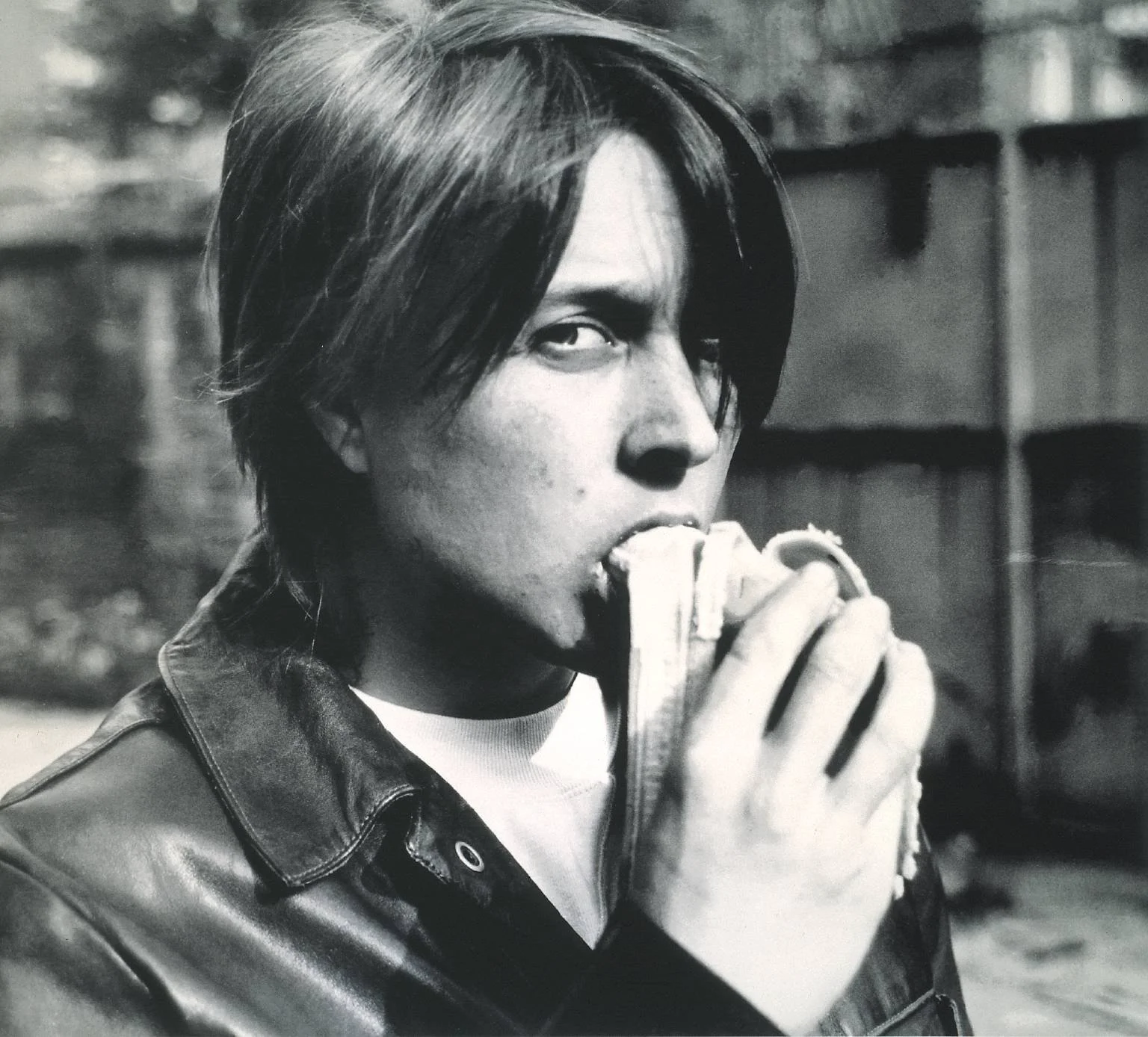
Sarah Lucas, Self Portrait, Eating a Banana, Digital print on paper, 539 x 596 mm, Tate Gallery (1990)
This early portrait reveals the bold, provocative tendency of Lucas’ work, while placing her as subject as well. Depicted outside of a feminine performance of gender, Lucas explores her own identity in tandem with the viewer’s expectation of it. This would come to be understood as one of her works that are most reflective of her thematic inquiries.
Lucas is a part of the Young British Artists, among them Tracey Emin, Michael Landy and Damien Hirst, all of whom are committed to challenging the social conventions of British life through their artistic practice. Similar criticisms are often found in Lucas’ work.
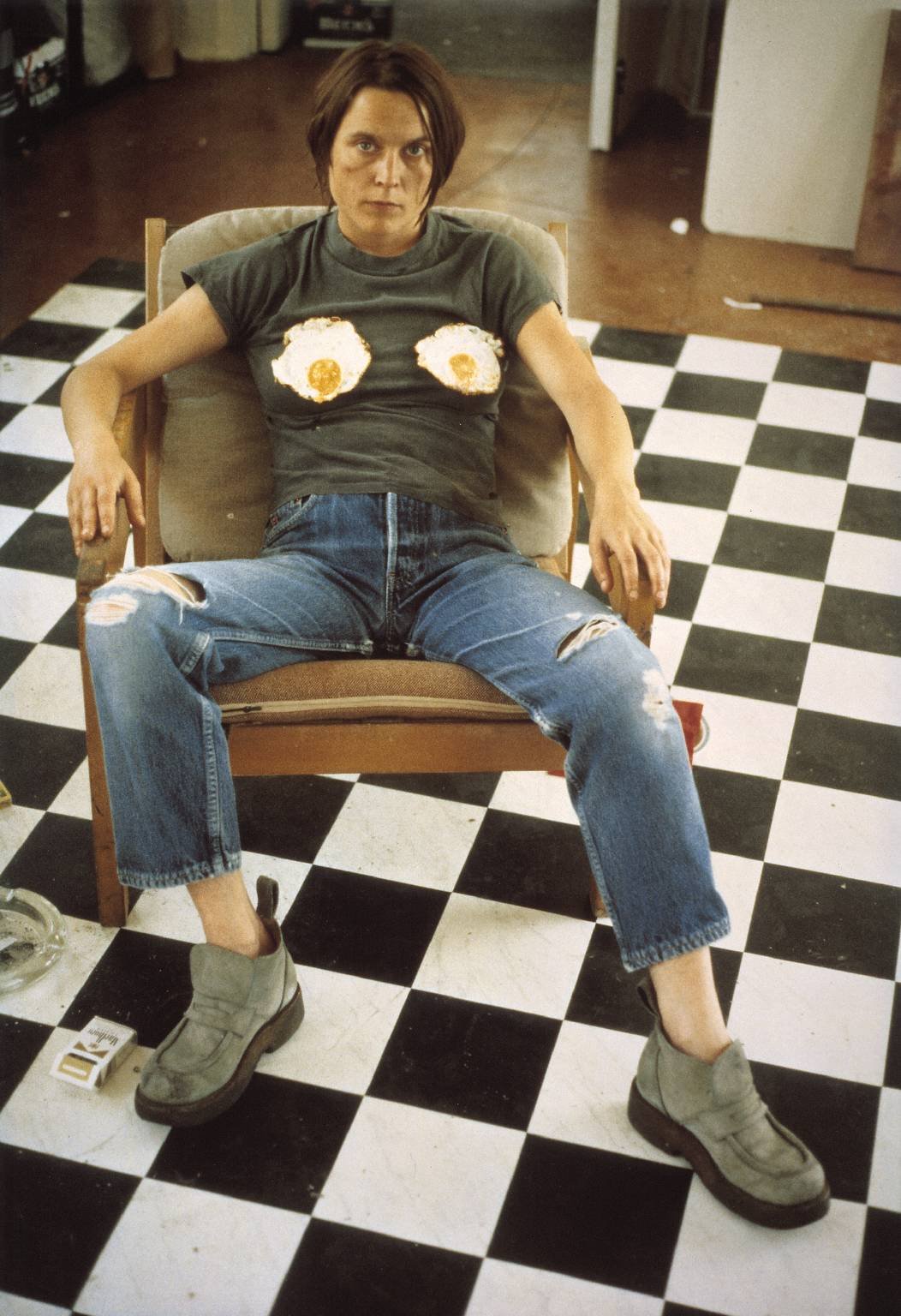
Lucas, Self Portrait with Fried Eggs, Digital print on paper, 745 x 514 mm, Tate Gallery (1996)
This second portrait was created some years after her most popular sculptural works, Two Fried Eggs and a Kebab (1992) and Au Naturel (1994), two compositionally simple yet very calculated works, the former depicting the female body deconstructed and summed up and the latter both a female and a male body on a mattress. This portrait is remarkable because it is a clear depiction of the artist’s lexicon maturing while simultaneously unravelling upon Lucas. A thematic use of performance, food and gender underlines the parodical character and satirical nature of the compositions. Likewise, it exists as a way for Lucas to take control of her own image. Situating herself within a grungy domestic interior, undone, with her legs spread, while two fried eggs lay on her breasts, she is thus masculine and strangely edible.
With a salmon slung over her shoulder, reminiscent of how one holds a rifle, Lucas employs the wordplay of Got a Salmon On (1997) to mock conventional performances of masculinity and power. That same year, Lucas creates the seminal installation Bunny Gets Snookered, which is made with stuffed tights draped over chairs. Exploring themes of submission, objectification and the absurdity of feminine ideology, the installation marks the point at which Lucas’ career begins to move towards abstraction. If one were to place emphasis on Lucas’ language, her work starts to become deeply psychoanalytical, foreshadowing her exhibition at the Freud Museum titled The Pleasure Principle in 2000.
During this period of her work, sexuality begins to transform into methodological exploration as well as something psychoanalytically complex. The humour of the sculptures allows for this half-concealed and partially addressed relationship between desire and visuality. Using innuendos, the artist implicates the viewer in this visual experience
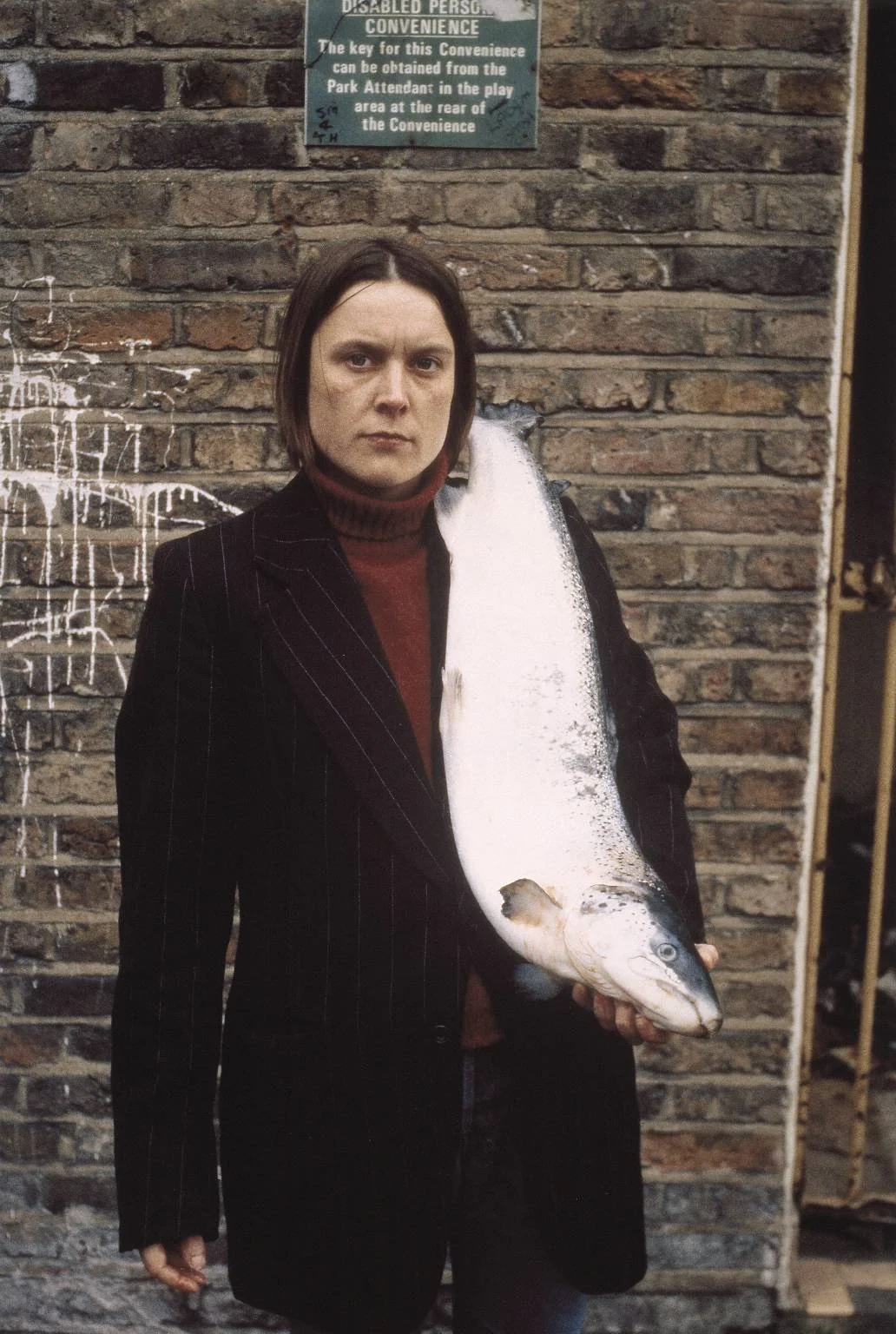
Lucas, Got a Salmon On #3, Colour iris print, Tate, London (1997)
The following piece, a continuation of her earlier work, depicts a fragmentation of the human body. Once again, the body is reduced to its sexual signifiers, mirroring how the female form is depicted in advertising and pornography. What is remarkable is its suggestion of what gender may be reduced to: Lucas tests whether it is performance or the flesh through which one can understand oneself.
In the decades following her 2000 exhibition at the Freud Museum, Lucas’ exploration of sexuality extends beyond its initial cultural framework of Britain. Unfettered by cultural associations, the work begins gravitating towards more ambiguous depictions of desire and mortality through the utilisation of bronze, concrete and resin. Though she continues to depict the human form, Lucas still manages to explore the fragility of the human condition.
The carnal, intertwined forms of her NUDS series (2009) epitomise her new visual language. Through the suggestion of vulnerability and showcased limits of the human body, the artist explores the profound difficulty found in intimacy. Retaining her humoristic voice, she allows for the passionate, the erotic and the grotesque to exist alongside one another, centred upon a reminder of fickleness and the fragility found therein.