A Summer of Art in Reflection: Controversies, Shakeups, and Resignations
By Ian Ziegler
Freshers’ Week is over, classes have begun, and I have, unfortunately, entered the library to write this. All these signs point to the sad fact that summer is now wrapping up, and fall has begun. As our calendars shift from blank, wide-open schedules to jam-packed with classes, meetings, and socials, the art world is also undergoing a transition. Exhibitions are coming down and new ones going up; fair tents are being struck in one city and raised in another. Summer really is over, but for me it was rather relaxing; that cannot be said for those working in the art world, for this summer was one for the history books, and more importantly, for HASTA.
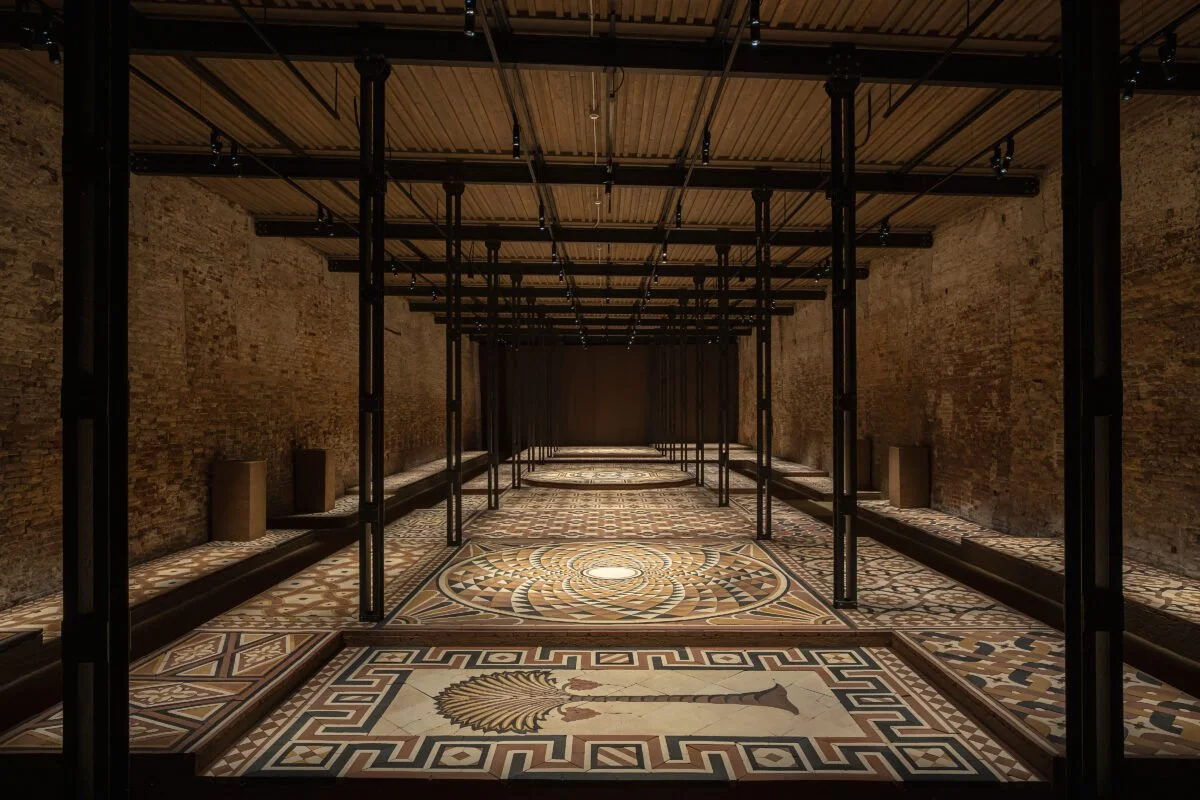
Dana Awartani, installation view of ‘May your tears never dry, you who weep over stones’ at the Saudi Arabian pavilion at the 61st International Art Exhibition - La Biennale di Venezia, 2026. Courtesy of the Saudi Arabian pavilion.
The most significant exhibition in contemporary art is held every two years in Venice: the Venice Art Biennale. Often referred to as the ‘Art Olympics,’ it is where countries come together to show the ‘state of art’ at home, alongside one main show, directed by an appointed curator, that sets the tone for the entire biennale. Unfortunately, that curator, Koyo Kouoh, the first African woman to hold the position, passed away in May of 2025; the exhibition was completed using her notes and work, honouring her posthumously. Her death was not the only story from behind the scenes. In April of this year, the five jury members, including chair Solange Farkas, announced that they would decline to consider countries with ‘[current] charges of crimes against humanity by the International Criminal Court’ for the Golden Lions, the Biennale’s grand prize, a decision that effectively ruled out Russia and Israel. Days later, the jury resigned en masse. For the first time ever, the Biennale’s top prizes will be judged by the public, and more than seventy artists have since pulled themselves out of consideration in solidarity with the jury, while the EU withdrew roughly $2.3 million in funding over Russia’s return.
The beauty of the Venice Biennale is that nothing is for sale; it is a collection of miniature museums, put there for the sake and for the love of art. With that said, money is needed to keep the art ecosystem breathing, and this summer saw the most expensive single-owner sale in the UK’s history: £296 million, without a single irrevocable bid, for the Lewis Collection at Sotheby’s Auction House. Works were sold in the tens of millions by some of modern art’s biggest names, like Modigliani, Klimt, Degas, and Magritte, breaking Magritte’s record for his most expensive work on paper, which sold for £16 million ($21.2 million). Altogether, London’s auction revenue nearly tripled year on year, to about $560 million, a good sign for the fall season.
Globally, however, this year is confusing some economists. The big three auction houses did $6.8 billion in sales in the first half of the year, up 70% and their best half since 2022. But most of that came from a few large purchases: research published this month found that around 150 works made up roughly 60% of global auction value over the same period. The top 1% of the 1% is spending more, and it is overshadowing the economic downturn many of the smaller galleries and auction houses are feeling.
It is becoming increasingly expensive to be a mid-level gallery, especially since much of the money they make comes from the hundreds of fairs held worldwide, and taking part in them is extremely expensive. Galleries are finding it hard to justify the cost of transportation, setup, and insurance for the slight possibility of selling a few works. It becomes a debate over whether to risk the FOMO of not taking part and losing a potential buyer, or to take part and leave with nothing sold, the economic equivalent of flushing thousands upon thousands of pounds down the drain. Art Basel and UBS now rank fairs as dealers’ third most pressing cost.
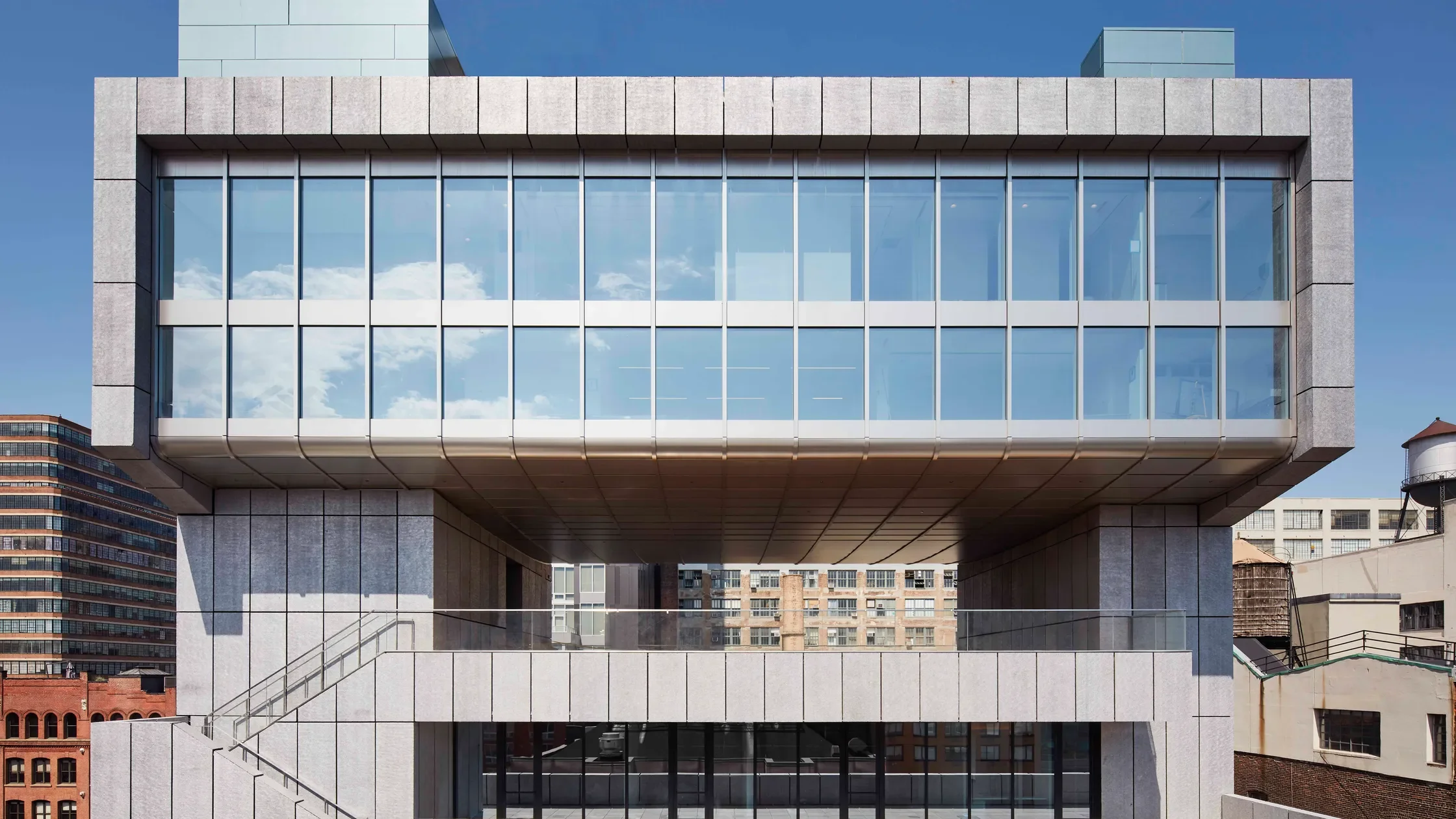
Pace Gallery in New York. Photo by Thomas Loof, Courtesy of Pace Gallery.
It isn’t just the smaller galleries. Pace, a mammoth of a gallery, laid off around 50 staff members and cut 50 artists from its roster in June. CEO Marc Glimcher stated that “the art world has changed dramatically over the past decade, and the current gallery model isn’t only broken, it’s unfixable,” with his father and the gallery’s founder, Arne, adding that “this whole mega-gallery thing is ridiculous and also unsupportable.” It signals a major shift. What may happen next is unclear, but I think we are expected to see a major hole being left in the art world soon, and how it will be filled is still up for debate.
Gallery closures and layoffs are not the only thing leaving people wondering what is next for art institutions. On the 250th anniversary of America’s independence, the Trump administration published a 162 page report titled ‘Saving America’s Story,’ accusing the Smithsonian museums of promoting ‘anti-white’ ideology. In this report, if that is what we’re calling it, it called out the Smithsonian American Art Museum, the National Museum of the American Indian, the National Museum of African Art, the Anacostia Community Museum, and the National Portrait Gallery. It also publicly named non-senior staff members, public servants working to educate the American people, and all those who visit the incredible museums of America’s long history. A history that starts well beyond 250 years ago, a history that is, for a vast majority, not white. The same administration’s budget proposal would cut the National Endowment for the Arts from $207 million to $29 million; the House has since recommended $135 million, and the Senate has yet to respond.
Both the public and private sectors of the art world are at tipping points, and to know where they are going is to be able to tell the future. It is an uncertain time, a saying that is getting used now more than ever, but it is just as important to support emerging and young artists where possible, and to support museums. Showing up to exhibitions, interacting online, and staying informed is the best way to know what is going on, for there is a lot going on. This summer has been hectic, and we’re about to enter the busiest season for fairs and auctions, plus the US midterm elections for the Senate, the House, and many gubernatorial seats. While this might be a time of chaos, it is also a time of great reflection. There are countless exhibitions on display across Europe that should be on your Reading Week bucket list, so go and see the art that has made these past few months so newsworthy.
Bibliography
Brady, Anna. 2026. ‘Auction Houses Made Significant Recoveries in 2026, ArtTactic Report Finds’. The Art Newspaper - International Art News and Events, July 10. https://www.theartnewspaper.com/2026/07/10/auction-houses-made-significant-recoveries-in-2026-arttactic-report-finds.
Carrigan, Margaret. 2026. ‘Has London’s Art Market Finally Beat the Brexit Blues?’. Artnet News, June 27. https://news.artnet.com/market/london-summer-auctions-2784216.
Carrigan, Margaret. 2026. ‘New White House Report Alleges “Anti-White” Bias at Smithsonian’. Artnet News, July 6. https://news.artnet.com/art-world/white-house-july-4-report-smithsonian-2786226.
Carrigan, Margaret. 2026. ‘Pace Gallery Downsizes, Cutting Artists and Staff’. Artnet News, June 4. https://news.artnet.com/market/pace-gallery-downsizes-cutting-artists-and-staff-2778584.
La Biennale. 2025. ‘Biennale Arte 2024 | Biennale Arte 2026 to Take Place from 9 May to 22 November’. La Biennale di Venezia, February 28. https://www.labiennale.org/en/news/biennale-arte-2026-take-place-9-may-22-november.
Lawson-Tancred, Jo. 2026a. ‘$392.6M Lewis Collection Sale Smashes Records at Sotheby’s, Led by $63.9M Modigliani’. Artnet News, June 24. https://news.artnet.com/market/392-6-m-lewis-collection-sale-smashes-records-led-by-63-9-m-modigliani-2783495.
Lawson-Tancred, Jo. 2026b. ‘E.U. Withdraws Venice Biennale Funding over Russia’s Return’. Artnet News, July 21. https://news.artnet.com/art-world/eu-cancels-venice-biennale-funding-2789489.
NASAA . 2026. ‘Legislative Alert: President’s FY2027 Budget Proposes Minimal NEA Funding - NASAA’. Nasaa. https://nasaa-arts.org/legislative_update/legislative-alert-presidents-fy2027-budget-proposes-minimal-nea-funding/.
Nayyar, Rhea. 2026. ‘Venice Biennale Jury Resigns’. Hyperallergic, April 30. https://hyperallergic.com/venice-biennale-jury-resigns/.
News Desk. 2026. ‘Venice Artists and Curators Withdraw from Awards Consideration’. Artforum, May 11. https://www.artforum.com/news/venice-biennale-participants-withdraw-from-awards-1234750110/.
Schneider, Tim. 2026. ‘Are We Seeing the Demise of Statement Stands at Art Fairs?’. The Art Newspaper - International Art News and Events, February 25. https://www.theartnewspaper.com/2026/02/25/are-we-seeing-the-demise-of-statement-stands-at-art-fairs.
Shaw, Anny. 2026. ‘Sotheby’s Auction of Joe Lewis Collection Breaks Record for Most Expensive Sold in UK’. The Art Newspaper - International Art News and Events, June 25. https://www.theartnewspaper.com/2026/06/25/in-a-boost-for-london-sothebys-evening-sale-of-joe-lewis-collection-becomes-most-expensive-sold-in-uk.
Shaw, Anny. 2026. ‘The Art World’s Billionaire Problem Is Getting Worse, Research Suggests’. The Art Newspaper - International Art News and Events, September. https://www.theartnewspaper.com/2026/09/01/the-art-worlds-billionaire-problem-is-getting-worse.