Elsa Schiaparelli’s UK Debut in “Schiaparelli: Fashion Becomes Art”
By Sadie McGraw
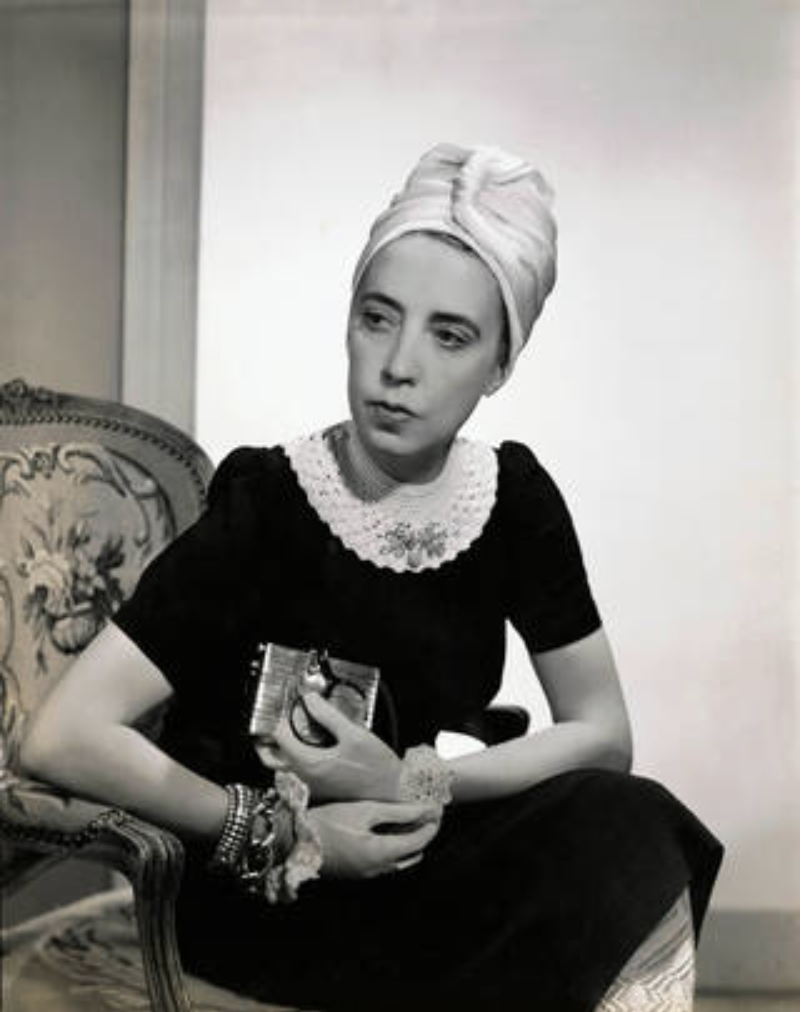
Fredrich Baker, Elsa Schiaparelli [1940], Image courtesy of Victoria and Albert Museum, London.
This Saturday, Elsa Schiaparelli and her designs are getting their first UK exhibit in Schiaparelli: Fashion Becomes Art, hosted in the Victoria and Albert Museuem in London. Spanning from the 1920s to today, this exhibition documents the fashion house’s evolution and origins, as well as Schiaparelli as an artist and innovator, inviting viewers to walk the blurred line between fashion and art. The exhibit will feature a blank 200 objects, ranging from iconic pieces designed by both Elsa Schiaparelli and longtime collaborators Salvador Dali and Jean Cocteau to a portrait of Schiaparelli shot by Man Ray.
Elsa Schiaparelli was one of the most noteworthy names in 20th century fashion and her legacy lives on today through the Schiaparelli fashion house. She challenged typical norms of fashion during the mid 1900s, transforming clothes into the idea of wearable art. Working within traditional tailoring, but subverting details allowed Schiaparelli to create designs that exemplified the Surrealist movement through powerful fashion statements.
Descending from an Italian aristocratic family connected to the Medicis, Elsa Schiaparelli was well within a powerful network from birth. A friendship with fashion designer Paul Poiret encouraged her to pursue dressmaking as an artistic outlet, leading Schiaparelli to start designing garments and selling her pieces freelance. In 1927, she opened an atelier and became almost an instant success, especially with her black and white knit pullover, featuring a faux bow design, utilizing trompe-l’oeil, which Vogue deemed a “masterpiece.” Schiaparelli’s use of haute couture gave her so much notoriety that she was the first female fashion designed to be on the cover of TIME Magazine.
Schiaparelli’s roots as a skillful painter and sculptor are crucial to understanding her designs, especially those in collaboration with Surrealists of her time, Dali and Cocteau, as mentioned above. Her unique ability to transpose fashion into wearable art allowed the Masion Schiaparelli to become edgy, avant-garde, and provocative. Schiaparelli’s artistic eye is clear throughout all her work, but especially through the legendary “Skeleton Dress.” Designed in collaboration with renowned painter Salvador Dali, this garment is a floor-length fitted black evening gown, made of silk crêpe and demonstrating the material’s matte sheen. The constricted nature of the garment acts as a second skin on the wearer, featuring quilting around the rib cage, vertebra, hip, and leg bones, giving the dress a skeletal structure and thus its name. The texture of the quilting achieved by Schiaparelli is called trapunto, and she exaggerates this technique using cotton wadding to give the design a three-dimensional effect.
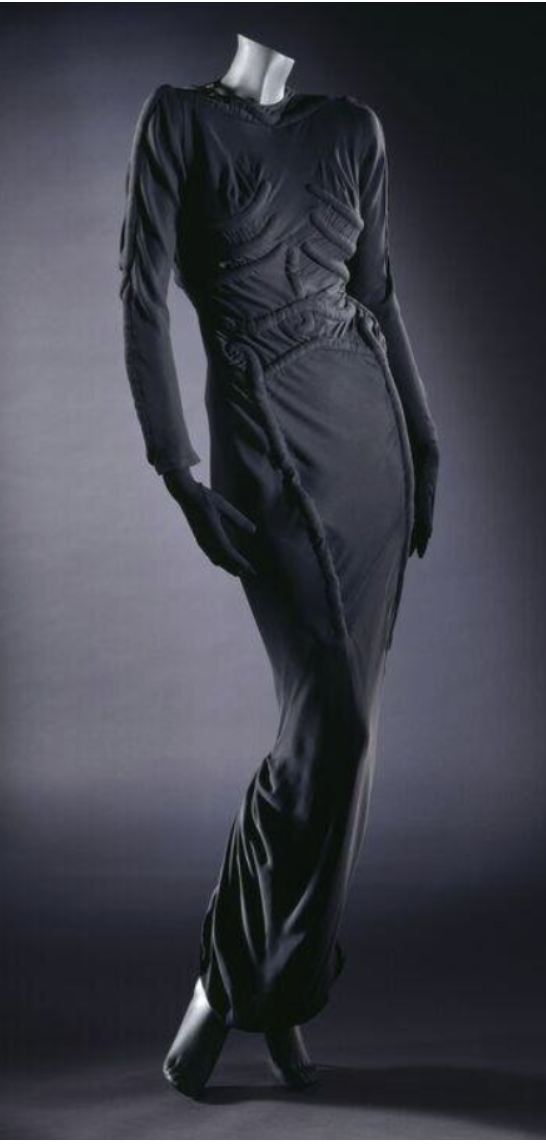
Elsa Schiaparelli and Salvador Dali, Skeleton Dress,[1938], Image courtesy of Victoria and Albert Museum, London.
Dali’s influence is clear in this piece. The garment is gothic and dark, key themes of Dali’s work, but the influence of bones and warped limbs and proportion from Dali’s work translated into his ideas for this dress. In communication to Schiaparelli regarding his idea for a new dress, Dali writes, ““Dear Elsa, I like this idea of ‘bones on the outside’ enormously.” Although Dali clearly had a large impact on the piece, the dress is a paragon of Maison Schiaparelli and is only fitting that it is one of the central pieces in the V&A’s new exhibition. Skeleton Dress is emblematic of Schiaparelli’s aesthetic, while also adhering to construction and silhouette norms of the 1930’s, as this decade began to favor the hourglass body ideal.
Another example of Schiaparelli’s translation of Surrealist art into fashion is shown through a collaboration with French artist and film maker Jean Cocteau. Similar to Dali, Cocteau provide Schiaparelli with drawings that were translated into designs for the Maison, one of which being the Evening Coat, made in 1937. The piece is an ankle length black silk coat, including a collarless neckline and short lapels. The back of the piece is designed by Cocteau specifically, depicting confronting facial profiles embroidered in gold thread that come together to form a vase filled with roses detailed in pink silk. The eyes of the faces are blue stones, and the lips are rendered in red foil. Down the back of the garment, more gold thread imitates pleats. The design of the entire coat, but especially the back, illustrates a core theme of the Surrealist movement: frisson. Frisson in art is a feeling of both excitement and fear, often achieved through juxtaposition. Here, the perfectly tailored front of the coat contrasts with the provocative illustrated back, making the coat a staple of the avant-garde collection of Schiaparelli’s work.
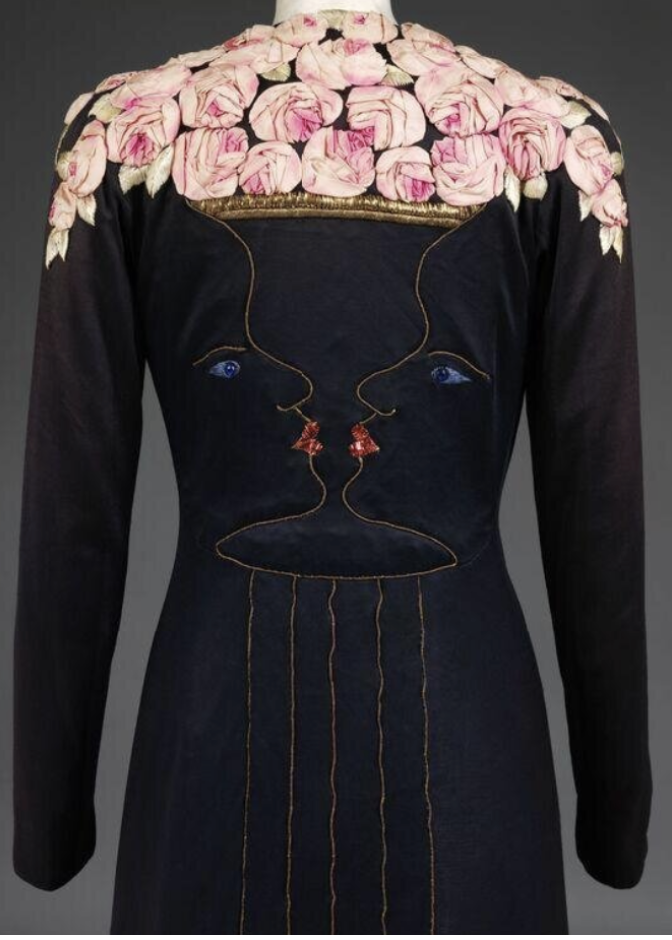
Elsa Schiaparelli and Jean Cocteau (designers) and Lesage (maker), Evening Coat, [1937], Image courtesy of Victoria and Albert Museum, London.
As well as exhibiting Elsa Schiaparelli’s iconic works, the exhibit will explore the new directions of Maison Schiaparelli after Elsa’s death in 1973, especially under the current creative director Daniel Roseberry. Roseberry has been working for the Maison since 2019 as their creative director and during this time, he has made sure to revive some of Schiaparelli’s most influential themes, while paying homage to her love of Surrealism. The exhibition will include pieces from Schiaparelli Haute Couture’s autumn/ winter collection of 2024. Schiaparelli’s legacy of being a fashion pioneer who revolutionized fashion as an artistic and experimental medium shines through the exhibit, making it sure to be a success this spring at the V&A.
Bibliography:
“Schiaparelli: Fashion Becomes Art,” Victoria and Albert Musuems, accessed March 22, 2026, https://www.vam.ac.uk/exhibitions/schiaparelli
Ariel Pincus, “1938- Elsa Schiaparelli, Skeleton Dress,” Fashion History Timeline, March 7, 2021, https://fashionhistory.fitnyc.edu/1938-schiaparelli-skeleton/
“Evening Coat” Victoria and Albert Musuems, accessed March 22, 2026, https://collections.vam.ac.uk/item/O117953/evening-coat-schiaparelli-elsa/?carousel-image=2013GB0254
“Daniel Roseberry” Maison Schiaparelli, accessed March 22, 2026 https://schiaparelli.com/en/pages/daniel-roseberry