Catwalk: The Art of the Fashion Show. An Immersive History of Runway Couture at V&A Dundee
By Wiktoria Iwaniak
Just a bus ride from St Andrews, the V&A Dundee – Scotland’s design museum located on the city’s waterfront – is currently hosting an incredibly chic and exciting exhibition, one perfect for fashion aficionados and history enthusiasts alike. Catwalk: The Art of the Fashion Show combines over three hundred multimedia objects, from archival runway pieces and design concepts to exclusive backstage photographs and video footage, bringing together influential examples from iconic fashion houses like Dior, Balenciaga and Vivienne Westwood, among many others. In the words of curator Kirsty Hassard, the exhibition “takes visitors on an immersive journey through the history of the catwalk and its changing eras, reflecting the times they are created in.”
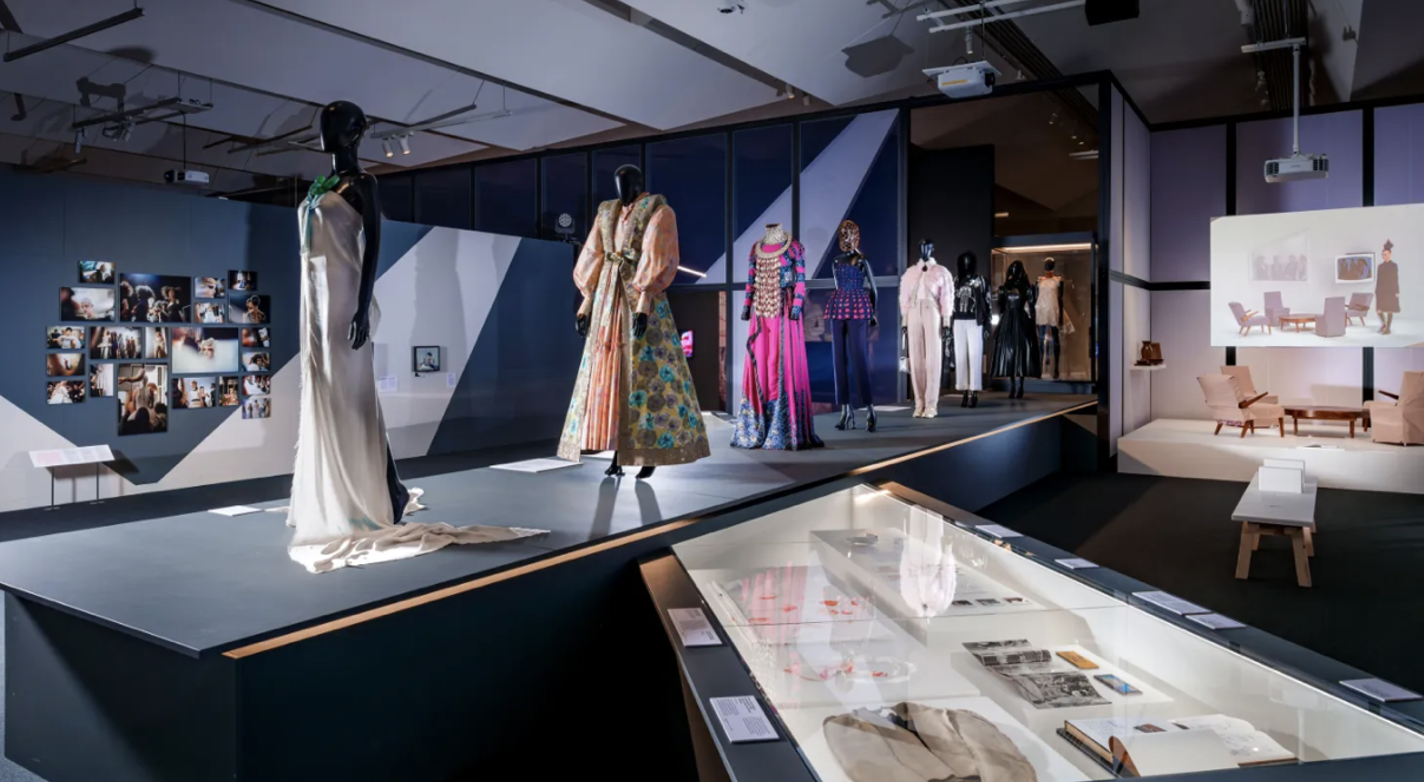
Exhibition View.
Image courtesy of Grant Anderson for V&A Dundee
Stepping into the exhibition feels like entering a time capsule. A beautiful visual narrative is created by the displays, walking the visitor through each core period in runway history. Teleported into the world of early twentieth century Parisian salons, I became fully immersed in the atmosphere. Haute couture was shown in salons and at social events, sometimes internationally, to attract a new clientele. A core designer during this time was Gabrielle ‘Coco’ Chanel, a pioneering figure in women’s fashion. Rare, mesmerising footage of models walking down the mirrored spiral staircase in Chanel’s townhouse is played on loop, creating an air of glamour and fantasy. Below this lies an issue of Vogue Paris from August 1931, in which Chanel’s first show was published, highlighting the long-standing significance of mass media in the fashion industry to communicate news and trends.
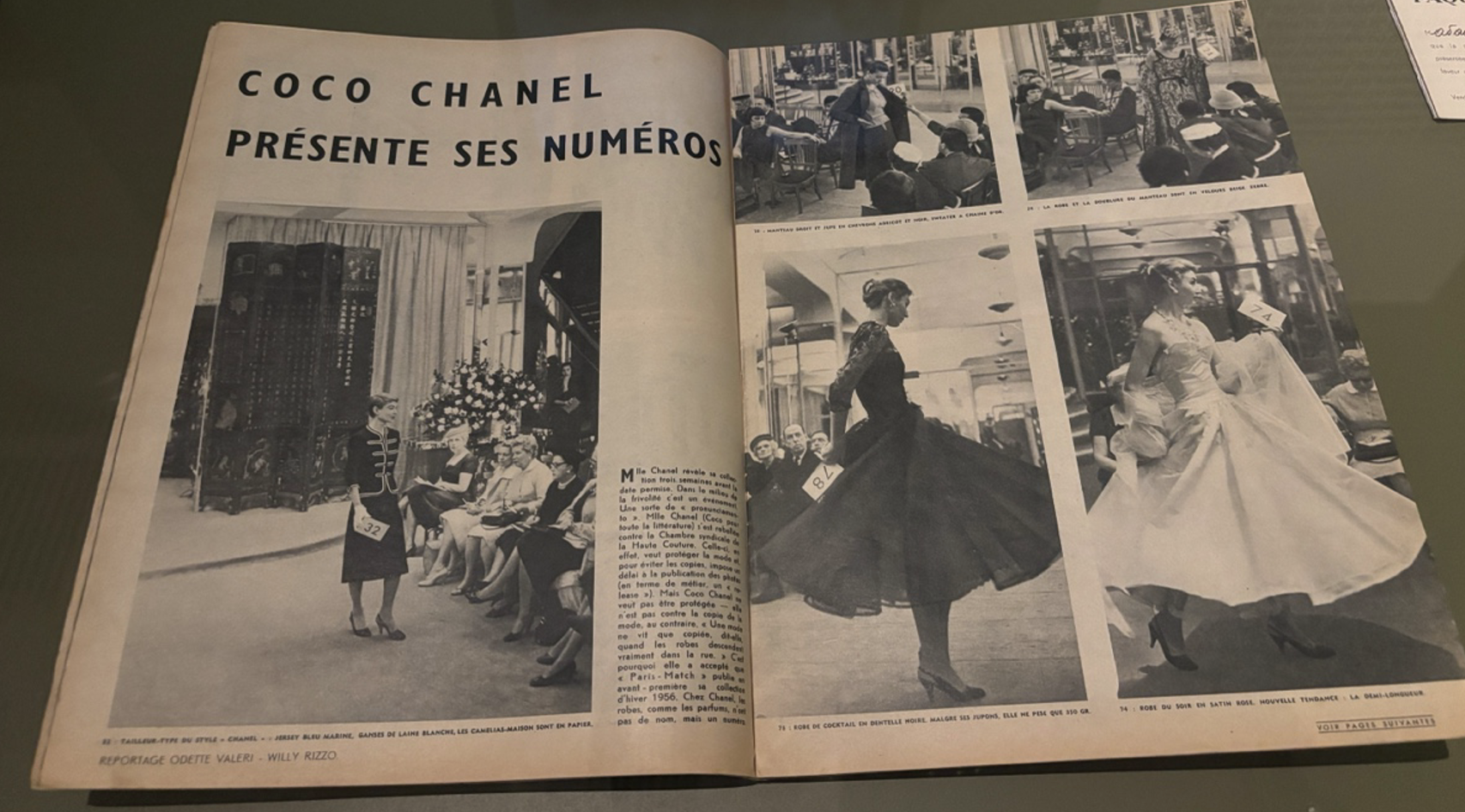
Chanel in Vogue, August 1931. Image Courtesy of Wiktoria Iwaniak.
Each room focuses on a shift in approach to runway fashion. From the elegant formality of the 1900s we move into a period of experimentation and cultural exchange in the post-war era, reflected by the vibrant, open exhibition space. By the 1970’s, fashion shows become much more commercialised, becoming regular, highly anticipated events in the ‘Big Four’ (Paris, Milan, London, and New York). Increased globalisation brought fresh perspectives from the East, which challenged Western ideals of beauty, inspiring designers to play around with different styles and aesthetics. Innovation and creativity of the period is exemplified by Paco Rabanne’s 1967 Mirror Dress. The use of unconventional, unwearable material was completely radical, showing that up-and-coming fashion houses were not afraid of pushing the boundaries of the meaning and use of fashion.
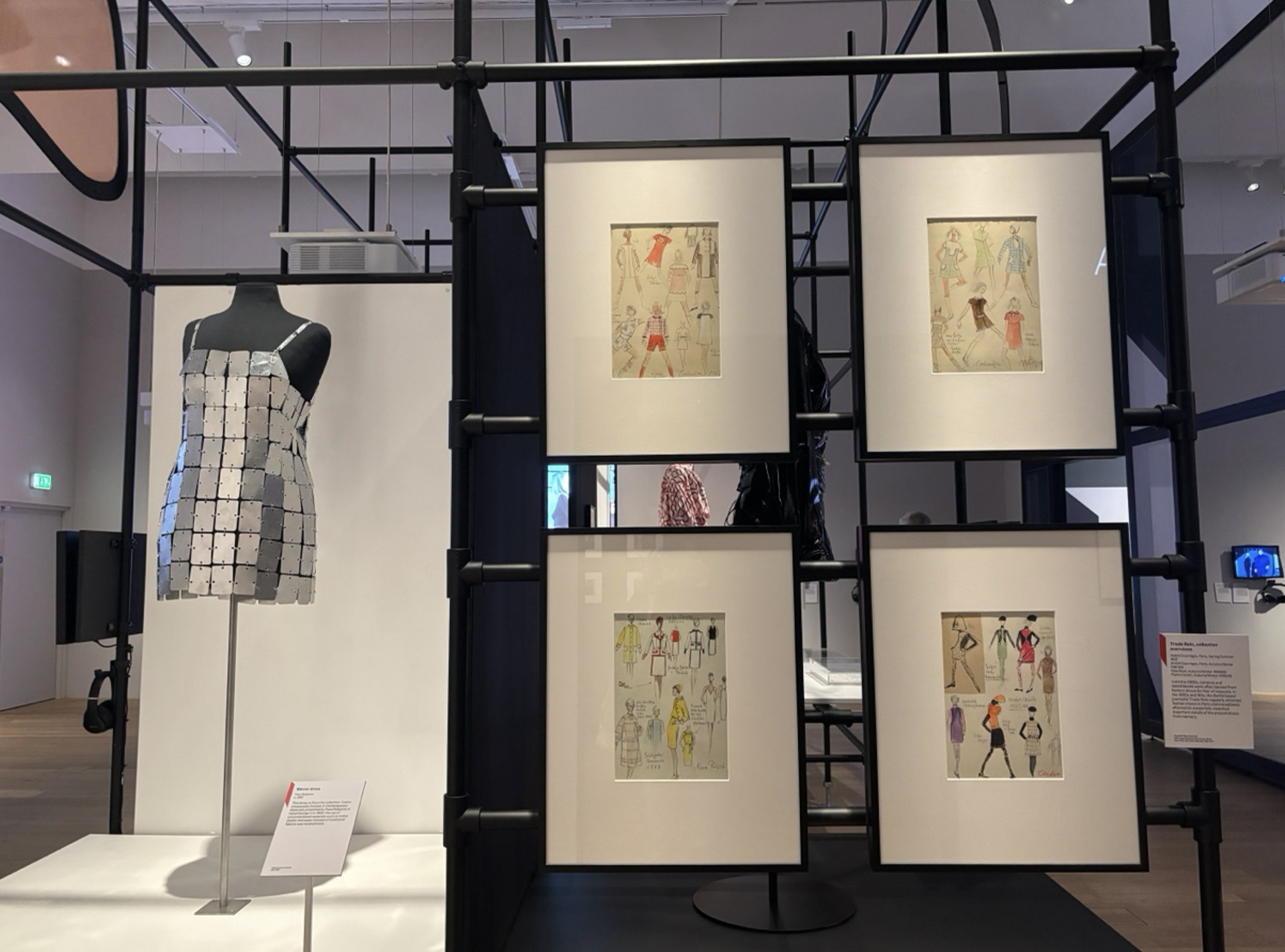
Left: Paco Rabanne, Mirror Dress, 1967. Right: Trude Rein, collection overviews.
Image courtesy of Wiktoria Iwaniak.
By the ‘90s, the runway became a theatrical spectacle on a global scale. With technological advancements boosting the commercialisation of the fashion industry, anything was possible. The grandeur of the fashion show is conveyed in this exhibition through the large-scale photo and video displays, highlighting its performative nature and hypnotic qualities. Catwalks became highly conceptual and interactive, such as Alexander McQueen’s 1999 show, No.13, in which two robots spray-painted the model’s dress live on stage. Catwalks were not purely about aesthetics anymore, becoming platforms for confronting socially relevant issues, such as consumerism in Chanel’s 2014 Supermarket Show.
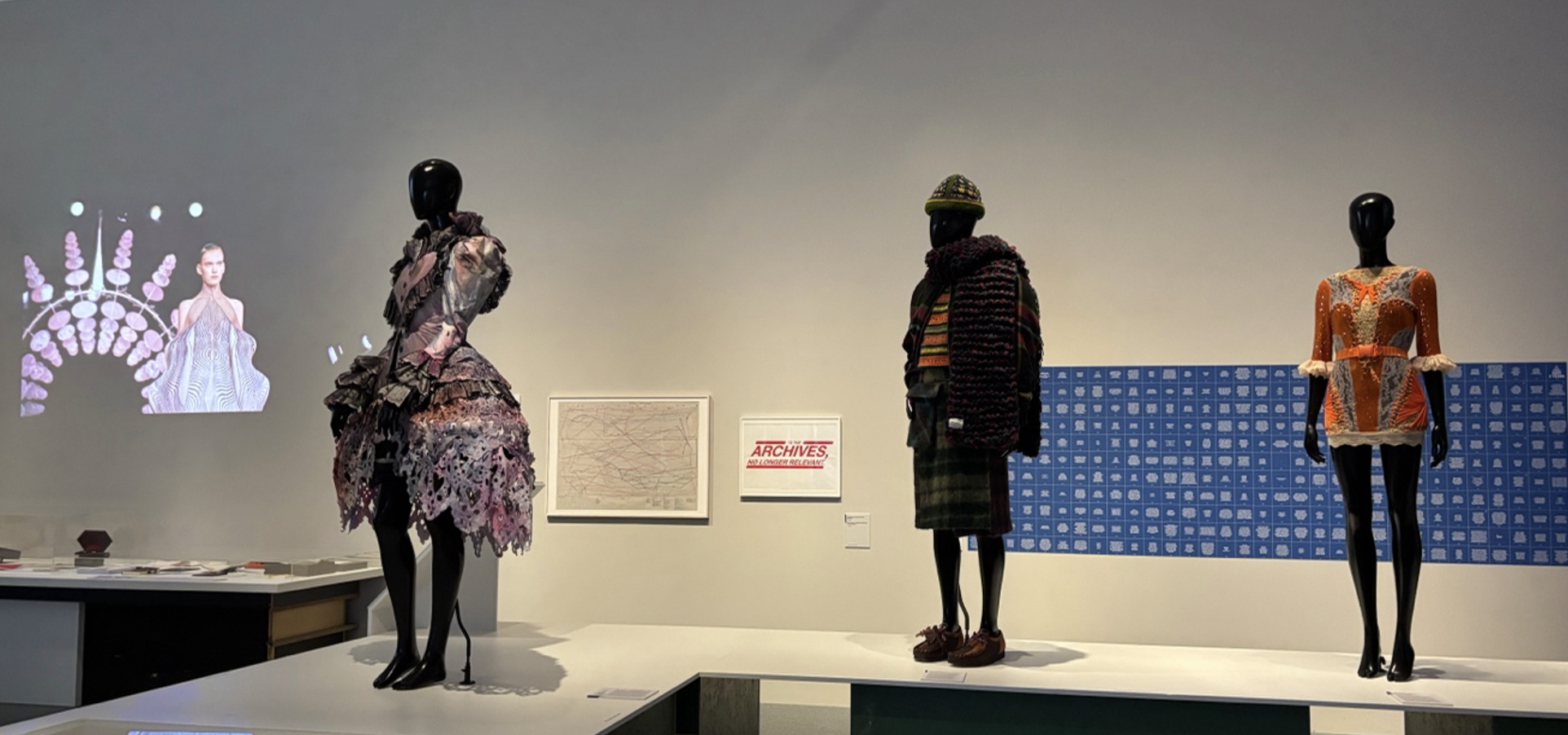
Work by Scottish designers Charles Jeffrey and Nicholas Daley. Image Courtesy of Wiktoria Iwaniak.
The exhibition closes with an homage to contemporary Scottish designers including Charles Jeffrey and Nicholas Daley, celebrating Scotland’s contributions to fashion history. This tribute highlights not only individual designers, but also Scotland itself as a source of inspiration through its rich heritage and textile history. Central to this narrative is the long-standing connection between Scotland and Dior, highlighted by iconic shows influenced and staged here, such as the 1955 presentations in Glasgow and Gleneagles. Additionally, the final room underscores the impact of the COVID-19 pandemic on runway productions. Forced into purely virtual spaces under restrictive circumstances, the industry adapted, proving that even in a global crisis, the show must go on.
With a history spanning over a century, the fashion show continues to evolve. Refusing to be a monolith, catwalks have become sacred productions for fashion houses. Their cultural significance cannot be overstated; fashion is now inseparable from pop culture and carries a global economic and social impact.
The exhibition does an incredible job at showcasing the full creative process behind staging a fashion show, drawing attention to every detail – from initial designs, to invitations, to the backstage preparations - allowing the viewer to visualise how much work and thought goes into a single show. I had very high hopes for this exhibition, being excited to visit it since hearing the announcement last year, and it is safe to say my expectations were far exceeded. If you have yet to visit this monumental exhibition, I urge you to see this brilliant curation while you still can. The exhibition is running until January 17th, 2027, so there is still plenty of time to catch it.
Bibliography
McLaren, Jennifer. 2026. ‘Catwalk: The Art of the Fashion Show Art Review – Fast-Tracking Fashion History’. The List. Accessed at: https://list.co.uk/news/catwalk-the-art-of-the-fashion-show-art-review-fast-tracking-fashion-history-48547.
V&A Dundee. 2025. ‘New Catwalk Exhibition Celebrates Fashion Shows Through the Decades’. The V&A Dundee. Accessed at: https://www.vam.ac.uk/dundee/info/new-catwalk-exhibition-celebrates-fashion-shows-through-the-decades?srsltid=AU7gw4XIhDJvYz8tj_YQl7DUNJxwv-PimSfAmghHJyVn5qpObb81H1bI.
V&A Dundee. 2026. ‘Catwalk: The Art of the Fashion Show’. The V&A Dundee. Accessed at: https://www.vam.ac.uk/dundee/whatson/exhibitions/catwalk-the-art-of-the-fashion-show?srsltid=AU7gw4XxsAniasIsNjtmif8aal2La0tz4_KEaUgrwHixwKxTJdwH6Z6M.