'From These Parts: Scotland, Art, and Identity' at the Wardlaw Museum
By Kasia Middleton
In a bid to escape the cocktail of familiar and contrasting emotions which accompany the beginning of every new semester at St Andrews, I decided to take my wandering mind somewhere it could be put to use. Freezing cold, wrapped in my coat but battered by the wind which whips off the sea on the Scores, it was not difficult to settle on the Wardlaw. This museum which is warm (luckily in both senses of the word) and familiar by now was a perfect refuge from my apprehensions, excitements, and the Scottish weather.
I made a beeline for their current exhibition, ‘From These Parts: Scotland, Art, and Identity’. Having written for and now edited this particular section of HASTA for the majority of my undergraduate career, it aligned well with my interests and knowledge base. It served the intended purpose. I spent a very pleasant chunk of time wandering from artwork to artwork, warming my body and soul. An account of the exhibition also makes for an excellent ‘back to school’ article, as I flex my writing muscles after their long festive repose and gently reintroduce my mind to the world of Scottish art.
And what a world it is! This exhibition presents only a microcosm of it, and is only one room, but you could easily spend forty-five minutes looking around as I did. It features many different artists using many different media: painting, print, film, photography, textile, and sculpture, as well as one artwork which was a continuous library, not due to be finished or read until 2114 (by which point I would be 110 years old)! The exhibition is split into three themes which helpfully use different coloured walls to indicate the artworks which are contained within them: red for ‘Ground Breakers’, green for ‘Cultural Crossroads’, and blue for ‘Shattering Stereotypes’. Some names on display I had heard of: the likes of Alberta Whittle, Anne Redpath, William McTaggart, and Eduardo Paolozzi have appeared time and again both in the process of writing for HASTA and studying in the School of Art History. There were, however, plenty of artists who were entirely unfamiliar to me, and to whom it was a pleasure to be introduced. Indeed, the exhibition excels at introducing an artist through one work. It often focusses on the aspects on display which are emblematic of wider artistic practice, and as such, I felt I left with a broader understanding of Scottish art than one might suppose an exhibition contained within a single room might have given me.
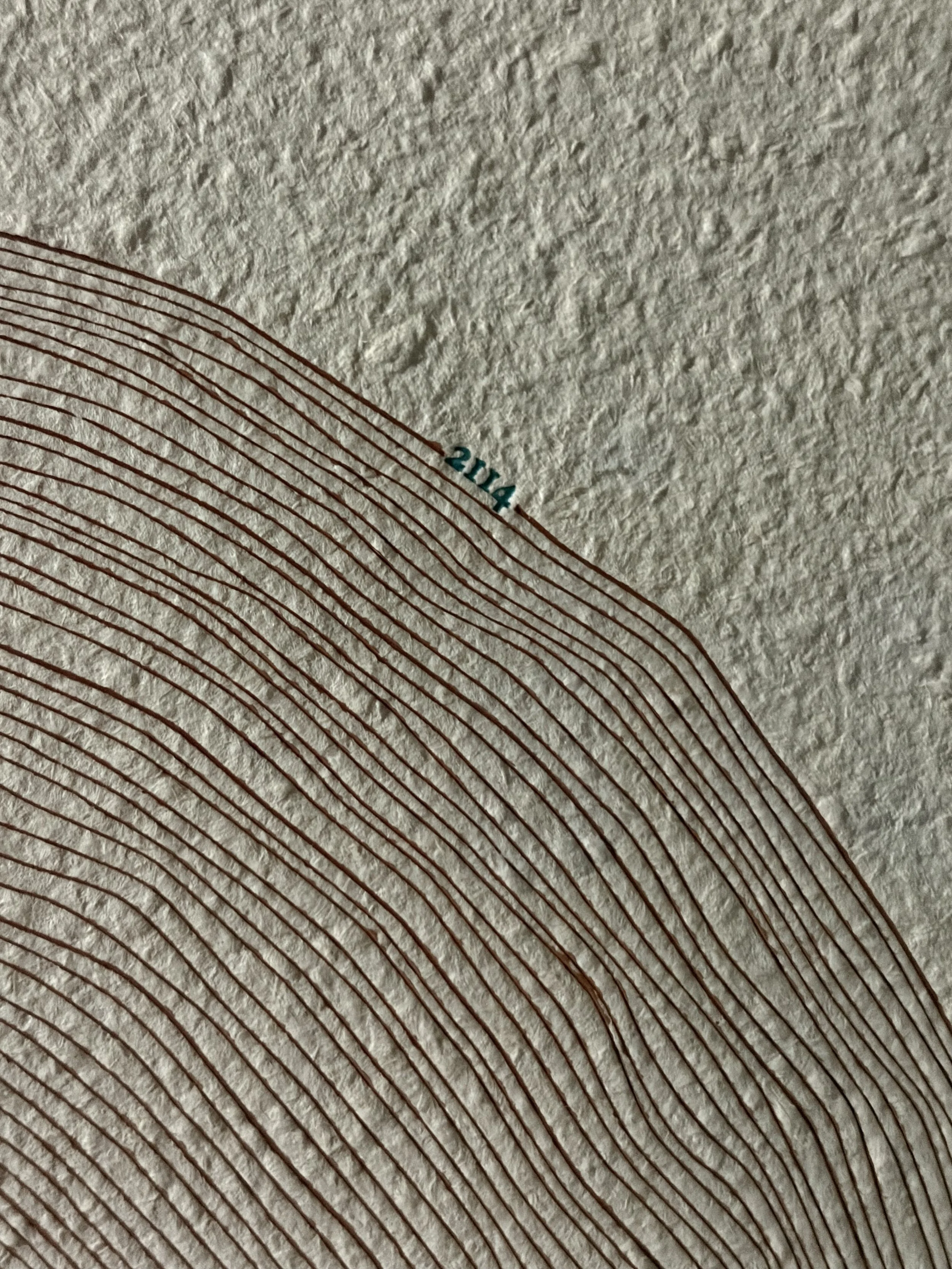
Detail of print which represents: Katie Paterson, Future Library , 2014-2114. Double-sided foil block print, 42 cm x 29.7 cm. Boswell Collection, University of St Andrews. Image courtesy of the author.
This is an exhibition which invites newcomers to the world of Scottish art, but also those who are willing to reconsider their perception of it. The work featured on the promotional posters and flyers is aptly hung in the ‘Shattering Stereotypes’ section. Alexander Moffat’s The Rock (The Radical Road) (1988-9) is an imposing and abstracted image of Arthur’s Seat in Edinburgh. The dramatic red sky which clashes with the greenish hues of the hill and draws the dwarfed city into high contrast is far from the romanticised view often peddled of the ultimate city viewpoint. Instead, the piece and its title focusses on the path (the Radical Road) which was built by unemployed weavers following the 1820 Radical War. This was, in fact, not a war at all, and rather a series of workers’ protests against unfair conditions. Though this specific path is now closed due to concerns around safety, still the great touristic pilgrimage to the top of Arthur’s Seat remains unconsciously a manifestation of the city’s working-class history, and many endure the gruelling slog to the top without ever knowing the ground they walk on was literally shaped by inequality.
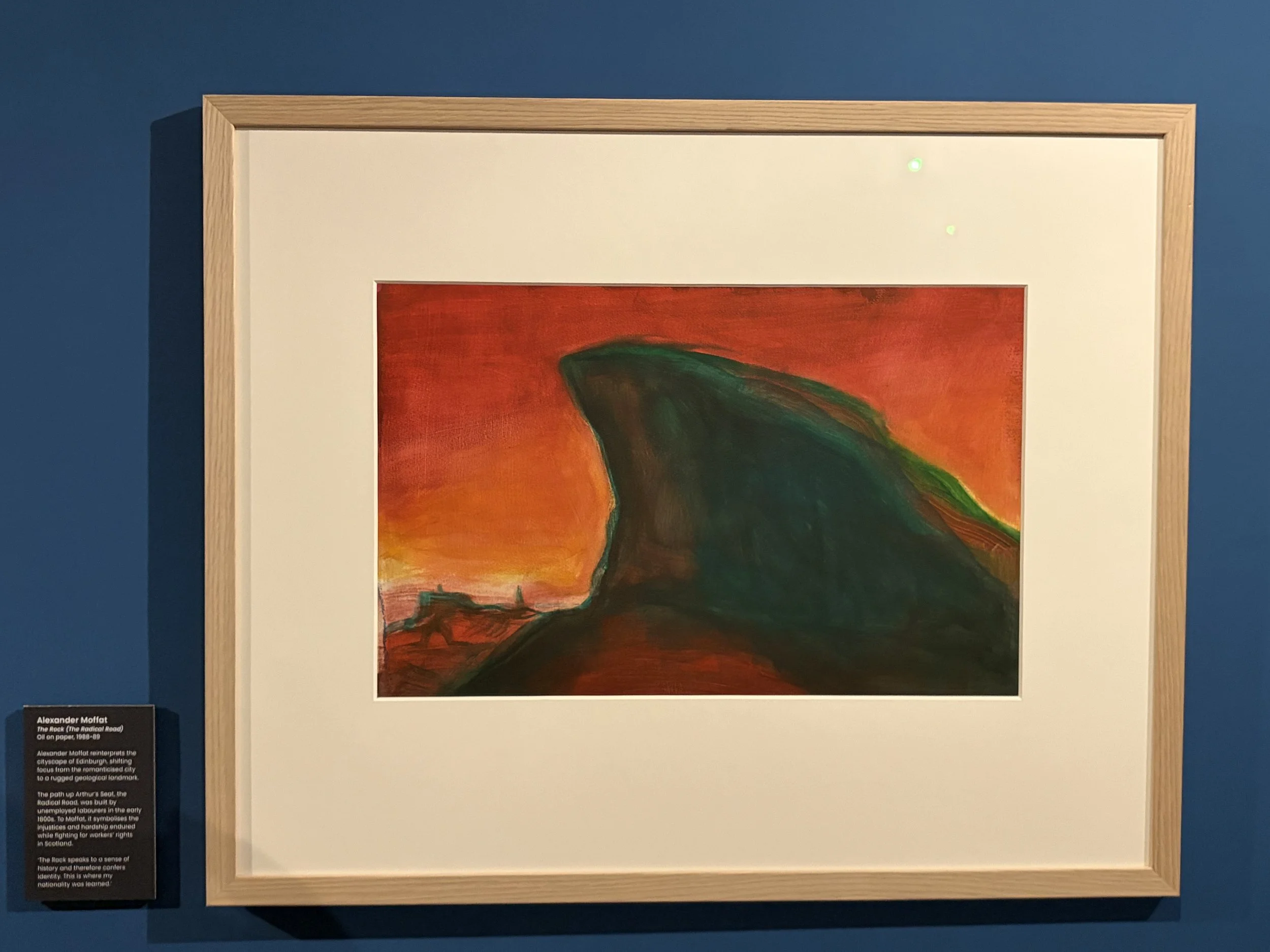
Image of: Alexander Moffat, The Rock (The Radical Road), 1988-9. Oil on paper. The Boswell Collection, St Andrews. Image courtesy of the author.
Unfortunately, there is no shortage of injustice in Scottish history to mine for display at the Wardlaw. The 2015 satirically feminised and anonymised football strip by Atelier E. B. speaks to the difficulties faced by Scotland’s female players, a beautiful 1912 painting by Dorothy Johnstone tugs at the heartstrings when viewed in tandem with the knowledge that she had to give up working as an artist by law when she married, and Sekai Machache’s 2021 film Profound Divine Sky calls into question the nature of heritage and a claim to the land in Scotland, a country which is not without a colonial history.
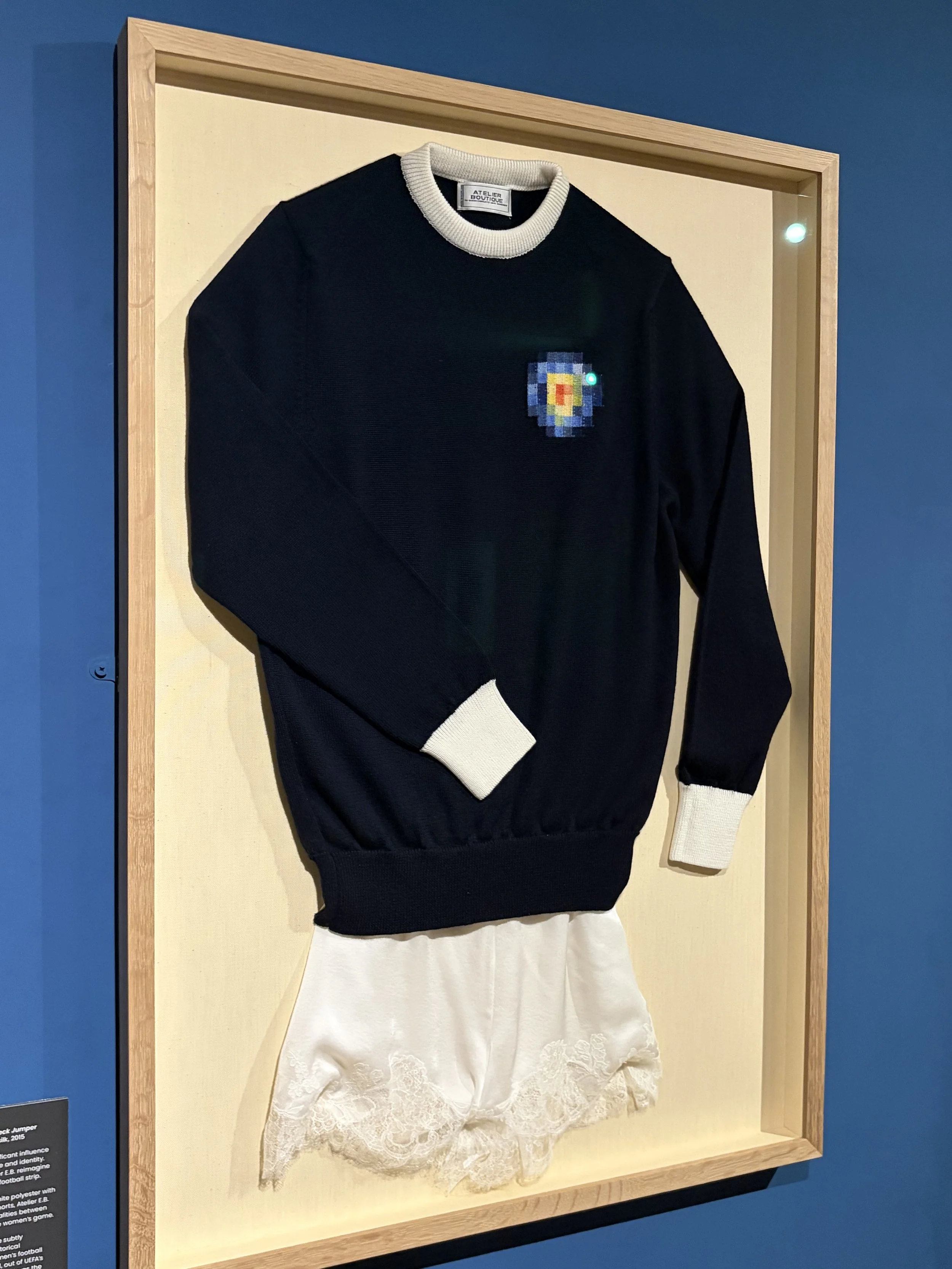
Image of: Atelier E. B., Dalglish Round Neck Jumper, 2015. Merino wool and silk, 104.7 x7 1.7cm. The Boswell Collection, St Andrews. Image courtesy of the author.
The exhibition is not, however, solely intended to feature artworks which demonstrate or encapsulate much-critiqued aspects of Scotland’s history and culture. Works such as William McCance’s Woman Seated at an Easel (c. 1930), which embraces the contemporary Cubist style, or Alison Watt’s Untitled (Special Edition, 2004) (2004), a ‘portrait’ of a folded piece of material which challenges our view of what it means to be a portrait artist, demonstrate the participation of Scotland in the perpetual artistic drive towards the future, inducting its artists into prestigious traditions often founded by or synonymous with household names like Picasso. The exhibition also celebrates artists whose themes and styles remain more domestic, such as thematically similar but stylistically entirely different works like John Bellany’s Woman of the North Sea (1997) and Mhairi Killin’s An Taisdeal II (2012), which celebrate the coastline and maritime culture of Scotland.
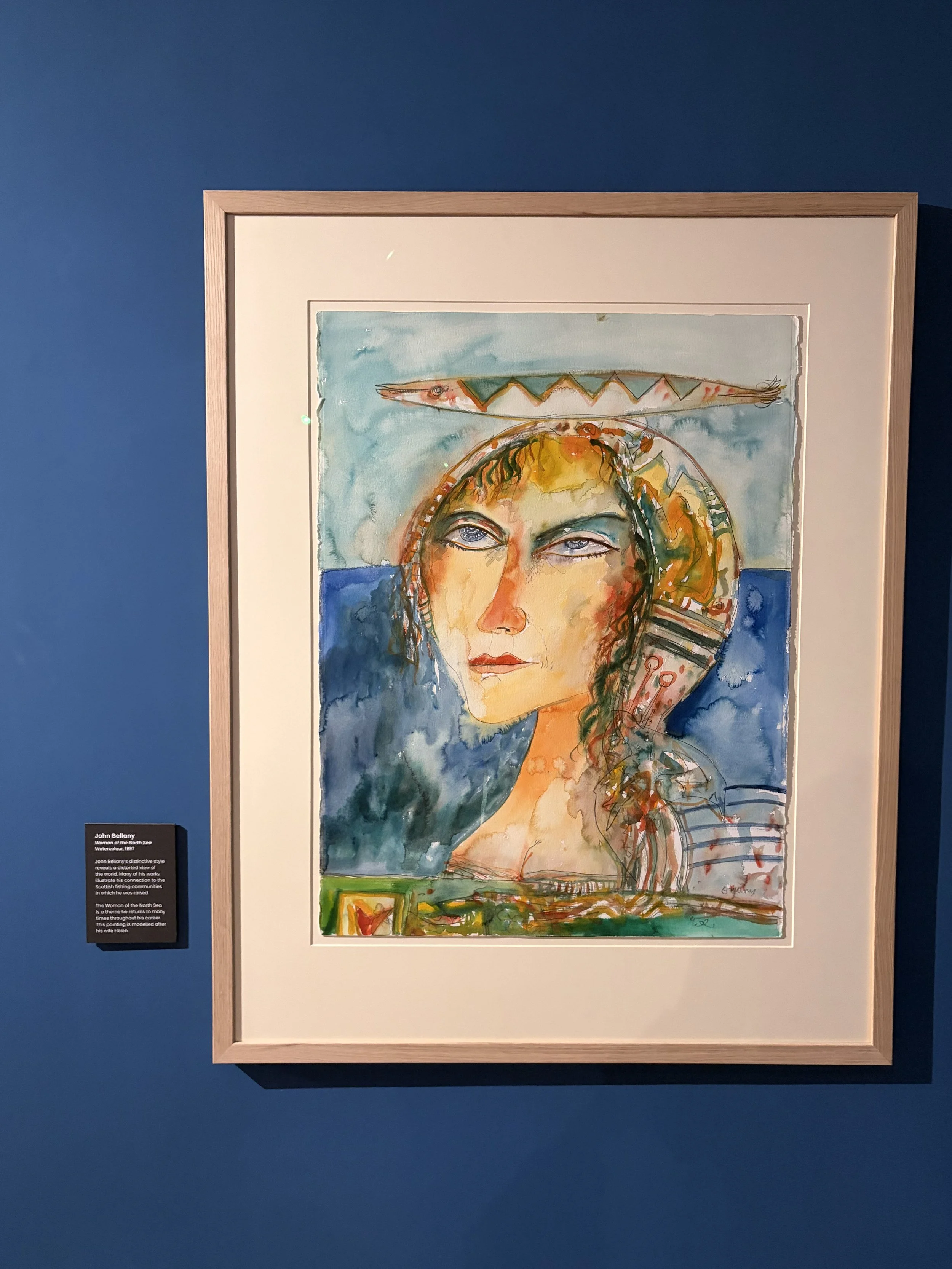
Image of: John Bellany, Woman of the North Sea, 1997. Watercolour and pencil on paper, 114cm x 92.5cm (framed). The Boswell Collection, St Andrews. Image courtesy of the author.
This was what I noticed, and these were my highlights, but I am certain that I haven’t spoiled it for any potential visitors. There is plenty more to see, and indeed in a university town such as St Andrews, an international community of like-minded people is fostered, all of whom decided to come to this part of Scotland, whether from within Fife or the opposite side of the globe. We are a group of people uniquely placed to appreciate such a diverse and all-encompassing exhibition. Indeed, after my visit I got in contact with Struan Watson, assistant curator at the Wardlaw, both to let him know how much I had enjoyed myself and ask if there was anything he would like to tell HASTA’s readers. Hopefully his words below, alongside my discussion of a few personal favourites will encourage people to visit the exhibition in its final weeks!
“From These Parts: Scotland, Art and Identity celebrates 30 years of collecting modern and contemporary Scottish art at the University of St Andrews held in the Boswell Collection. It is one of a number of exhibitions being held across Scotland in 2026 highlighting the bicentenary of the Royal Scottish Academy of Art and Architecture as part of its 'RSA200: Celebrating Together' project.
“Today, the Boswell Collection represents over 50 artists, many of whom feature in the exhibition. This is supported by 5 artworks on loan from the RSA, including Joan Eardley RSA, WIlliam McTaggart RSA, and Dorothy Johnstone ARSA. Visitors will have the chance to see 120 years of Scottish art history across these two important collections, showing how this nation's artists have embraced and contributed to Scotland's changing cultural landscape.”
‘From These Parts: Scotland, Art and Identity’ is on at the Wardlaw Museum, St Andrews, until Sunday 15th February 2026. Entry is free. Thank you for Struan Watson for taking the time to reach out to me.
Bibliography:
Garry, James. “Edinburgh’s Radical Road - its history, its uncertain future.” The Cockburn Association, 18th July 2024. https://www.cockburnassociation.org.uk/history-blogs/edinburghs-radical-road-its-history-its-uncertain-future/.