Lee Krasner (1908-1984)
By Josh Warnock
Lee Krasner was born Lena Krassner in Brooklyn, New York on 27th October 1908 to Russian-Jewish immigrants from Odessa, Ukraine. She resolved her early teens to become an artist. Following her attendance at Washington Irving High School - one of the few schools in the city to offer young women serious art instruction – Krasner commenced studying at the Women’s Art School of Cooper Union (1926–28), before the Art Students League (1928) and later the National Academy of Design (1929–32). At some point during in these years Lena became Lee - a change that did not announce her sex to the critics and dealers. Her determination was matched by a refusal to be satisfied, and throughout her life she reconstituted, painted over and discarded work she deemed unresolved. Through this we shall find that her career is shaped by repeated rupture and rebuilding.
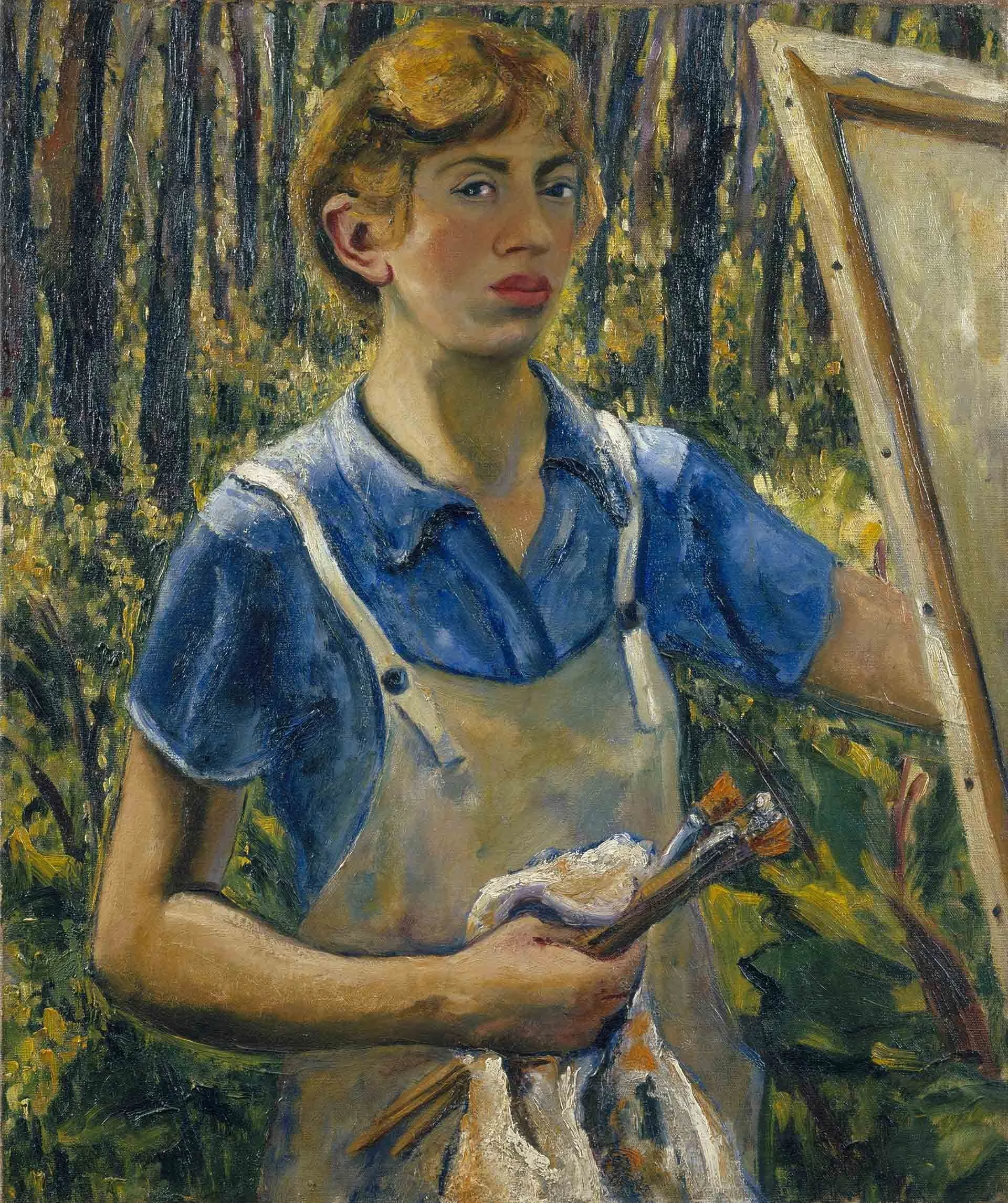
Lee Krasner, Self-Portrait (c. 1928) Oil on canvas, 76.5 × 63.8 cm, The Jewish Museum, New York
Painted while she was still a student, this early self-portrait records a young artist asserting her place within the tradition of academic portraiture, the discipline from which her later work would depart. It is a statement of intent as much as a likeness.
Through the 1930s Krasner supported herself through the Federal Art Project, working for the programme until 1943. From 1937 to 1940 she studied with Hans Hofmann, whose teaching introduced her to Cubism and the colour of Matisse. Hofmann reportedly praised one of her drawings by remarking: ‘This is so good, you would not know it was done by a woman’. An adage that captures the conditions in which she worked. In 1940 she joined the American Abstract Artists, an association committed to abstraction at a time when it was still marginal in America. Around this time, Krasner met Jackson Pollock, and in 1942 they exhibited together in French and American Painting, organised by John Graham. Krasner introduced herself at his studio after seeing his work, and the two began a relationship that would define both their lives.
They married in 1945 and moved to Springs, Long Island. Pollock took the barn as his studio, while Krasner worked in a spare bedroom of the farmhouse. Out of these domestic limits came the Little Image paintings (1946–50), small, densely worked canvases built from repeated marks and fragmented grids. She later likened them to Hebrew script, a writing she had learnt as a child, legible in form but not in meaning. The comparison suggests an art concerned with language and concealment, a generally enigmatic sensibility, abstaining all ability of being immediately understood.
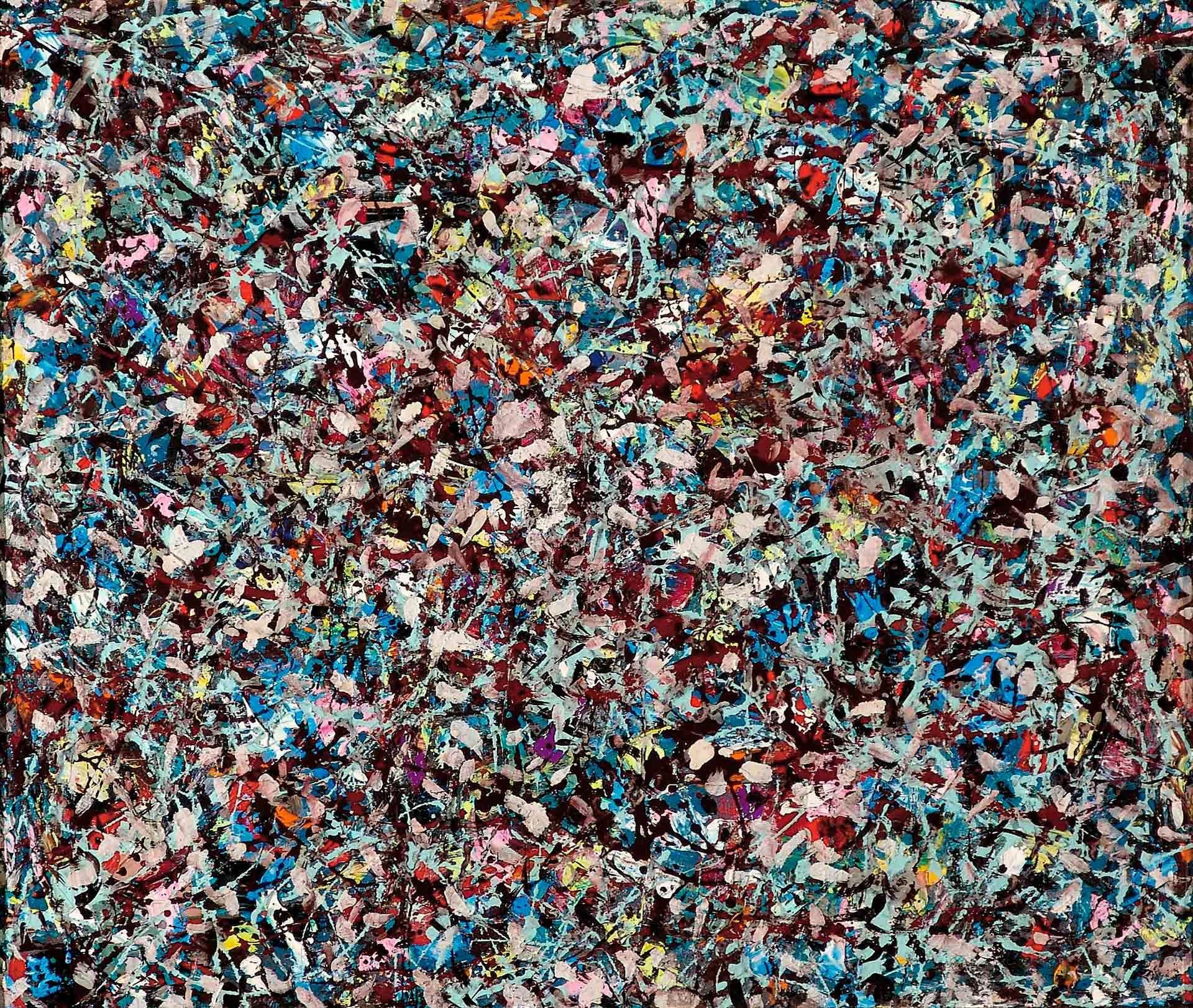
Lee Krasner, Shattered Colour (1947) Oil on canvas, 53.3 × 66 cm, Guildhall Museum.
Krasner’s first solo gallery exhibition took place at the Betty Parsons Gallery in 1951; the reception was muted and she responded, as she often did. Between 1953 and 1955 she tore up her own drawings and rejected canvases, including life studies from her years with Hofmann, and recomposed them as collages. Destruction is thus becomes a method out of perceived failure. With the fragments reassembled into new, rhythmic wholes, Milkweed (1955) demonstrates how violence and growth coexist in a single composition, with its torn edges conceding a veritable lyricism.
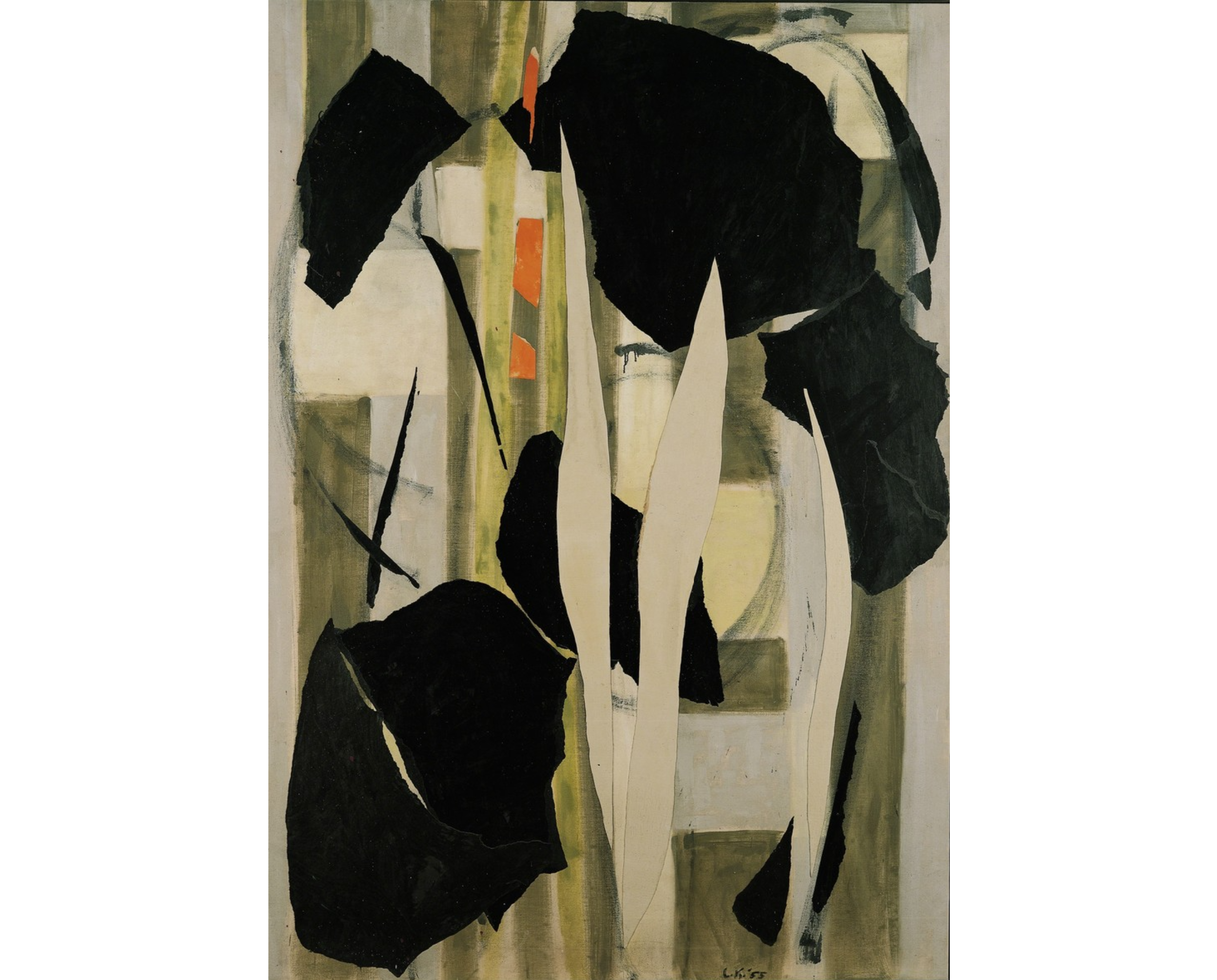
Lee Krasner, Milkweed (1955) Oil, paper and canvas collage on canvas, 213.4 × 149.9 × 3.8 cm.
Pollock died in a car crash on 11 August 1956, aged forty-four. In the aftermath, Krasner moved into the barn and began to work on a scale her earlier studio had never allowed. In the Umber series (1959–62), sometimes referred to as the Night Journeys, she painted at night through a period of insomnia, limiting herself to earth tones and off-white. The canvases are large and gestural, their composition taking in the whole sweep of the arm. They have none of the considered restraint of the Little Images. In The Eye Is the First Circle (1960), a curving form rolls across the surface, and as a release of breath, it collapses somewhere between the enormity and the intimacy found within.
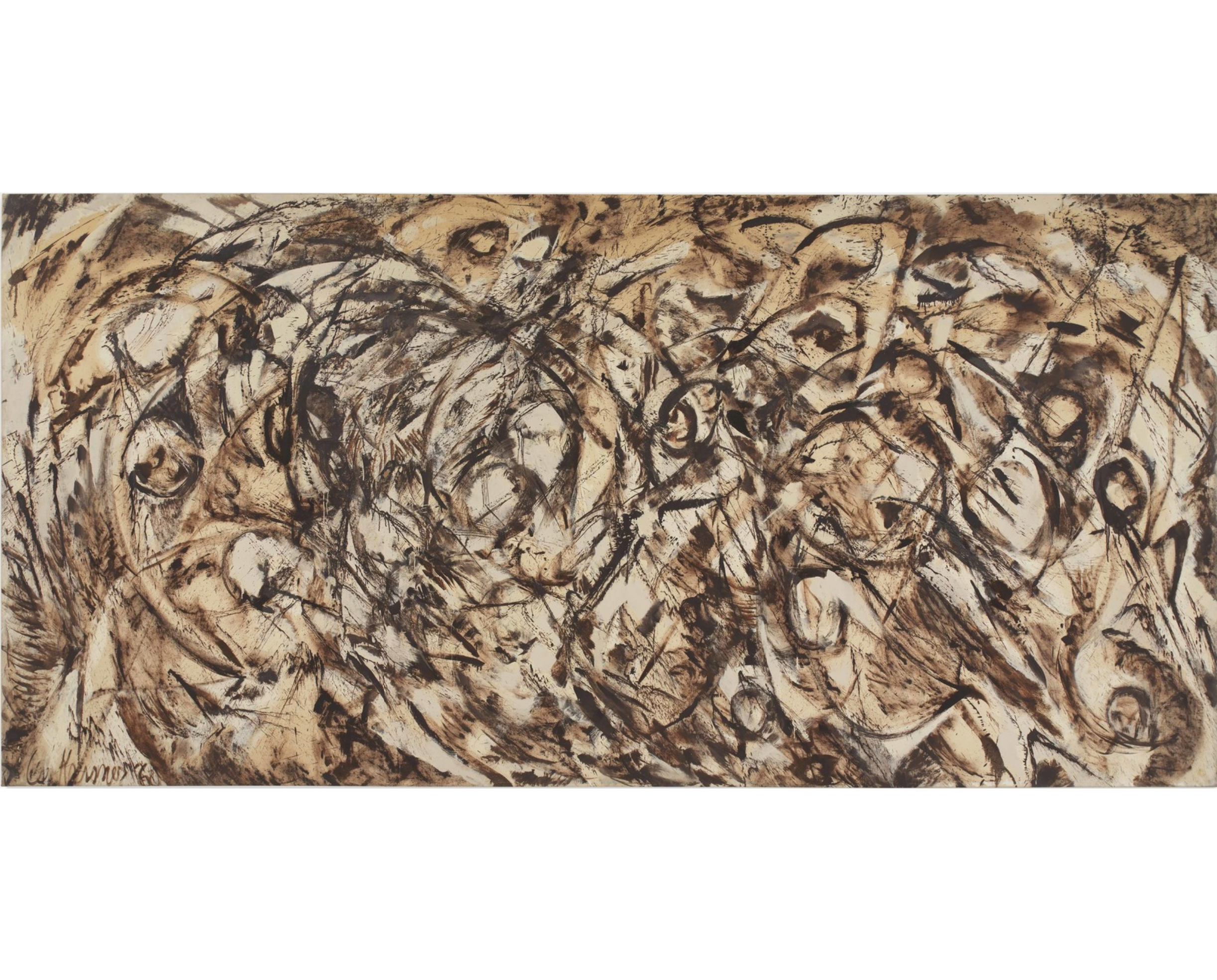
Lee Krasner, The Eye Is the First Circle (1960) Oil on canvas, 235.6 × 487.4 cm, Royal Academy of Arts.
In the 1960s she returned to colour, and in the monumental Gaea (1966) the abstract field feels at once bodily and mythic, as the title suggests. Recognition followed, slowly and then widely. The Whitechapel Gallery in London gave her a solo exhibition in 1965, the Whitney Museum of American Art held a retrospective in 1973, and a major retrospective organised by Barbara Rose was shown in Houston and at the Museum of Modern Art in New York in 1983–84. Krasner died in New York on 19 June 1984. Her will established the Pollock-Krasner Foundation, which continues to support working artists. In 2019 the Barbican in London mounted Lee Krasner: Living Colour, a reminder that her reputation was never simply that of Pollock’s widow.
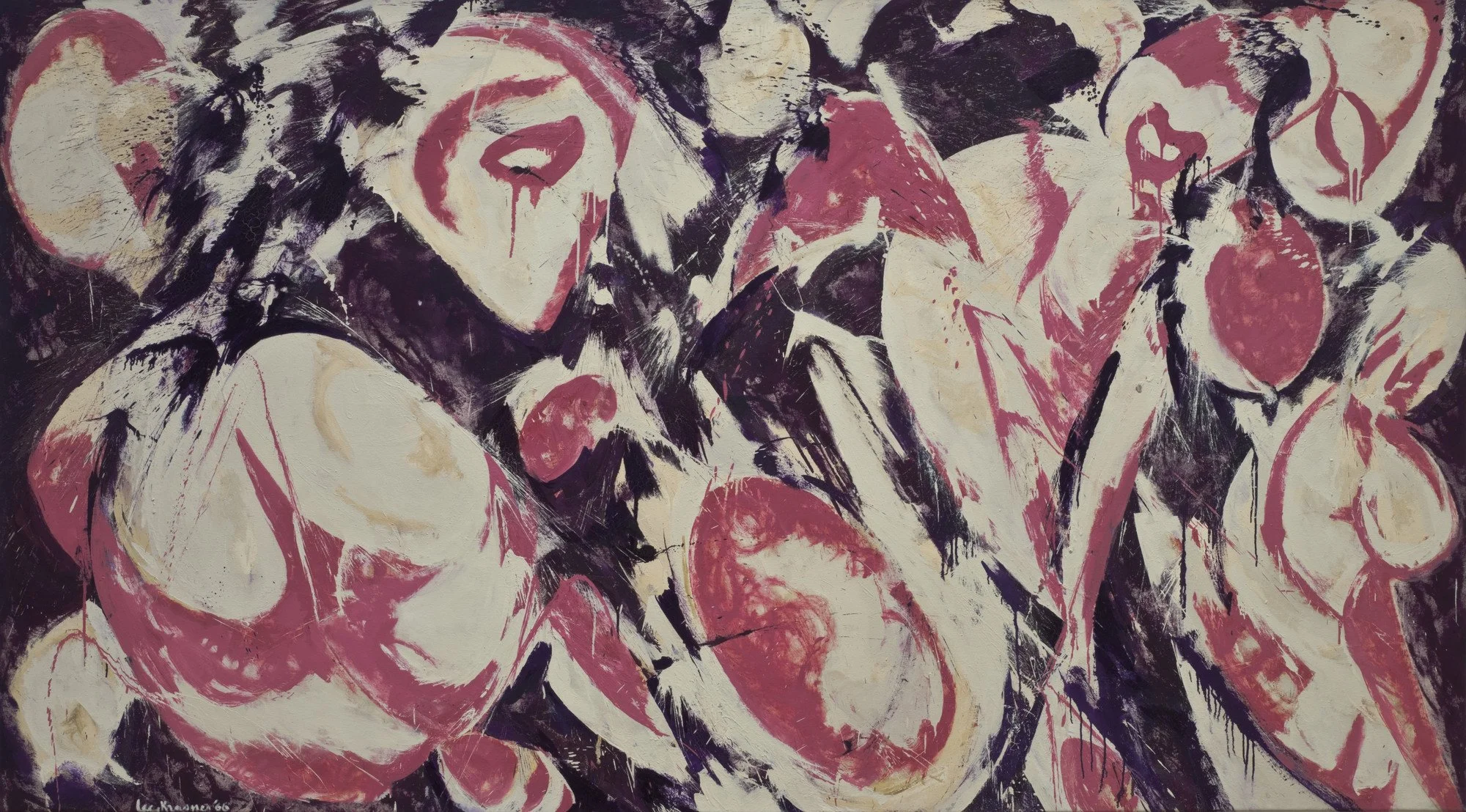
Lee Krasner, Gaea (1966) Oil on canvas, 175.3 x 318.8 cm, MoMA.
Krasner’s art is continually remade, posing the question of what remains when a work is torn apart and begun again. For an artist so often cast in the shadow of another, this practice of reinvention was perhaps a way of insisting on authorship.
Bibliography
Hobbs, Robert. Lee Krasner. New York: Abbeville Press, 1993.
Landau, Ellen G. Lee Krasner: A Catalogue Raisonné. New York: Harry N. Abrams, 1995.
Levin, Gail. Lee Krasner: A Biography. New York: William Morrow, 2011.
Munro, Eleanor. Originals: American Women Artists. New York: Simon and Schuster, 1979.
Naifeh, Steven, and Gregory White Smith. Jackson Pollock: An American Saga. New York: Clarkson N. Potter, 1989.
Nairne, Eleanor, ed. Lee Krasner: Living Colour. London: Barbican Art Gallery, 2019.
Nemser, Cindy. Art Talk: Conversations with Twelve Women Artists. New York: Charles Scribner’s Sons, 1975.
Rose, Barbara. Lee Krasner: A Retrospective. New York: Museum of Modern Art; Houston: Museum of Fine Arts, 1983.
Wagner, Anne M. Three Artists (Three Women): Modernism and the Art of Hesse, Krasner, and O’Keeffe. Berkeley: University of California Press, 1996.