By Millie Barker
Last week, India’s Cabinet approved plans for a $340 million ‘mega-museum’ in New Delhi. The first gallery is expected to open in 2027, though the project will take several years with completion anticipated in the 2030-31 financial year. The museum will be called Yuge Yugeen Bharat which translates to “India through the ages” and references the country’s Sanskrit name, capturing the institution’s impetus to celebrate India’s pre-colonial cultural identity. The site furthers this momentum as the museum will occupy the former civil service offices in the capital, designed by British architects Edwin Lutyens and Herbert Baker in the 1920s, a physical palimpsest reclaiming history.
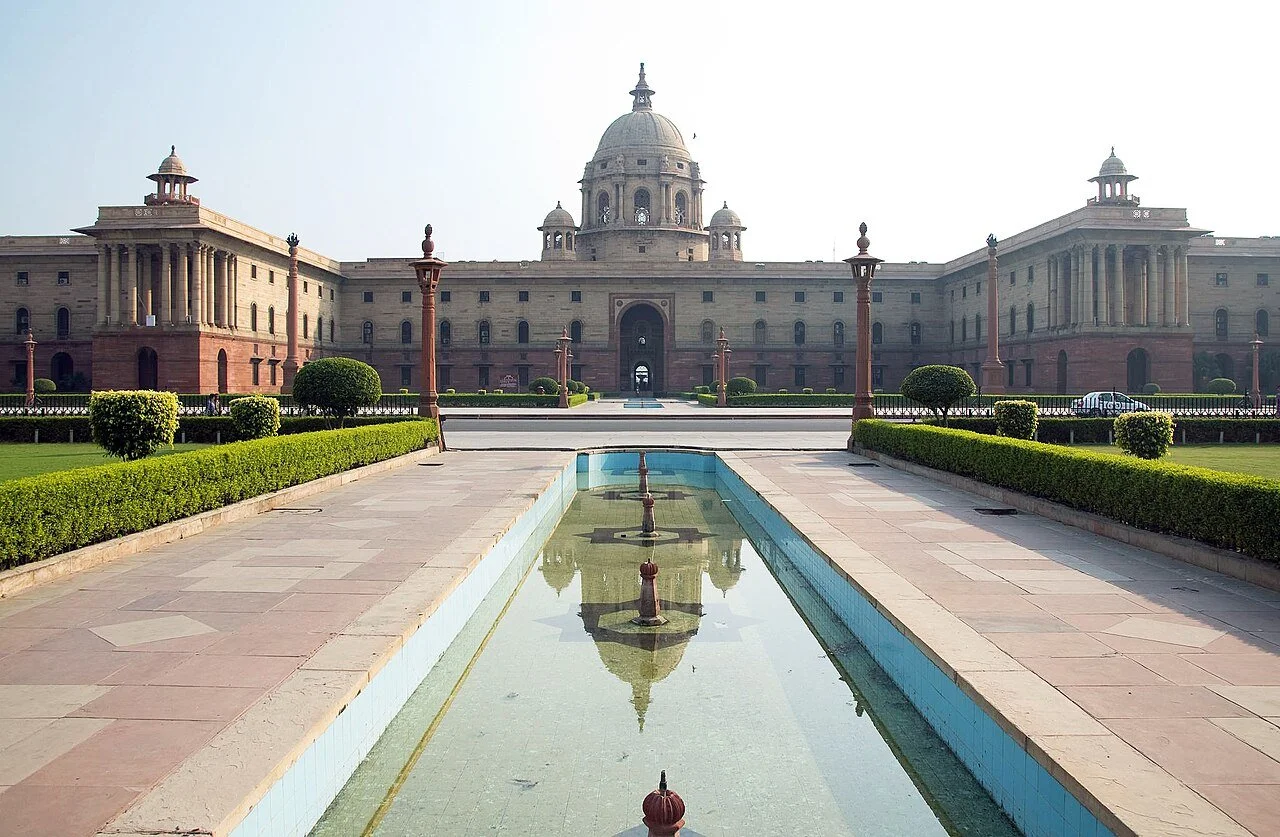
North block of the Secretariat building, New Delhi where the museum will be constructed.
Image courtesy of Laurie Jones, Flickr.
The museum is anticipated to be open to 10 million annual visitors and exhibit a collection of over 1.8 million items to tell the story of Indian civilisation across the past thousand years. Such site and scale will firmly cement the museum as India’s new cultural centre and projected as the largest display area in the world, greater than the Louvre, willunequivocably place India on the world stage. The project appears the pinnacle of Priminister Narendra Modi’s intention to elevate India’s heritage and global standing, a mission he has pursued since entering the office in 2014.
The Delhi ‘mega-museum’ has a parallel paradigm in the success of the Grand Egyptian Museum in Cairo. This week, the institution reported that it is has attracted 4 million visitors since its opening in November 2025. The popularity of the museum is projected to grow in parallel with the expected increase in the overall number of tourists visiting Egypt in the coming years, despite persistent tensions in the Middle East. Indeed, it is remarkable to see how the museum has retained tourist engagement despite conflict in neighbouring territories. The engagement shines a rather illuminating light on how business as usual can proliferate while war-torn devastation prevails just next-door.
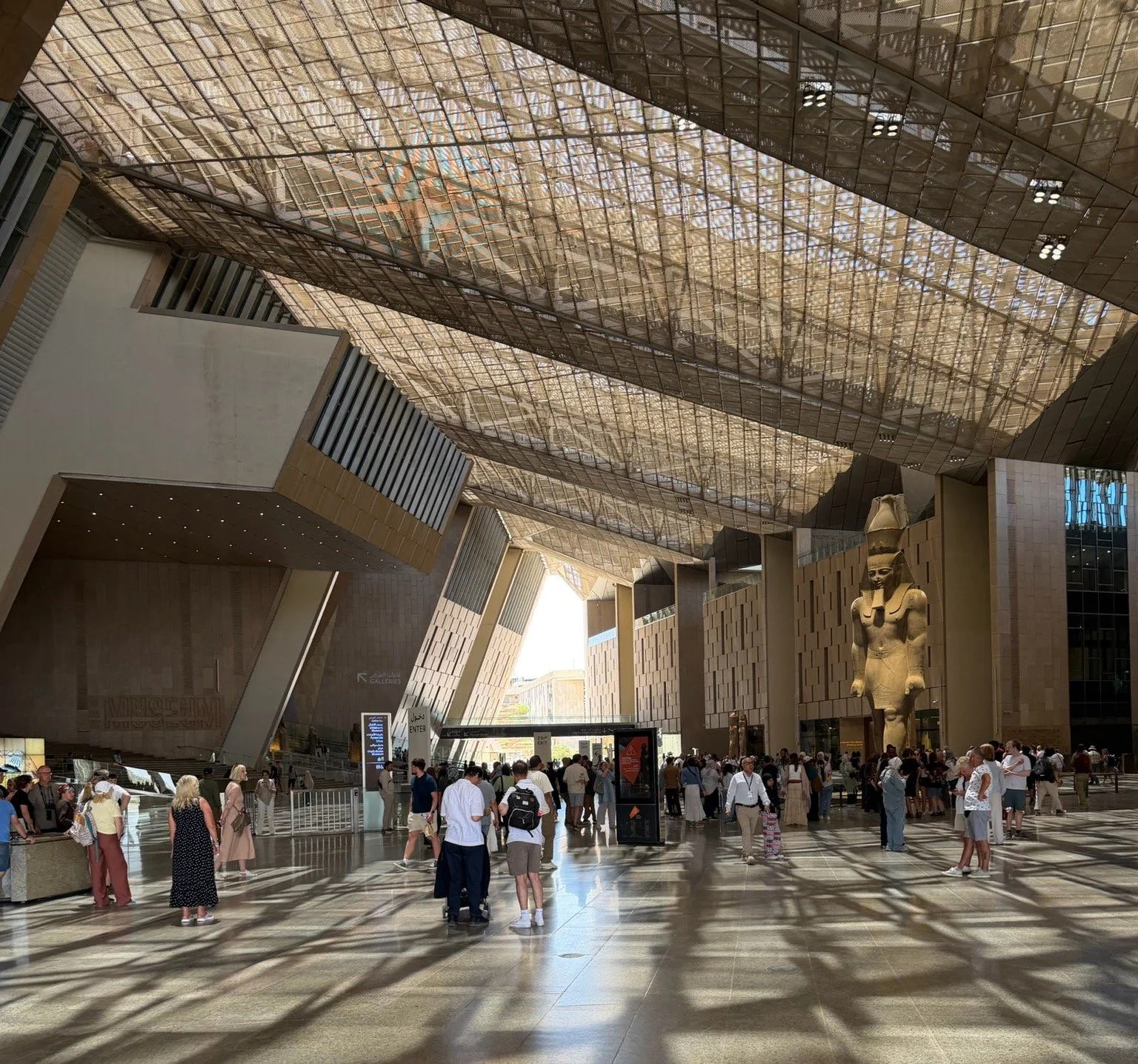
The cavernous entrance hall of the Grand Egyptian Museum.
Image courtesy of author.
On a different tone, business as usual returned for many entering their office morning, likely letting out a slight sigh – whether in relief or disappointment is up to your discretion – as your inbox was full and your outbox empty. Microsoft’s outage on Friday 13th November indoctrinated a four-day working week for many, as it seemed best to call it a day and head to the pub, but, on a more serious tone, significantly impacted digital communications across the world. The outage highlighted our acute digital vulnerability, especially in the wake of warnings from the UK government to prepare for a possible cyber-attack.
I believe there is a parallel between the tech-giant and the mega-museum that can be prodded. Microsoft has dominated the market for the last few decades, leveraging its unique selling point as a global digital ecosystem to increase its market standing. But the outage poses a significant question about the risk such a large ecosystem poses to infrastructural resilience. Is this a counterpart that we must be cautious of in the art world? In a world facing increasing geo-political crises, is it truly wise for us to put all our metaphorical eggs inside one museum basket?
There is a fine balance to be walked between accessibility and resilience, pros and cons of resource allocation and financing decisions to be weighed up. Nevertheless, I believe the Microsoft outage offers an impetus to reevaluate the large-scale models that increasingly structure the art world. More than resilience to severe weather or political risk, there is an underlying question hidden within the headlines of last week; if we consolidate the history of our country into the hands of relatively few, who do we consign the power to dictate our future?
Bibliography
Elkhodr, Mahmoud. 2026. Microsoft Has Suffered a Global Outage. A Tech Expert Explains What Went Wrong. November 13. https://doi.org/10.64628/aa.dtcgtakss.
France-Presse, Agence. 2026. ‘India to Build Museum with World’s “Largest Display Area”’. The Manila Times, November 13. https://www.manilatimes.net/2026/11/13/world/asia-oceania/india-to-build-museum-with-worlds-largest-display-area/2468394.
KYODO NEWS. 2026. ‘Grand Egyptian Museum Attracts 4 Mil. Visitors Despite Mideast Tensions’. Japan Wire by Kyodo News, November 14. https://english.kyodonews.net/articles/-/91405.
Taylor, A. R. E. 2026. The Microsoft Outage Is an Urgent Wake-Up Call for Greater Digital Resilience. November 13. https://doi.org/10.64628/ab.kxhna9s7x.