Dark Art: Jeffrey Epstein and his abuse of the art market
By Ian Ziegler
It has been difficult to go anywhere without hearing the name ‘Epstein’ in recent years, particularly following the re-election of President Trump, a longtime associate of Jeffrey Epstein. But this is not another article about the Epstein–Trump relationship. Instead, it examines a lesser-discussed aspect of Epstein’s operations: his use of the art market as a financial tool.
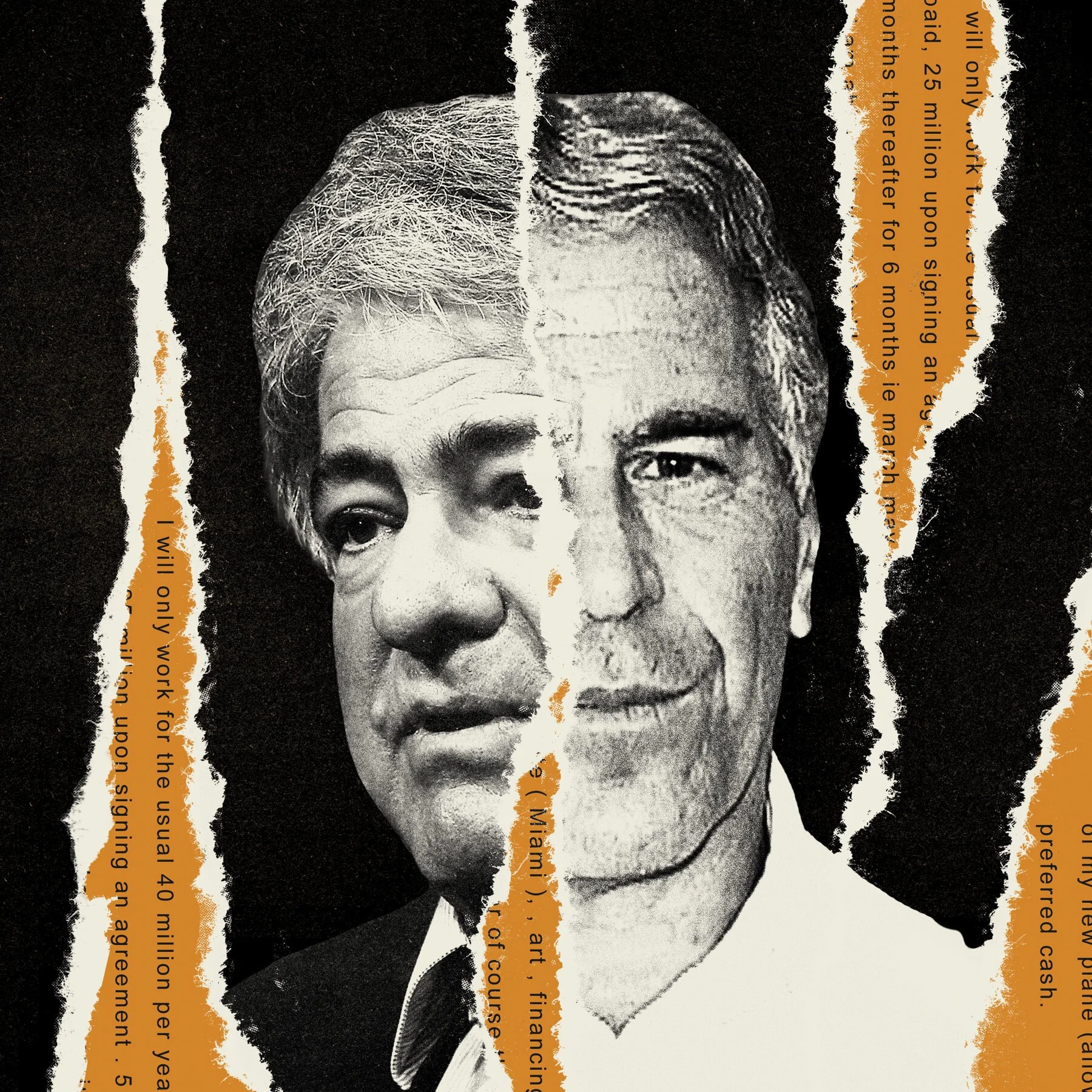
Collage of Leon Black and Jeffrey Epstein.
Courtesy of the New York Times, Joan Wong.
Epstein exploited a system already tilted in favour of the ultra-wealthy. Through it, he helped generate hundreds of millions of dollars not only for himself but also for the powerful clients who paid him. With immense wealth came immense influence, and within elite circles that influence often fostered a sense of untouchability. Epstein understood how to move money, grow it, and conceal it, funnelling funds through trusts, shell companies and art. His use of the art market highlights not only the inequalities embedded in modern finance but also how institutions can enable those who need assistance the least.
Before his arrest, Epstein was known in elite circles as a money manager capable of producing enormous returns. His services were extraordinarily expensive - reportedly costing tens of millions of dollars a year for a single client - yet the promise of wealth and financial discretion kept the ultra-rich coming back.
Art has long carried both cultural prestige and financial value. Works pulled from obscurity can turn artists into legends and collectors into tastemakers. For Epstein and associates such as billionaire Leon Black, media executive Steve Tisch of NYU’s Tisch School of the Arts, former French Minister of Culture Jack Lang, and collector Jean Pigozzi, art represented something else as well: a vehicle for preserving and expanding wealth.
For years, speculation about Epstein’s relationship with the art world remained limited. Investigative reporting and the release of millions of documents have since shed new light on those connections. Reports suggest Epstein advised Leon Black on art acquisitions, helping build a multi-billion-dollar collection between 2012 and 2017, years after Epstein had already been convicted in Florida for soliciting minors.
One mechanism involved using artworks as collateral for loans. High-value pieces could secure financing at extremely low interest rates, often far below those available to ordinary borrowers. By structuring transactions through art purchases, loans and corporate entities such as LLCs, wealthy collectors could access liquidity while minimising their tax exposure. Epstein reportedly charged substantial advisory fees, profiting handsomely from the arrangements.
While Epstein helped assemble collections that included works by artists such as Rembrandt, Titian, Edvard Munch, Pablo Picasso and Andy Warhol, his own collection appeared far more unusual and troubling. Some pieces reportedly depicted disturbing themes involving youth and sexuality, while others were overtly provocative, including works referencing political figures such as former President Bill Clinton. Elements of Epstein’s private collection seemed to reflect a fascination with controversy, power and transgression.
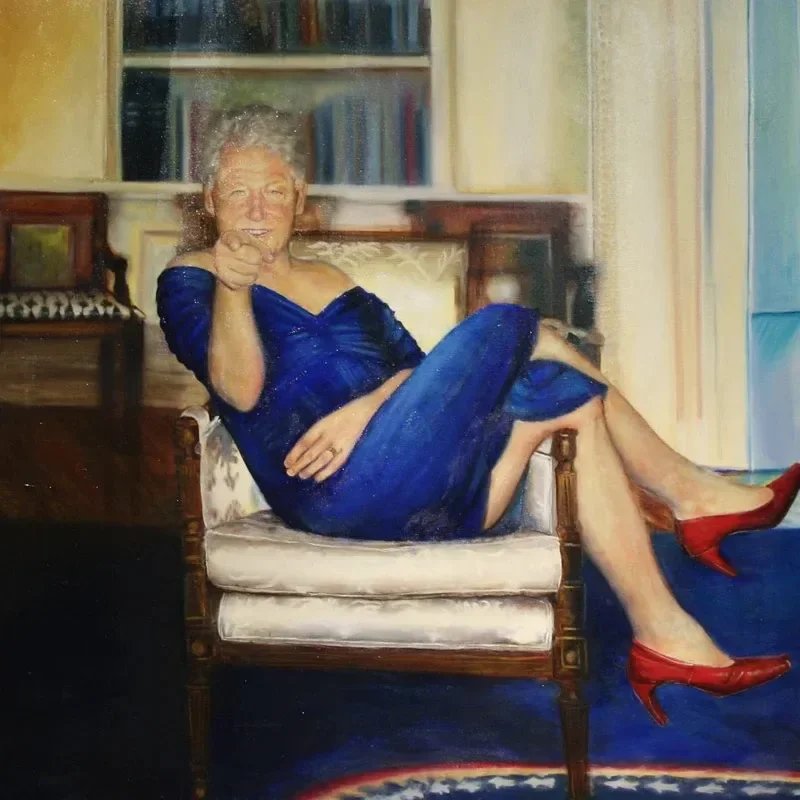
Petrina Ryan-Kleid, Parsing Bill (2012).
Image courtesy of the New York Academy of Art.
The broader lesson is not simply about Epstein himself. The ultra-wealthy have long relied on complex financial structures to preserve and grow their fortunes, often in ways unavailable to the public. The art market - opaque, lightly regulated and capable of moving enormous sums of money - can function as one of those mechanisms.
Most of the individuals connected to Epstein socially or financially have not been convicted of crimes related to his abuse. Yet their associations raise uncomfortable questions about the networks of power that allowed him to operate for so long. If art can be used to transfer wealth through shell companies and opaque transactions, Epstein’s case may represent only a glimpse of a much larger system.
The art market has received relatively little attention in discussions of Epstein’s finances. Perhaps it deserves more. If one financier could leverage it so effectively to move money, shield assets and build influence, it is unlikely he was the only one.
Bibliography
ARTnews. “The Pink Room Mural.” In “Jeffrey Epstein Files Reveal Artists Denounced Him More Than 20 Years Ago and Other Revelations.” https://www.artnews.com/list/art-news/news/jeffrey-epstein-files-art-reveals-1234767764/the-pink-room-mural/.
Deresh, Mariia. “Newly Released Epstein Records Detail Financial Ties Linking Billionaire, Art Adviser and Epstein.” Organized Crime and Corruption Reporting Project (OCCRP). February 20, 2026. https://www.occrp.org/en/news/newly-released-epstein-records-detail-financial-ties-linking-billionaire-art-adviser-and-epstein
Frank, Robert. “Epstein Files Highlight How the Wealthy Borrow Against Art Collections.” CNBC. February 24, 2026. https://www.cnbc.com/2026/02/24/epstein-files-wealthy-borrow-against-art-collections.html
Kinsella, Eileen. “Jeffrey Epstein’s Connections in the Art World, Explained.” Artnet News. December 19, 2025. https://news.artnet.com/art-world/jeffrey-epstein-art-world-connections-2732681.
Ware, Joe. “Prominent Art World Figures Named in Latest Epstein Files, Including France’s Ex-Culture Minister Jack Lang.” The Art Newspaper. February 4, 2026. https://www.theartnewspaper.com/2026/02/04/prominent-art-world-figures-named-in-latest-epstein-files-including-frances-ex-culture-minister-jack-lang