An Exhibition of One’s Own
By Josh Warnock
Some are fortunate enough to have exhibitions within reach, whether by luck of location or by means. Those of us who are not quite so must find some other way to satisfy the need to look at beautiful things. Woolf, writing about what a woman requires to produce fiction, named money and a room of one's own — a material threshold, and a fair one for making art. But looking is not making. For one’s own exhibition, the threshold is only curiosity. What follows are a few places to begin.
Film:
Film is likely the most accessible way in which one may interact with art, chiefly in that it costs very little and goes an awfully long way — particularly if one were to indulge in some absurdly long foreign film, which is to say Béla Tarr's Sátántangó. Seven and a half hours, and one need not queue for the cloakroom. For film which foregrounds the image over the plot, or which tells its story somewhat unconventionally, I would recommend investing in an online distributor of independent cinema; a month's subscription costs less than a single gallery ticket (and that is before the student discount) which I think settles the question of extravagance. In my case this is Mubi, though I can also recommend Criterion Collection as well.
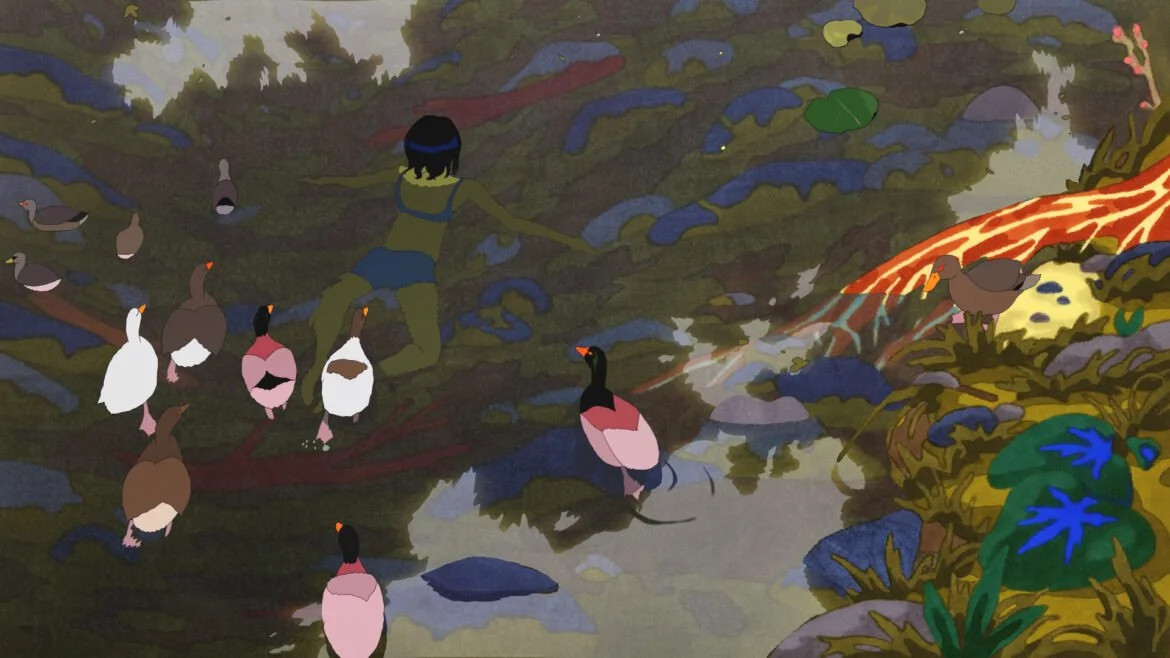
Still from God is Shy. Image courtesy of Le Court-Clermont.
As a starting point for my recommendations, though of course highly subject to my personal taste, you must see Jocelyn Charles’ God is Shy: a look into the perverse human desire to know all, even when it invariably has the most adverse of affects. It portrays the most cosmic of horrors, contrasted with a wonderfully bright animation style that almost evokes the aesthetics of Giallo thrillers of the 1970’s. All packed into a neat sixteen minutes.
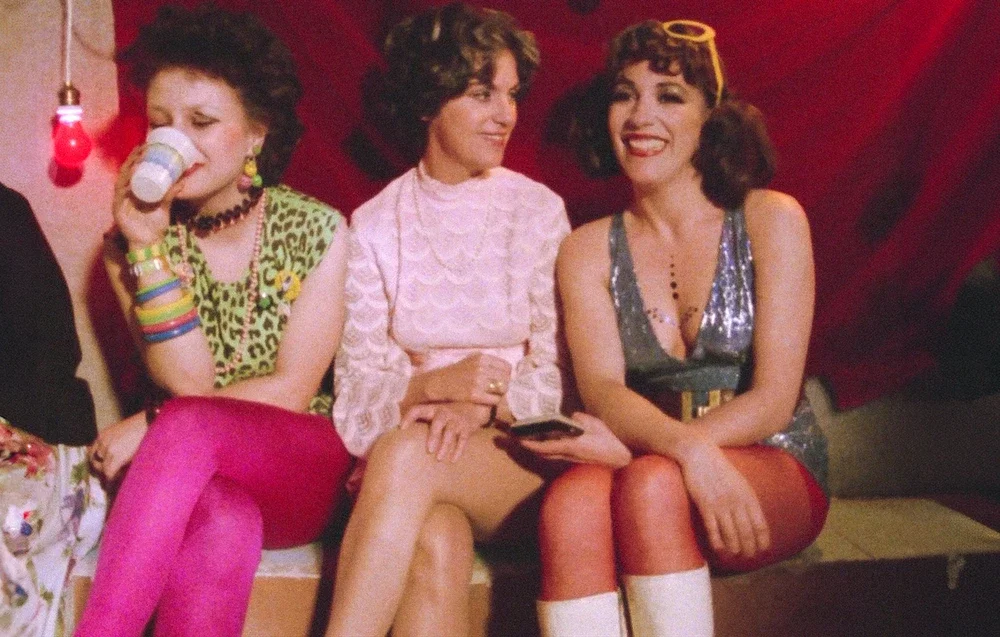
Still of Pepi, Luci, Bom and Other Girls Like Mom (1980). Image courtesy of Mubi.
Secondly, the utterly clandestine, and exceedingly punk Pepi, Luci, Bom and Other Girls Like Mom (1980). Directed by Pedro Almodóvar – his first feature, shot on weekends over more than a year for want of a proper budget - and starring the marvellous Carmen Maura (of A Woman on the Verge of a Nervous Breakdown fame). Befitting of the riotous cultural upswell La Movida Madrileña that followed the death of Francisco Franco in 1975, its daring colours, deliberately rough framing, and plot turn decency on its head, positing it as something to be dismantled rather than obeyed. It considers sexuality, identity, and the role of women in post-Franco Spain, though ‘considers’ is far too dull a description when it has so much fun doing so. Endlessly outrageous, and so very entertaining.
Theatre:
Theatre presents a rather different difficulty, and a more honest one: unlike film, it does not come cheap, nor does it once witnessed, come again in quite the same form. And yet I include it, unrepentant, for this very reason, because the National Theatre makes a habit of filming its better productions and letting the rest of us in, at a fraction of the Olivier's asking price. It is not the same as being there. It is, however, considerably better than not seeing it at all. Especially when it can be accessed for free at Alexander Street Video using your student email.
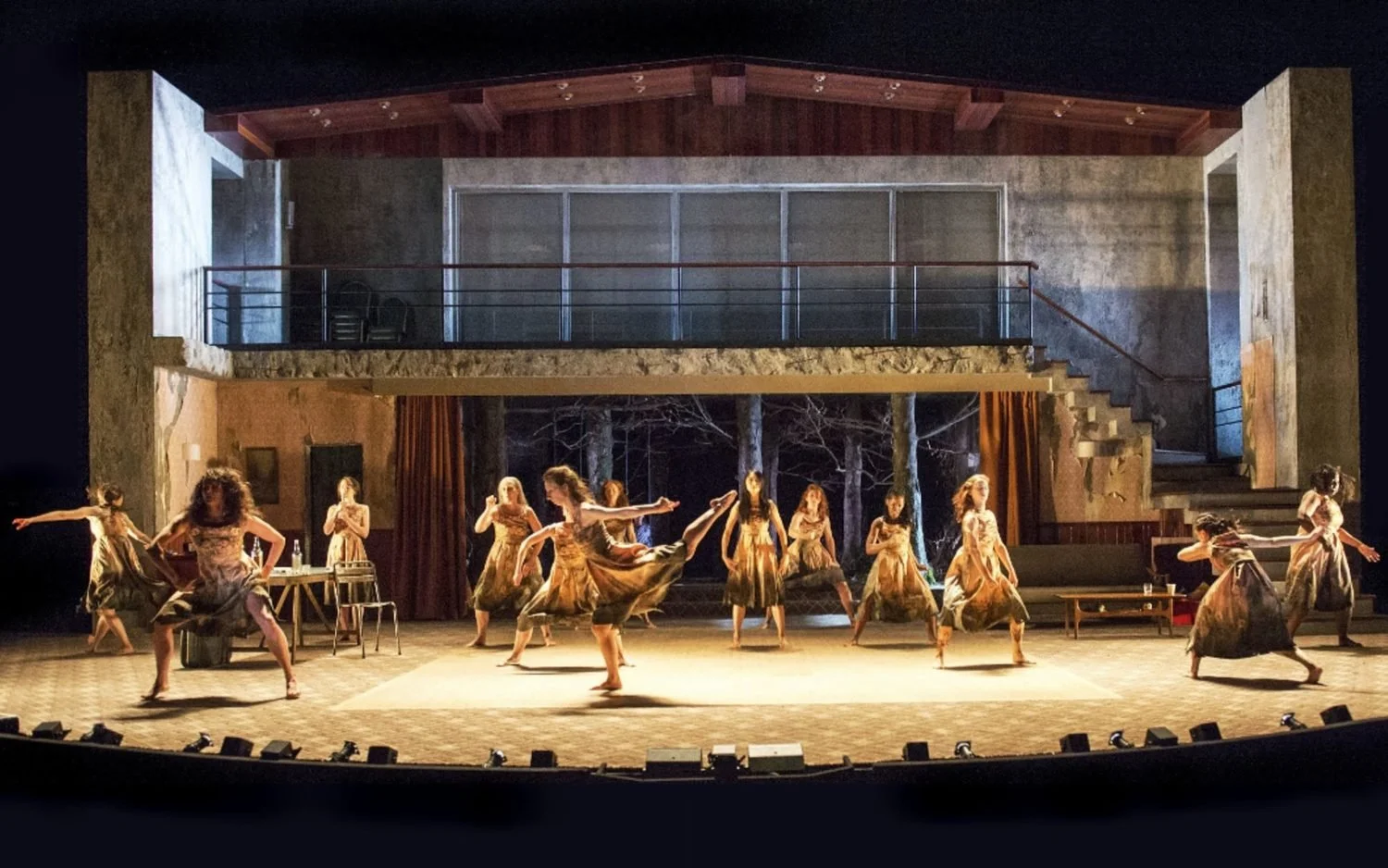
Still of Medea [2014]. Image courtesy of The National Theatre.
Chief among these, the National's staging of Euripides’ Medea (2014), with Helen McCrory in the titular role, directed by Carrie Cracknell. With a set by Tom Scutt, split cruelly in two — a modern, glass-walled house above where the women of Corinth gather, and below it the house of Medea’s sadness, madness, and ultimate revenge. Lucy Carter's lighting does most of the unsettling; scenes are lit not so much to illuminate as to withhold, so that horror arrives from the corners rather than the centre. The whole thing owes more to horror cinema than to Greek tragedy, and is scored, rather unexpectedly, by Alison Goldfrapp and Will Gregory, whose music does the same trick as the lighting — one feels dread before one can name its source. Desolate, and rather difficult to shake.
Literature:
In lieu of some great long summer novel that I invariably never finish until it is time to pick up its successor, I prefer a short novel, or better yet a collection of short stories. If like me you find delight in absurdity, might I suggest the work of Leonora Carrington. Some may be familiar with her tantalizing surrealist paintings; equally as alluring are the shorts that make up The Debutante and Other Stories. The Debutante, originally written in the late nineteen-thirties, follows a girl so disillusioned by what is expected of her that she frees a hyena from the zoo so that it may impersonate her. The stories that follow are indescribable. Although, I now know how to simultaneously beat the time of ‘The Volga Boatmen’, while counting from a hundred and ten to five, while thinking of my own fate and weeping for those who have gone before me.
None of this, I should say, amounts to instruction, only to a discerning disposition - which as ever, does heavier lifting than the wallet. Go and be curious about something; the rest tends to follow.