A Conversation with Frank Gohlke: Reading the Landscape
By Grace Liang
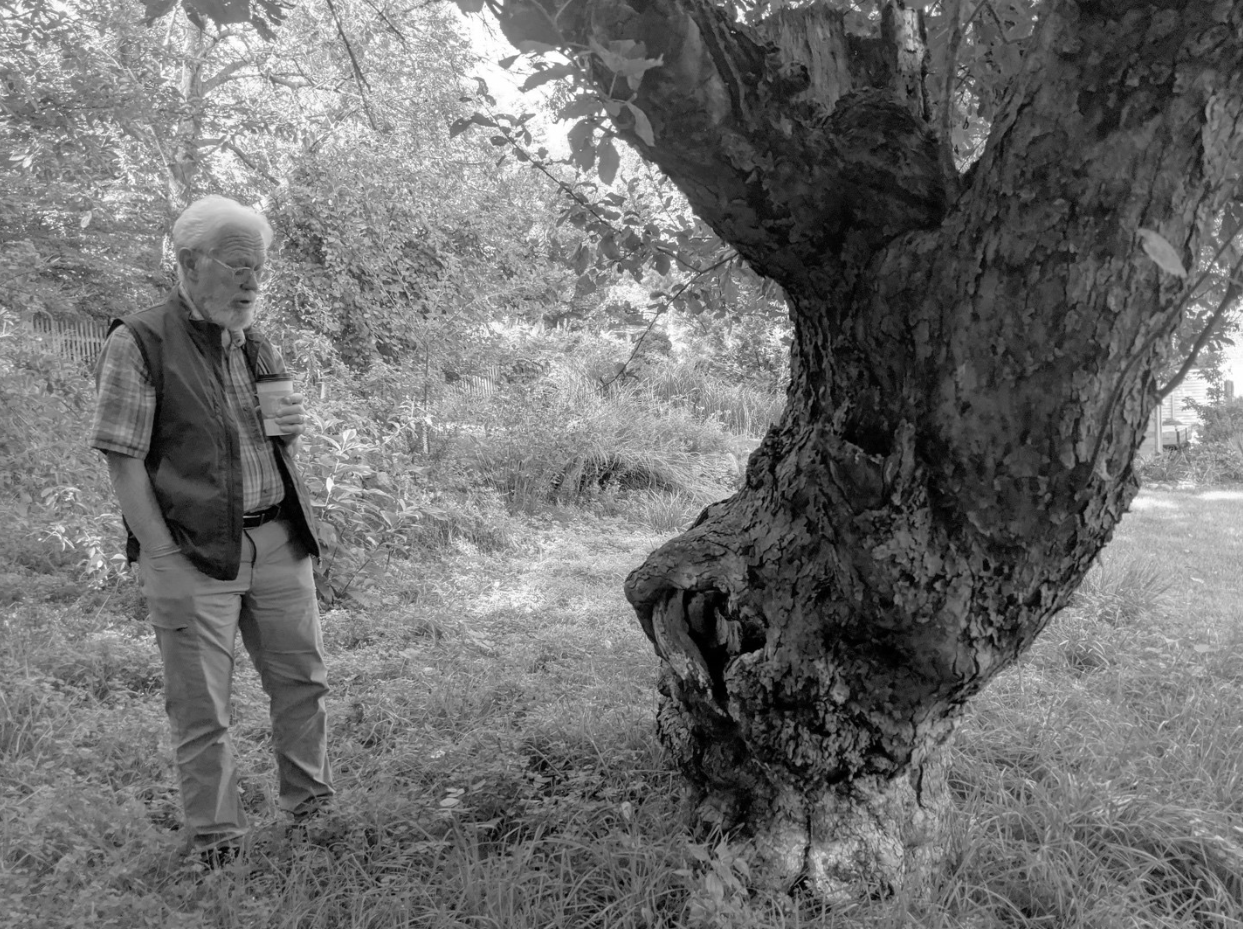
Image courtesy of Tusen Taak Foundation.
A few weeks ago, I had the pleasure of speaking to the photographer Frank Gohlke. His oeuvre spans five decades of patient literary observation of the American landscape. His work is featured in the collections of the Museum of Modern Art, the Metropolitan Museum of Art, the Art Institute of Chicago, and the International Museum of Photography at the George Eastman House. He was awarded two Guggenheim Fellowships for Photography as well as two fellowships from the National Endowment for the Arts.
He was born in 1942 in Wichita Falls, Texas where he first picked up photography in high school. His passion for photography waned, as he pursued literary academia from the University of Texas and then to Yale University where he earned his MA in English. When I asked him about the moment he began to consider himself an artist, he said that he “never imagined that [he] might be an artist” beyond “dealing with art” by teaching English Literature. Gohlke says that it was at Yale where photography “made its presence known” to him. He had rediscovered the “magic of the process” whereby the “tedious” darkroom hours necessary for analogue photography became a profound joy. Though he found success and true passion in the medium of photography, Gohlke’s literary education is evident in his quiet and reflective works.
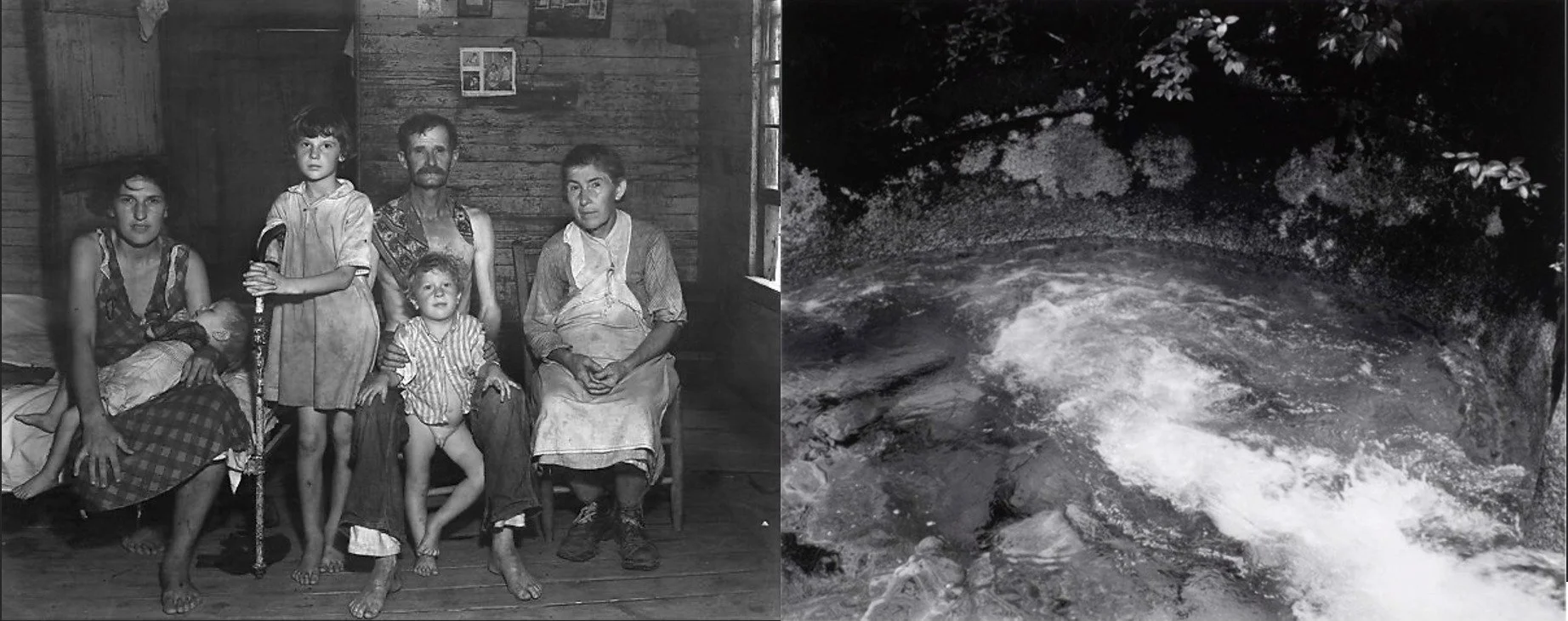
Left: Walker Evans, Bud Fields and His Family, Hale County, Alabama, c. 1936–37; from the book Let Us Now Praise Famous Men (1941) by Evans and James Agee.
Image courtesy of the Met.
Right: Paul Caponigro, Waterpool, White Mts., New Hampshire, 1960, gelatin silver print, 19.4 x 24.3 cm.
Image courtesy of the International Center of Photography.
It was at Yale where Gohlke was introduced to the renowned documentary photographer, Walker Evans, who was teaching undergraduate classes at the time. Evans, Gohlke says, was “kind and generous” and encouraged him to continue pursuing photography. He also cites Paul Caponigro as “the most potent influence” on his photographic style. Gohlke spent months traveling to Caponigro’s home in Bethel, Connecticut to attend his workshops. The connection was not merely creative, but philosophical and deeply personal; Gohlke reflected “I loved the way he talked about photographs and about being a photographer,” viewing Caponigro as a “model on which I could imagine myself continuing my immersion in photography”. Gohlke’s work combines the stark matter-of-factness of Evans’ social realist style and the captivating mysticism of Caponigro’s landscapes.
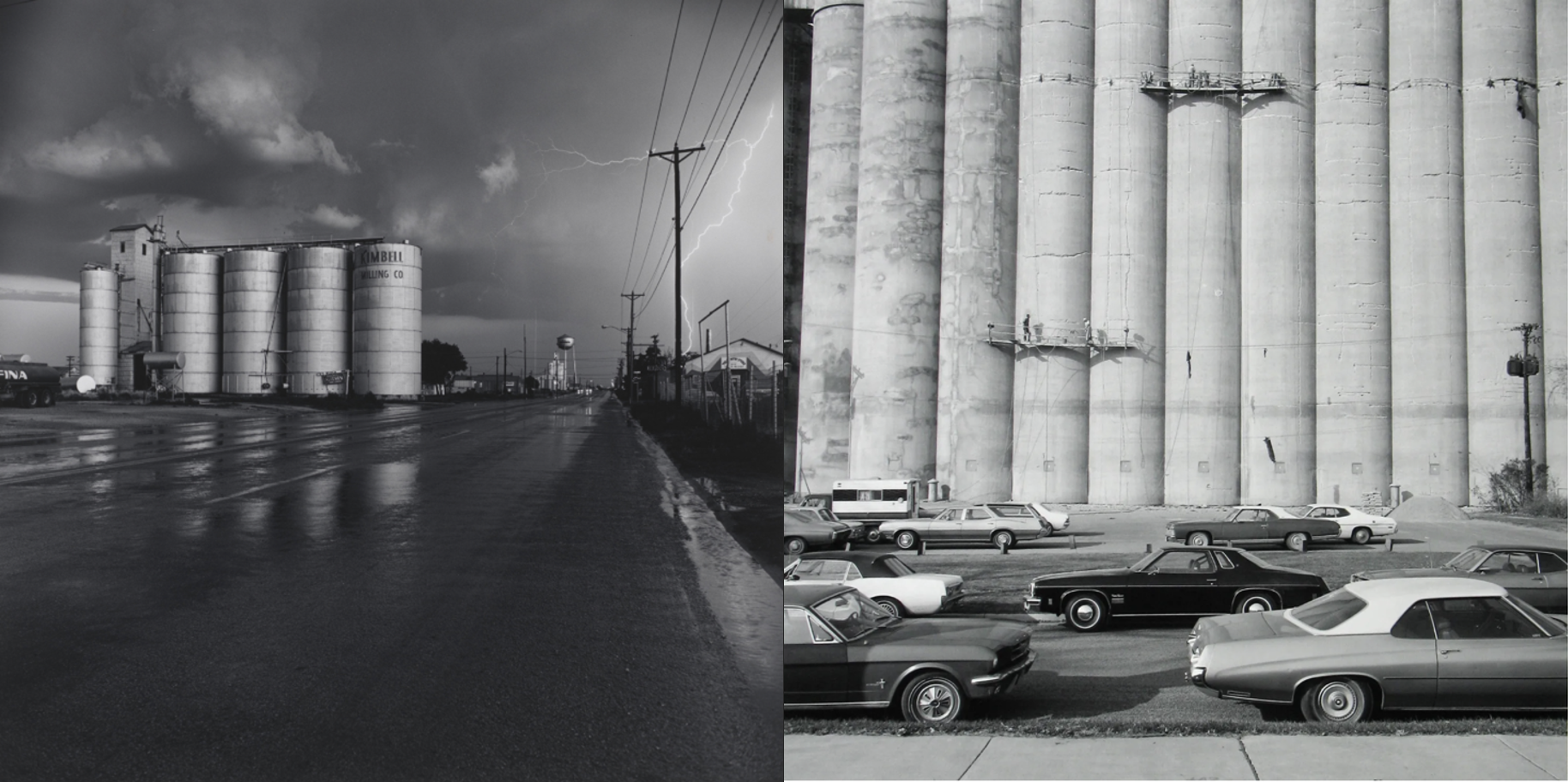
Left: Frank Gohlke, Grain Elevators and Lightning Flash, Lamesa, Texas, 1975, gelatin silver print. 35.1 × 35.1 cm.
Image courtesy of MoMA.
Right: Frank Gohlke, Grain Elevators being Repaired, Minneapolis, 1974, Gelatin silver print. 34.9 × 34.6 cm.
Image courtesy of Howard Greenberg Gallery.
Gohlke’s photographic and literary educations form the bedrock of his artistic identity. He approaches photography with a literary sensibility, equating the “time” within a poem with the that of a picture. He argues that truly being able to “read” and photograph a landscape “requires patience”. This ability to read a landscape ensured that he “could always find something to take pictures of” regardless of the location. Viewing Gohlke’s literary process from the age of instantaneous digital media, Gohlke’s insistence on patience feels radical. This is perhaps most evident in his images of grain elevators and silos in the American Midwest. He was first “arrested” by the concrete giants when his family moved into an apartment in Minnesota that looked out onto an area of the agricultural constructions. The “peculiar experience” of walking amongst the acres of industrial landscape captured him and led to the creation of some of his most famous works. The images function less as snapshots and more like visual essays, transforming the silos into imposing cathedrals and challenging viewers to find beauty in what others might dismiss as mundane.
Due to the widespread nature of these industrial artefacts, Gohlke would go on road trips across middle America through Minnesota, Oklahoma, and Texas. Some he went on with other photographers, but the best, he says, he went on alone. He reflects on his complete absorption and immersion in his photography on these road trips, in a methodology that he likens to the Odyssey. He describes the “romance” of these trips, mythologizing himself as one of the many heroes and anti-heroes of literature who are shaped by their travels. When asked about the internal effects of his practice of revisiting the same sites over decades, Gohlke said “it’s hard to know how you have changed” since it is all so “gradual”. Returning to sites as the artist himself ages reflects a slow, everyday accumulation of experience, throughout which he continues his lifelong pursuit of “trying to make sense” of the landscape and “trying to figure out how to make a good picture”.
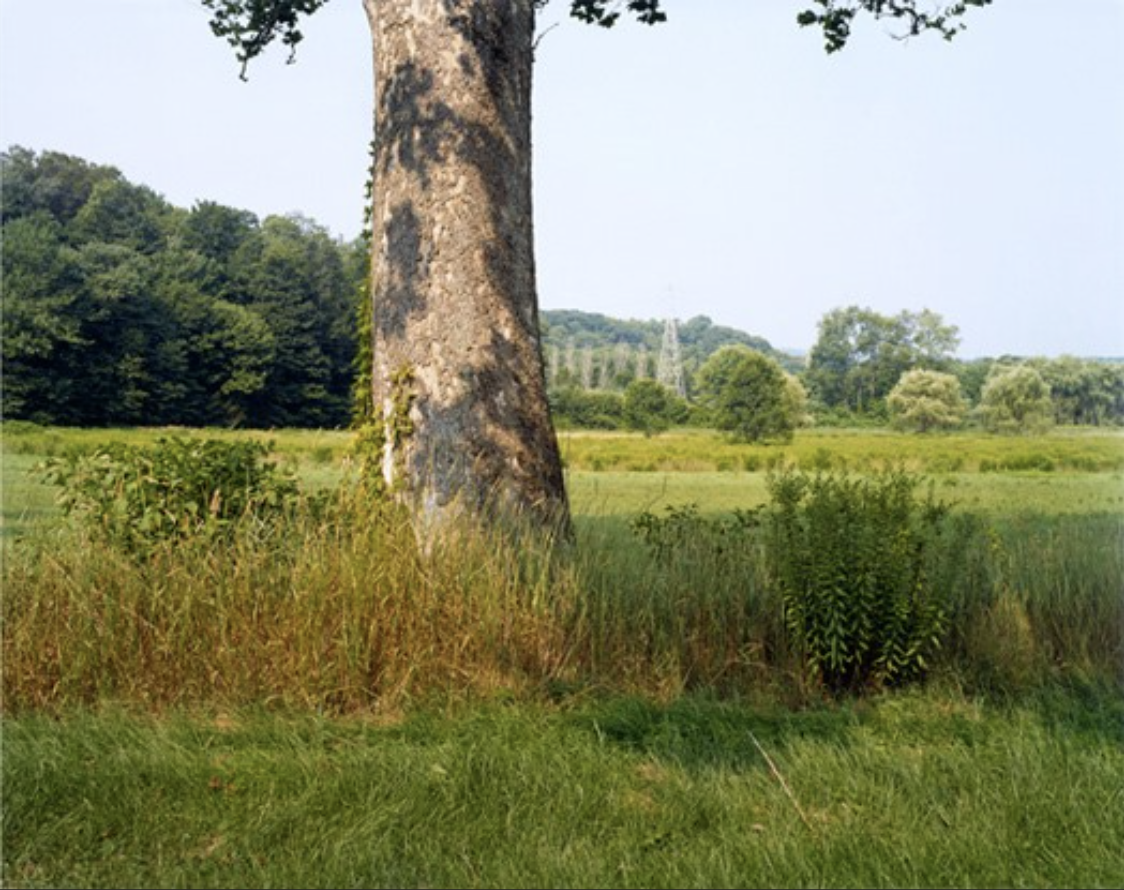
Frank Gohlke, from 42º30” North Latitude, in collaboration with Herbert Gottfried, circa 2003.
Image courtesy of Places Journal.
Gohlke’s transition from working exclusively with black-and-white to incorporating colour film was another evolution of his ability to “read” his surroundings. He describes how, on his Midwestern road trips, he and his photographer friends would become accustomed to seeing the world in monochrome. Many of Gohlke’s contemporaries initially saw colour film as gauche, due to its “attention getting” nature and use in advertising. However, as the colour process became more reliable, Gohlke and his some of his peers were able to incorporate it into his work in an elegant, understated manner, allowing the colour to quietly blend into the landscape rather than command the composition.
As chemical processes evolved and the landscapes evolved, Gohlke has developed a critique of our contemporary American vista. The photographer views landscape as the greatest and most telling artefact of culture, even more so than art or literature, which he explores by capturing the ways in which humanity shapes the land around it. In this light, he views the 21st-century landscape with a degree of weariness. “Everything I disliked about the world that I was photographing in the 70s, there’s just more of it,” he notes. To Gohlke, contemporary commercial culture and politics have diminished the landscape, making it increasingly rare to find places that have not yet been flattened by these forces. In the face of our contemporary suburban sprawl and commercial facades, Gohlke’s works from the 70s and 80s stand as a eulogy for a landscape that is losing its character.
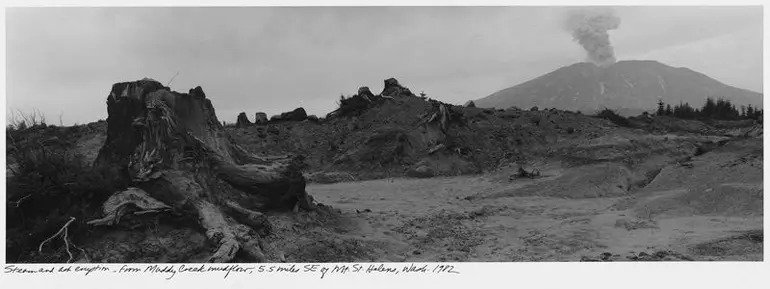
Frank Gohlke, Steam and ash eruption, from Muddy Creek mudflow, 5.5 miles southeast of Mount St. Helens, 1982. Gelatin silver print, 45.1 x 69.85 cm.
Image courtesy of The Cleveland Museum of Art.
This concern for the state of the world encompasses his practice of documentation of destruction and disaster. When photographing the aftermath of natural disasters like a tornado in his hometown of Wichita Falls and the eruption of Mount St. Helens, Gohlke has always been careful to avoid “destruction voyeurism”. He notes the sharp distinction between the natural “rhythm of destruction and extinction” from which humans evolved, and the devastation caused by “human folly and human carelessness.” Beyond man’s environmental impact, Gohlke’s concern extends to the ways in which human actions affect one another. Reflecting on the aftermath of aerial warfare in conflict zones like Gaza and Tehran, he says “it’s as if someone took their hand and scraped the façade of the building off, leaving everybody’s lives exposed”. For Gohlke, this haunting imagery is a far cry from the natural cycles of the Earth, but it is a rupture in the landscape, standing as a sobering reflection of our culture.
Ultimately, Gohlke’s oeuvre serves as a profound meditation on the ever-changing relationship between humanity and the land it inhabits. From his Odyssean stills of the Midwestern grain elevators to his cautious documentation of natural disasters, Gohlke’s work consistently seems to make sense of the “artefacts of culture” left behind by man’s presence, While he laments that our landscape has been eroded by commercial forces, his practice remains rooted in a gradual, lifelong pursuit of understanding. By revisiting the same sites over decades, Gohlke captures not just the physical transformation of the earth, but the slow rhythm of experience that shapes both the artist and his subject.