Psychological Realism in Austrian Art and Cinema: Depictions of Sexuality and Human Desire
By Wiktoria Iwaniak
Desire. A longing and craving every human being experiences. Whether it be emotional or physical, it is a fundamental element of the human condition. Desire, specifically sexual desire, was a key area of exploration for artists during the Art Nouveau movement, especially Austrian artists such as Gustav Klimt and his contemporary Egon Schiele. At the fin-de-siecle, traditional ideas concerning society and morality were rapidly changing. Sexuality, up to this point in history, was seen as crude and indecent, something perverted, forced to be hidden and definitely not displayed in art. However, these artists were not afraid to push the boundaries, creating artworks with taboo, eroticised subjects. The psychological realism of the Vienna Secession carries into the 21st century, and this article explores the importance of art that continues to challenge the limits of human understanding.
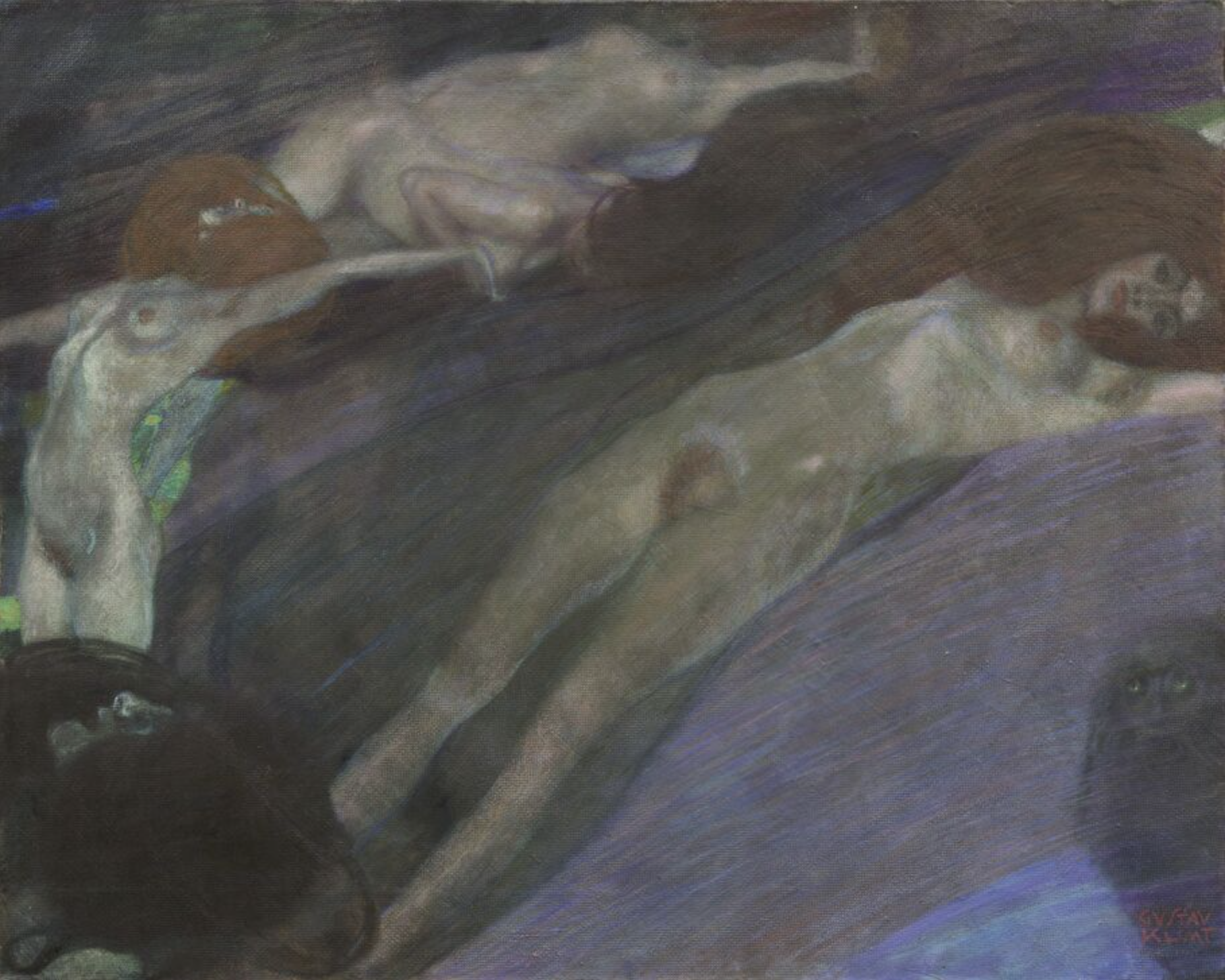
Gustav Klimt, Moving Water, 1898, oil on canvas, 52 x 65cm.
Image courtesy of Galerie St. Etienne.
As the First President of the Vienna Secession - a radical movement that aimed to modernise Austrian art - Klimt’s core belief was to express the profound power of human emotion, in line with the group’s motto: “to every art its freedom”. The nude female body became central to his work, in an attempt to destigmatise female sexuality and destabilise social conventions, with his frequent portrayal of femme fatales, dangerously attractive and intensely seductive women, evoking mass controversy due to their provocative and immoral nature. For example, in Moving Water (1898), the bodies contort and flow with the current, as if sinking into their desires, letting their passions take over them. Klimt was often criticised for his intensely erotic and ‘perverted’ approach to art by rigid traditionalists; however, this did not stop him from continuing to explore taboo themes throughout his career.
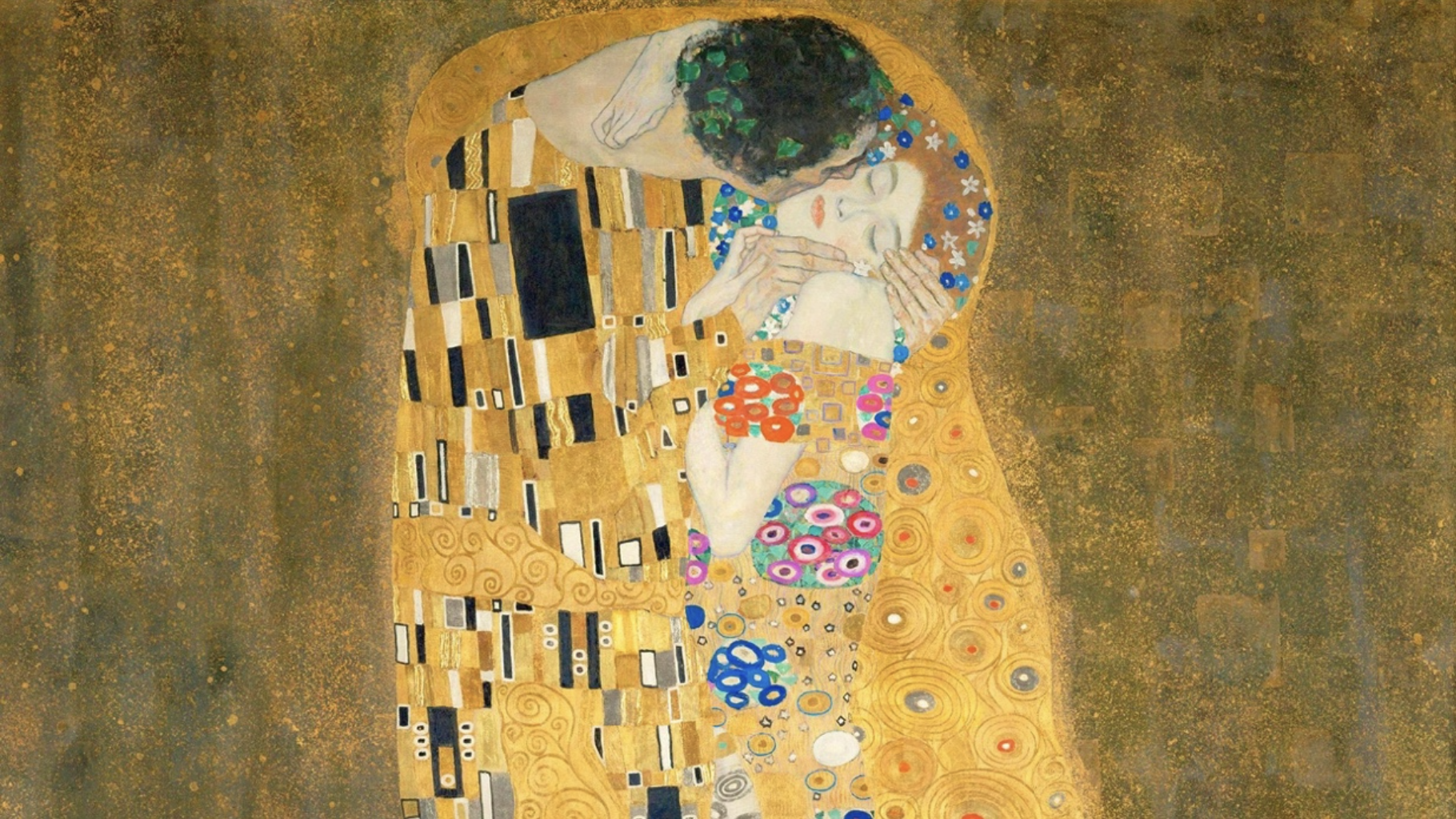
Gustav Klimt, The Kiss, 1907-8, oil on canvas, 180cm x 180cm.
Image courtesy of the Belvedere Museum, Vienna.
The Kiss (1907-8), Klimt’s most popular artwork, represents the apex of his signature style and interest in human passions. It is definitely a standout piece in the artist’s oeuvre, centred on love rather than lust, which was a key leitmotif of his early work. The single focus of this painting is intimacy, with the intertwined lovers almost melting into each other, highlighting Klimt’s ability to capture the psychological intensity of the human desire for connection and to be known completely by the one you love. He presents tender, romantic love as a positive force in a conservative society, stressing that desire and passion are natural emotions to be celebrated, not immoral behaviours that warrant shame or secrecy.
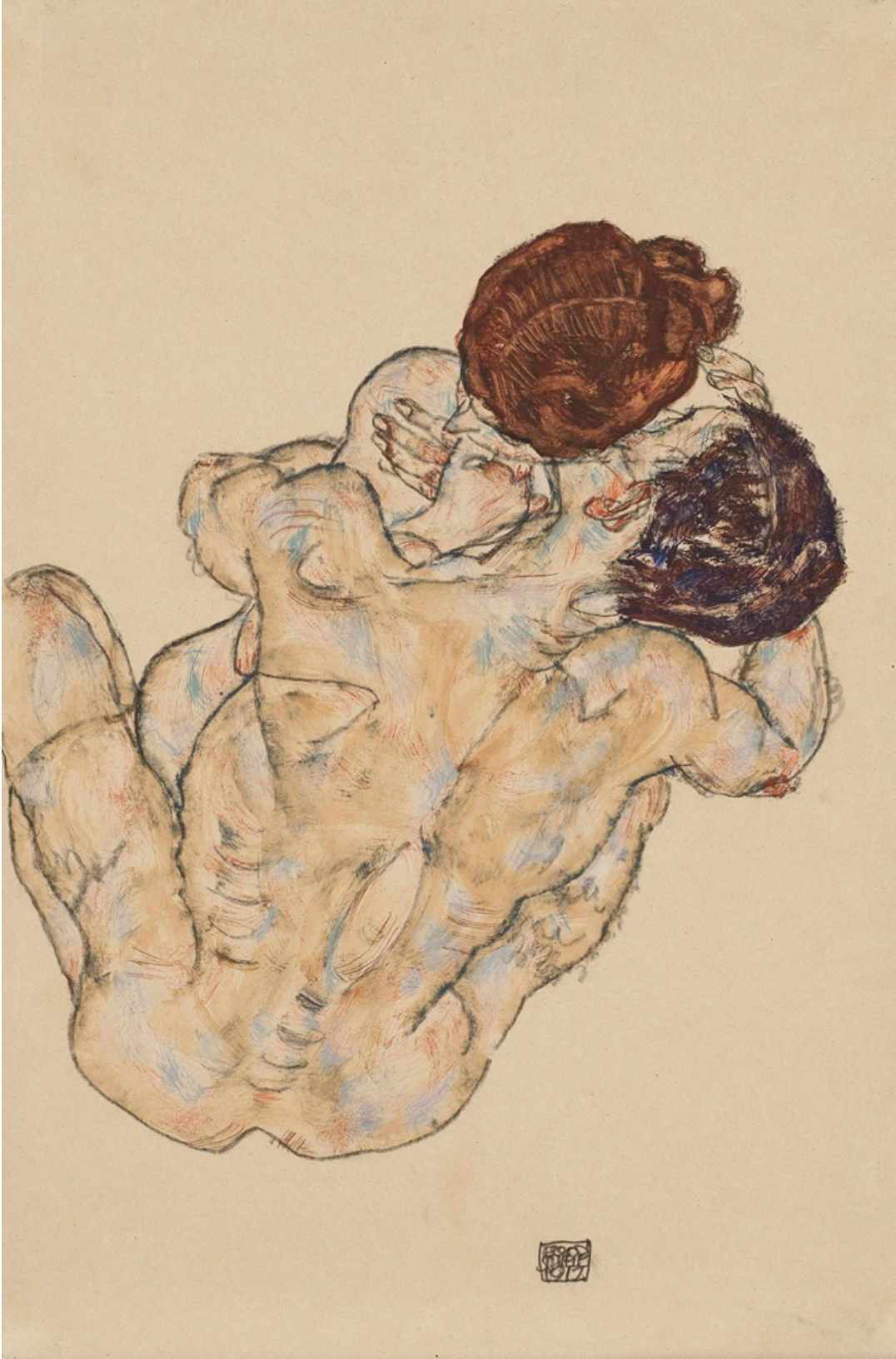
Egon Schiele, The Embrace, 1917, oil on canvas, 80 x 60cm
Image courtesy of the Belvedere Museum.
Klimt’s artwork has inspired countless artists, such as the expressionist Egon Schiele, to delve deeper into complex human feelings. He was interested in exploring what sexuality is and how it manifests at a time when it was considered a pathology, and was often accused of creating pornography. Schiele’s work is recognised for its shockingly intense, raw sexuality, which visualises both inner and outer experiences of sexual desire. His use of coloured undertones in the skin could be interpreted as mapping out the pleasure coursing through the body, underlining the transcendent interplay between the internal and external. He frequently features himself and his wife, Edith, in his art, separately and together, utilising self-portraiture to reflect their close bond. In The Embrace (1917), Schiele captures a private moment of the couple sitting on the floor, a very vulnerable and intimate scene. By giving his viewers an insight into his personal life, Egon emphasises that emotional depth and sincerity were necessary for him to open up his mind and, in turn, his work.
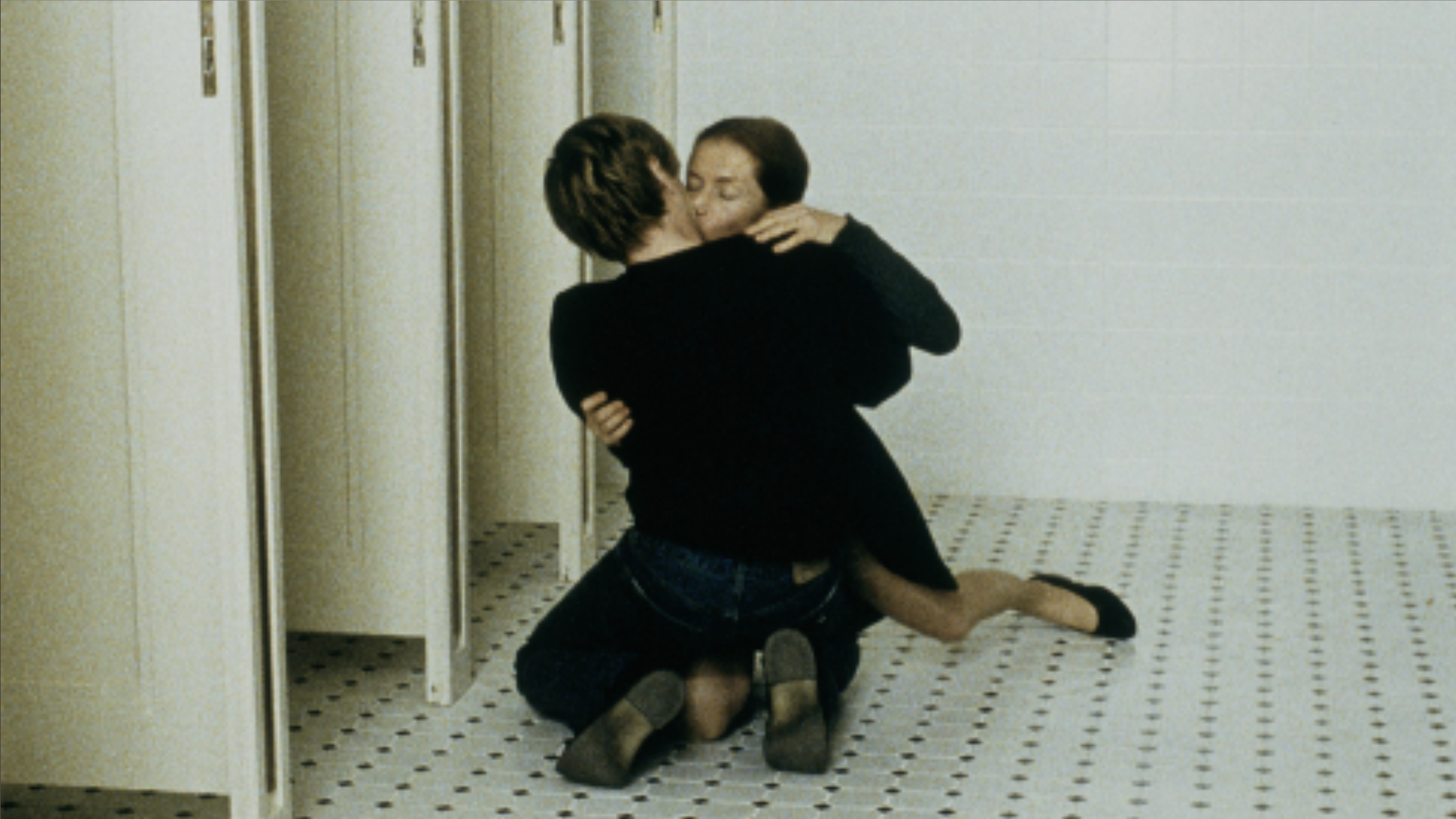
Still from Michael Haneke, The Piano Teacher, 2001.
Image courtesy of IMDb.
Echoes of Klimt’s Kiss and Schiele’s Embrace can be seen in Michael Haneke’s 2001 film, The Piano Teacher, which explores the all-consuming power of desire. Erika Kohut, a sexually repressed piano teacher, and her student, Walter, begin a confusing relationship, driven by her urge to release herself from the chains of sexual and emotional repression. For so many years, she was unable to express her inner longings, tormented by her desires; thus, when she finally has the opportunity, she does not know how to behave. Her façade of carefully calibrated control begins to drop, and with that, her masochistic tendencies start to surface.
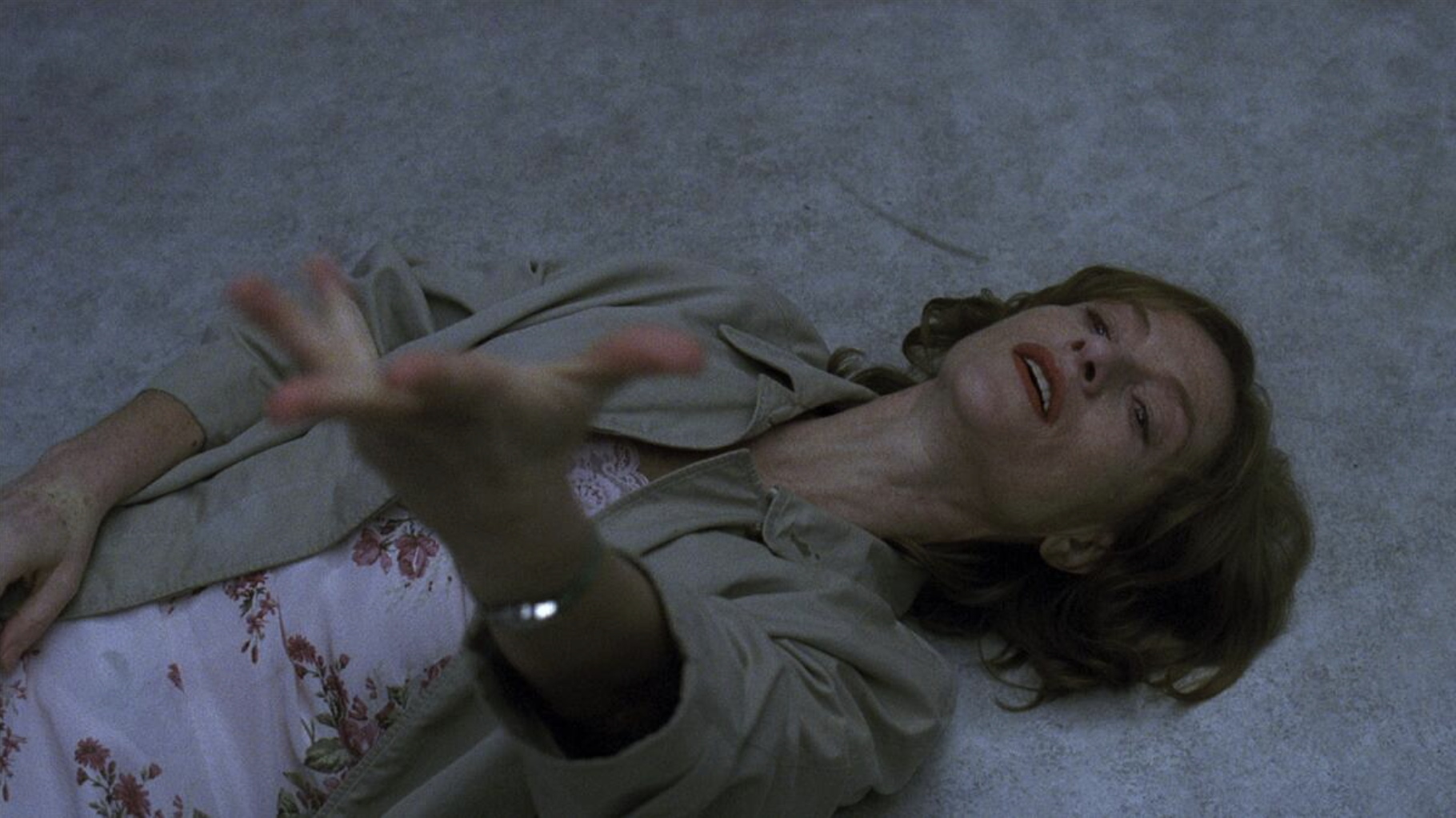
Still from Michael Haneke, The Piano Teacher, 2001.
Image courtesy of IMDb.
Passion can be beautiful, but it can also become extremely destabilising. Reciprocity can quickly turn into infatuation, especially when a power imbalance is at play, like here. Erika’s obsession with Walter quickly gets out of hand, and she begins to behave irrationally and manically, with her mental instability becoming clearer as the film progresses. Haneke’s disturbing exploration of sexual pathology is raw and terrifying, highlighting the impact that extreme repression can have on the psyche, thus underlining the importance of human contact. He can present the humanity behind the horror, revealing that he is a director deeply interested in and concerned about exploring human behaviour, even at its ugliest.
To conclude, the Vienna Secession has had a profound, long-lasting impact on Austrian art and cinema, continuing to influence media to this day. While art carries the legacy of its past, it continuously offers new perspectives that drive the evolution of art history and underscore the necessity of artistic freedom for real change to occur, both in art and real life.
Bibliography
Alexxa Gotthardt. “Klimt’s Iconic ‘Kiss’ Sparked a Sexual Revolution in Art.” Artsy, May 8, 2019. https://www.artsy.net/article/artsy-editorial-klimts-iconic-kiss-sparked-sexual-revolution-art.
BFI Player. “Watch Michael Haneke: The Humanity behind the Horror,” 2025. https://player.bfi.org.uk/subscription/film/watch-michael-haneke-the-humanity-behind-the-horror-2025-online.
BFI Player. “Watch the Piano Teacher,” 2025. https://player.bfi.org.uk/subscription/film/watch-the-piano-teacher-2001-online.
Chang, Justin. “Criterion Revives a Chilling Tune with Michael Haneke’s ‘the Piano Teacher.’” Los Angeles Times, September 20, 2017. https://www.latimes.com/entertainment/movies/la-et-mn-critics-choice-20170920-story.html.
Essie.L. “An Empowering Tale of Femme Fatales: Gustav Klimt’s Female Eroticism.” Medium, May 4, 2020. https://medium.com/@ruiyuliu_17933/an-empowering-tale-of-femme-fatales-gustav-klimts-female-eroticism-642f2e30ecf0.
Ghosh, Olivia. “Drawing Death and Desire: Egon Schiele’s Nudes and Early Twentieth-Century Vienna.” The Courtauld, 2016. https://courtauld.ac.uk/research/research-resources/publications/immeditations-postgraduate-journal/immediations-online/2016-2/olivia-ghosh-drawing-death-and-desire-egon-schieles-nudes-and-early-twentieth-century-vienna/.
Gurney, Tom. “Embrace by Egon Schiele.” www.thehistoryofart.org, 2023. https://www.thehistoryofart.org/egon-schiele/embrace/.
Pecherska, Nataliia. “Egon Schiele: Art on the Verge of Eroticism and Pathology.” DailyArt Magazine, 2026. https://www.dailyartmagazine.com/art-on-the-verge-of-eroticism-and-pathology-by-egon-schiele/.