By Ian Ziegler
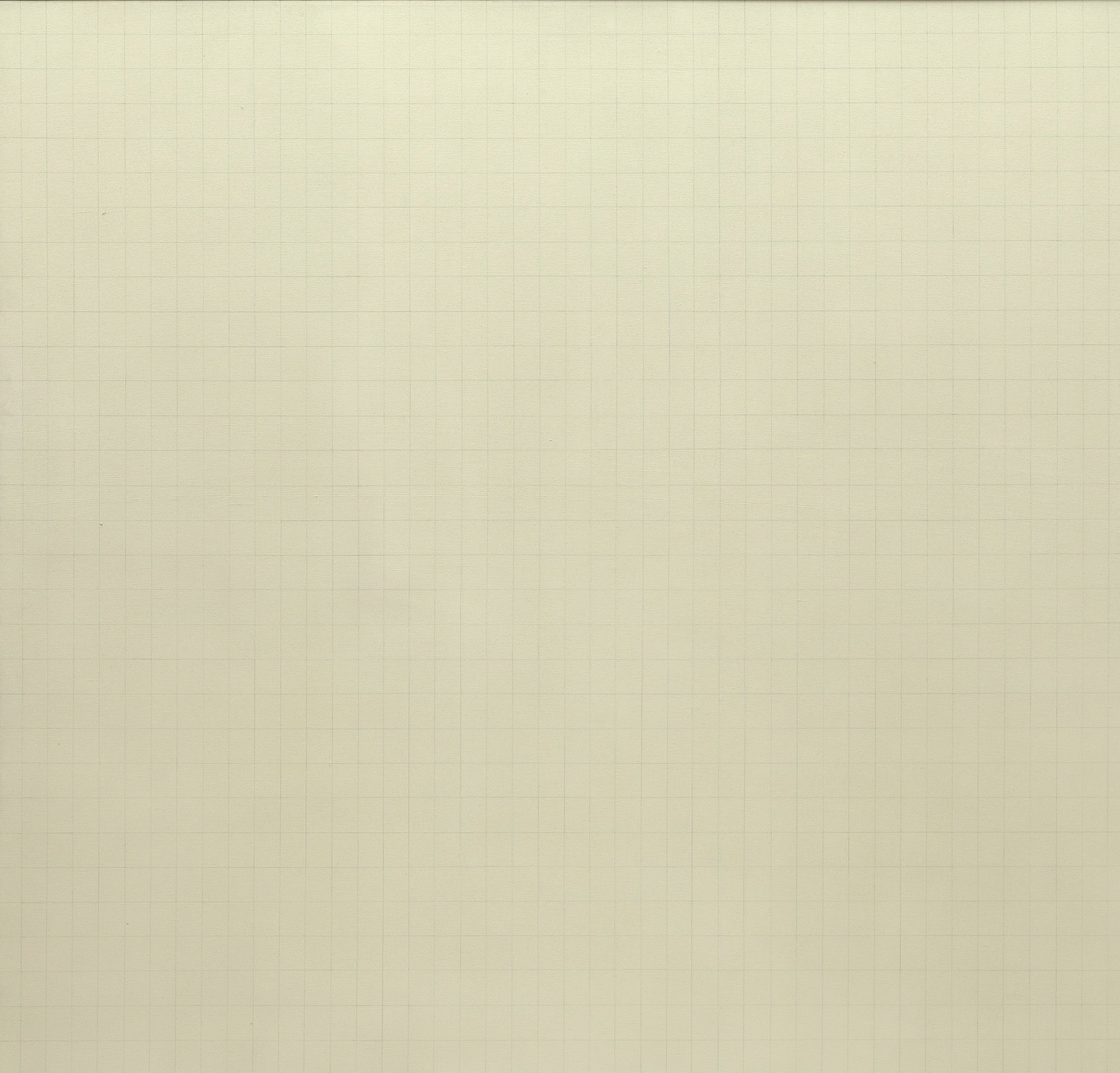
Agnes Martin, Rose, 1966, acrylic on canvas, 182.9. x 182.9 cm: Courtesy of the Peggy Guggenheim Collection: Solomon R. Guggenheim Foundation
I have lost count of the times I have overheard someone in a museum insist that they could make a piece of modern art, as if its apparent simplicity were the whole of it. The work that comes to mind first is Agnes Martin's The Rose (1964), a six-foot square of faint pencil lines that, from across the gallery, reads as little more than a pink haze. It seems simple until you learn something about the woman who made it.
Martin's dealer, Arne Glimcher, tells a story about his granddaughter Isabelle visiting the artist. The girl was holding a rose cut from a bush outside Martin's house. Martin took it and asked whether it was beautiful. Isabelle said yes. Martin hid the rose behind her back and asked again: was it still beautiful? Yes, said Isabelle. Beauty, Martin told her, is in your mind, not in the rose. The anecdote comes from long after the painting, but it captures the conviction behind it: Martin's belief that her paintings were not about what is seen but about what is held in the mind. Once you know that, The Rose stops being simple. It becomes a question about beauty, about object permanence, about the kind of wonder a child brings to a flower.
That is what art is. It is more than what is visibly there; it is the story behind it. It is the question an artist asks a child; it is the heartbreak that sends someone to the canvas in the first place; it is the love story that brings the brushstrokes together into a portrait of devotion. This is particular to art, and it is precisely what is missing from AI “art”.
AI “art” is a digital rendering that imitates art. It is an illusion: it holds no artistic or emotional value for the person who prompted it, yet it invites the viewer to assume that emotional labour went into its making. It is, as Macbeth puts it, “a tale / Told by an idiot, full of sound and fury, / Signifying nothing.” And because art and politics have always been entangled, AI “art” has been politicised too. The conversation in the art world and in the mainstream media is largely hostile to it, yet it keeps appearing, keeps being used, and has now moved firmly into politics.
In the run-up to this month's US midterm elections, political advertisers spent an estimated $187 million on nearly 300 ads generated or enhanced by AI, according to the Wesleyan Media Project, up from less than $50,000 in 2024. More than 90 per cent of that spending came from Republican candidates, party committees and GOP-aligned groups. It is hardly surprising that those rewriting the rules to clear the way for data centres on schools and residential lands are also willing to use the product of those data centres to manufacture false narratives. The growing tolerance for AI ads is worrying because it signals a wider acceptance of AI imagery, and the more AI is normalised in daily life, the more readily AI “art” will be accepted alongside it.
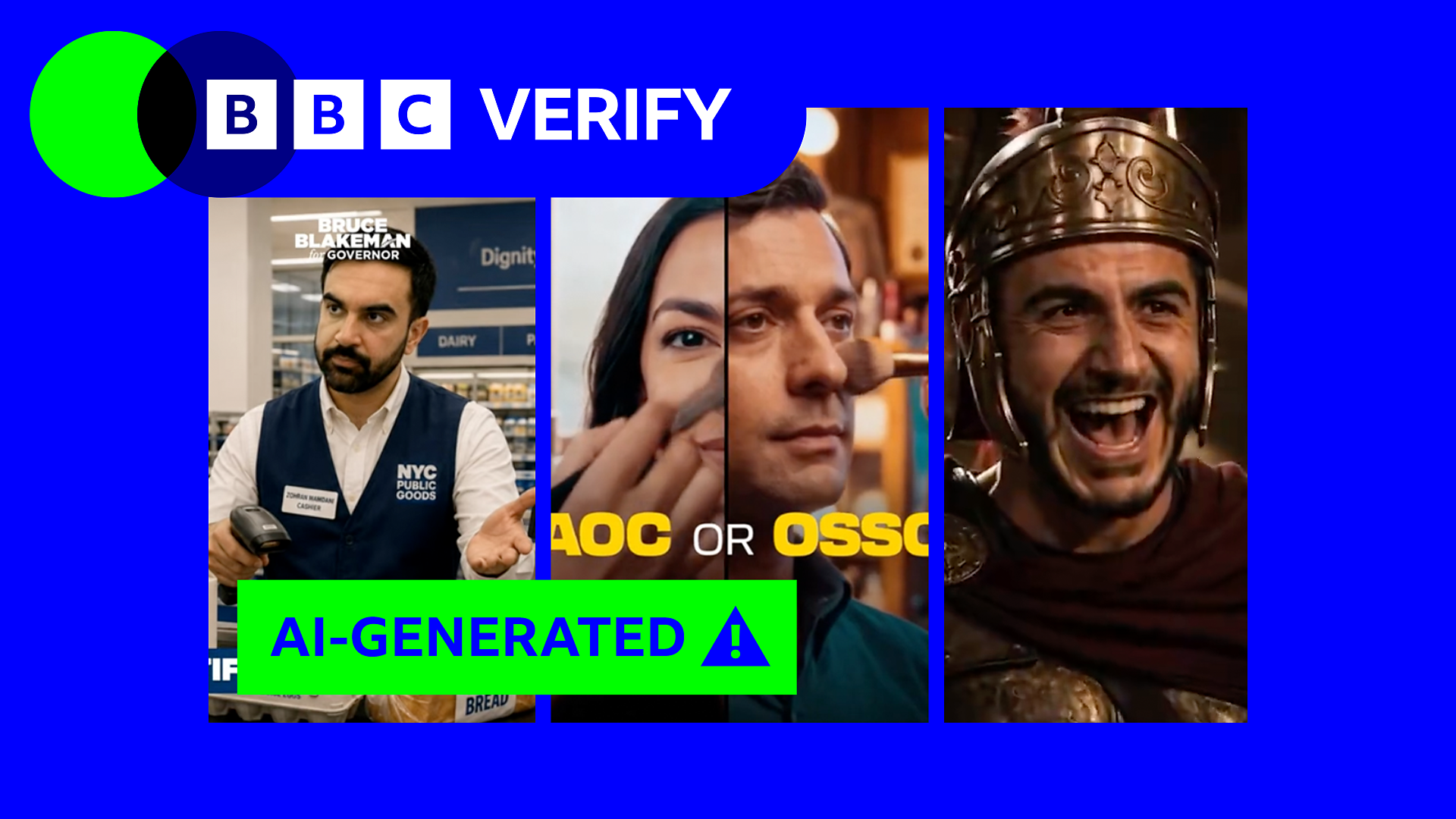
Courtesy of BBC News
President Donald Trump has posted a steady stream of AI-generated images, from attacks on former presidents Barack Obama and Joe Biden to a picture, posted in April and deleted after a backlash, that appeared to show him as Christ healing the sick. There seems to be no limit to how AI can be used to stretch the imagination, and it can be useful for visualising a text or making a joke. But the line blurs when it enters the realm of artistic creativity and claims the status that art holds. A random image, AI-generated or not, does not carry the connotations of a work of art. It does not carry the same weight, nor does it try to convey the emotional and personal meaning behind its lines. The lack of emotional intent in AI-generated “art” is one of many reasons artisans on the popular website Etsy have recently sparked an uproar. After Etsy updated its terms and conditions clause, allowing the site to feed handmade artwork into an AI training model, many Etsy storefronts closed to stop AI from taking advantage of their work and using it for its own advancement. It is noticeable how unwilling artists are to have their work taken and used by AI, and yet companies keep using it for their own benefit, creating something with no true meaning.
I often think back to The Rose: how I would get caught in its grid, in lines that confused me and yet drew me in, and how differently I saw it once I learned what Martin believed about beauty. Knowing the history of a work changes the way you see it. AI-generated “art” has no such history. It emerges from a data centre, not from a life; there is no question asked of a child, no grief, no devotion behind it. It signifies nothing.