Dressed To Impress? The Politics Behind Olympic Uniforms
By Mary Henderson
Competition between nations during the 2026 Milan Winter Olympics has extended beyond the slopes, with team uniforms that would look at home on any fashion week runway.
Olympic team kits have become a creative opportunity for even the smallest delegation to showcase their distinctive national identity. Team Mongolia, for example, continued their success from the 2024 Summer Olympics to present Opening Ceremony uniforms that married practical functionality with cultural heritage and craft. Designed by Goyol Cashmere, the ceremonial outfits reimagined the deel - long belted traditional robes using cashmere, silk trimming, and traditional horn motifs that draw inspiration from the attire of the Mongol Empire of the thirteenth to fifteenth centuries. Meanwhile, while the United States offered a classic preppy collection of toggled woollen coats, fair isle sweaters, and suede Alpine boots designed by Ralph Lauren and J. Crew, Brazil’s delegation sported puffer everything- from skirts and capes to Bermuda shorts and flat-brim hats.
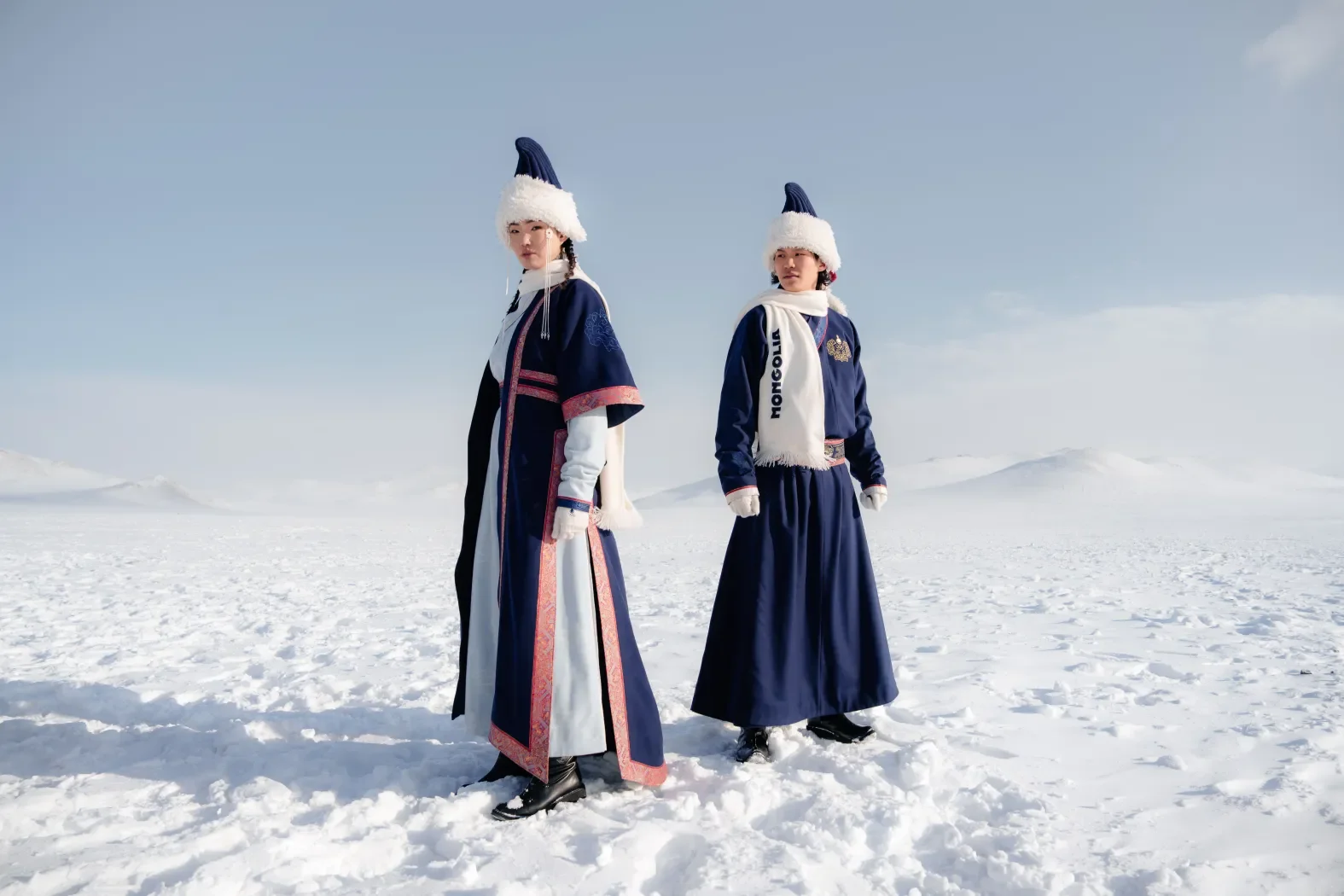
Team Mongolia’s uniforms for the Winter Olympics 2026.
Image credit Goyol Cashmere.
However, not every fashion statement has been smooth sailing this year. Disputes over where national pride crosses into the realm of the ideological have become increasingly prevalent. In an environment that simultaneously encourages the symbolism of flags, anthems, and national allegiance, what is a step too far when it comes to celebrating the complexities of cultural heritage and political identity?
Mere weeks before the Opening Ceremony, Olympic officials blocked Haiti’s intention to include a painting of the revolutionary leader Toussaint Louverture on the uniforms of its two-person team. Toussaint Louverture led the slave revolt that led to the successful Haitian Revolution against French colonial rule in 1791, resulting in the establishment of the world’s first black republic in 1804.
Italian-Haitian designer Stella Jean had planned to include artist Edouard Duval-Carrié’s contemporary portrait of a uniformed barefoot Louverture on horseback, holding up a snake in the place of a sword, on the Haitian team’s uniforms. The snake represents the great spirit Damballa, a symbol of wisdom, patience, and peace within the Haitian Voodoo tradition.
The International Olympic Committee (IOC) intervened, however, citing Rule 50.2 of the Olympic Charter: ‘No kind of demonstration or political, religious or racial propaganda is permitted in any Olympic sites, venues or other areas.’
Jean ended up adapting her design by removing the figure of Louverture while retaining the charging red horse and surrounding foliage. Painting over the nation’s founding father by hand, her team was able to deliver the final products to Milan just two days before the Opening Ceremony.
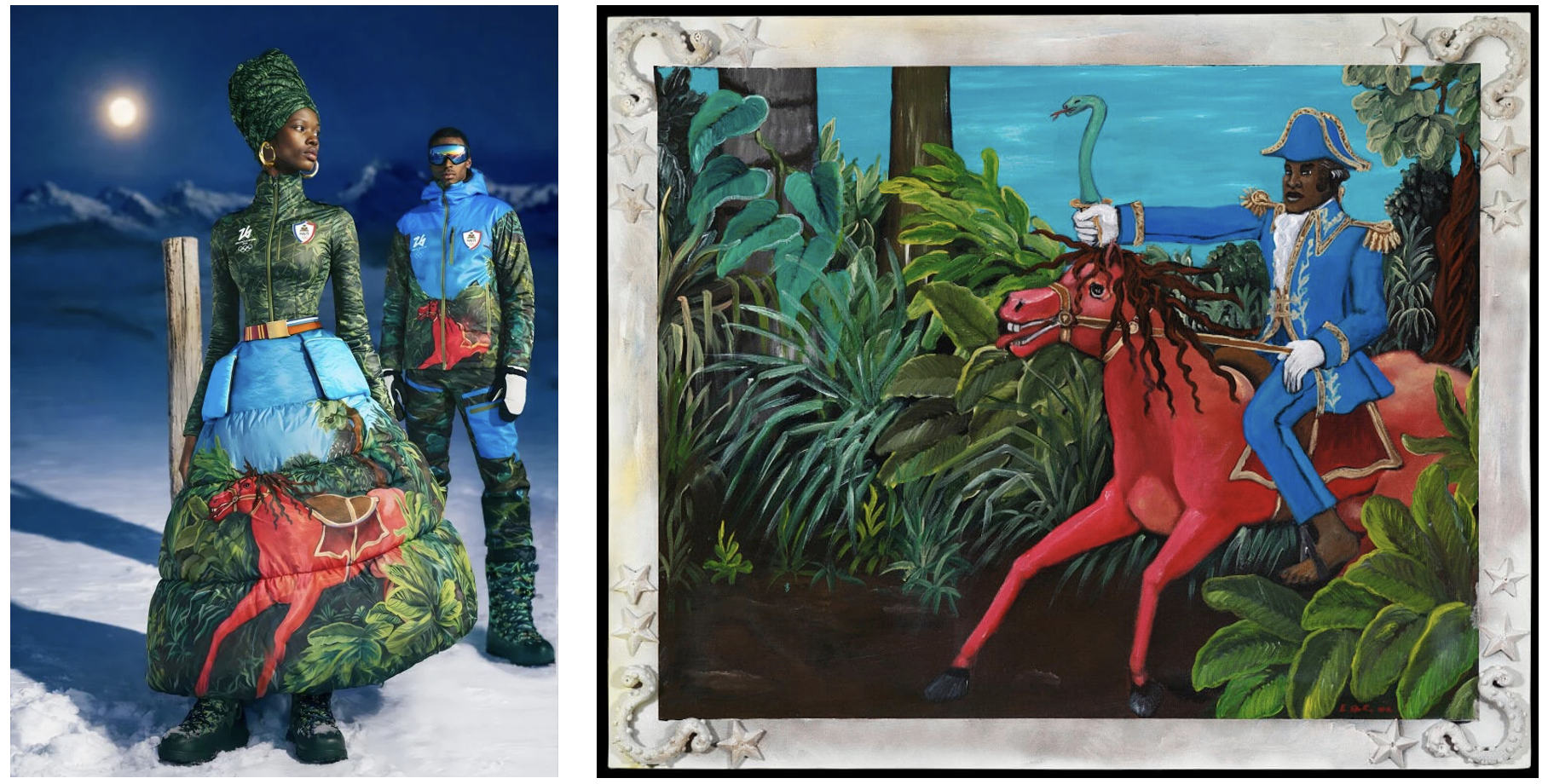
Left: Team Haiti’s uniforms for the 2026 Winter Olympics. Image credit Stella Jean.
Right: Edouard Duval-Carrié, Toussaint Louverture (2006), Oil on canvas with mixed media frame, 31.5 x 38.5 inches, Figge Art Museum. Image credit Figge Art Museum.
Another such dispute also hit the headlines this year.
Ukrainian skeleton racer, Vladyslav Heraskevych, was warned by the IOC that his helmet portraying images of twenty Ukrainian athletes and coaches killed during the war with Russia contravenes Olympic ‘athlete expression’ guidelines, banning him from wearing it at official training sessions and competitions.
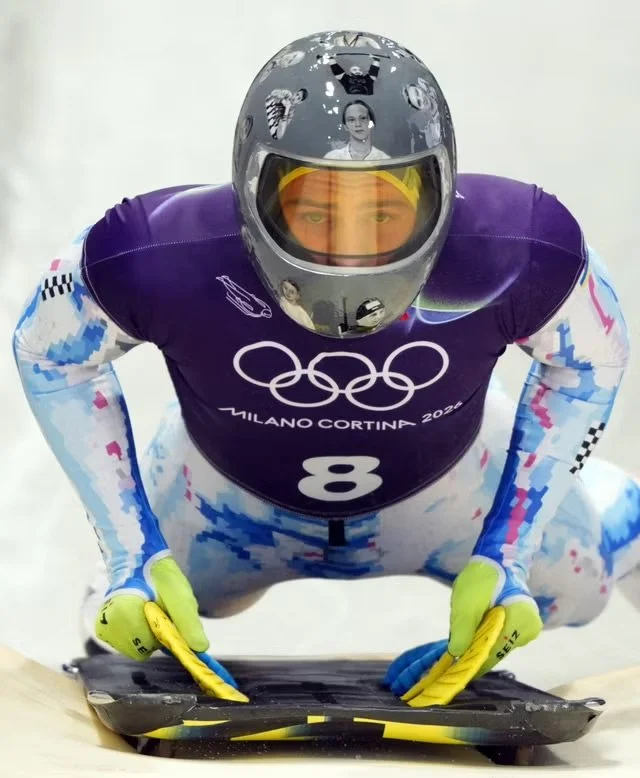
Skeleton racer Vladyslav Heraskevych.
Image credit Alessandra Taratino/ AP.
Heraskevych, who was his country’s flagbearer at the opening ceremony, had intended to wear the ‘helmet of remembrance’ in tribute to his fallen compatriots.
After a series of unresolved conversations with IOC and a failed appeal, Heraskevych was eventually disqualified from the competition, describing this decision as the ‘price of our dignity’.
Ultimately, these causes have arguably reached a far more global audience through these very attempts to suppress them. Images of the helmet and Haiti’s team uniform have flooded international media, raising important questions about the interconnection between sport and politics, the responsibility of institutions to uphold neutrality, and the right to commemorate national history and identity. The fact that both these nations have endured such travails and yet promote a unified message of resilience and hope underscores the very spirit of what the Olympics ought to represent in a fractured international climate.
Bibliography
Lawson-Tancred, Jo, ‘Haiti’s Hand-Painted Winter Olympics Uniforms Are A ‘Story of Resistance’, ArtNet, 6 February 2026, https://news.artnet.com/art-world/haiti-winter-olympics-2743597.
Pérez, Christina, ‘The Best Olympic 2026 Uniforms to Look For At the Winter Games’, Vogue, 3 February 2026, https://www.vogue.com/article/best-olympic-2026-uniforms-winter-games.
Barry, Colleen and Fernanda Figueroa, ‘Haiti’s skiers at the Winter Olympics Shine A Positive Light for a Troubled Nation’, ABC News, 3 February 2026, https://abcnews.com/Lifestyle/wireStory/haitis-athletes-winter-olympics-shine-positive-light-troubled-129803614.
Smith, Emma, ‘’Shocking’ or Correct? Why Ukrainian Skeleton Slider Was Banned’, BBC Sport, 12 February 2026, https://www.bbc.co.uk/sport/articles/cx2dnd7g209o.
Ostlere, Lawrence, ‘Why Was a Ukraine Skeleton Racer Banned from the Winter Games? War Tribute Helmet Controversy Explained’, The Independent, 13 Friday 2026, https://www.independent.co.uk/sport/winter-olympics/ukraine-helmet-ban-war-winter-olympics-2026-vladyslav-heraskevych-b2919748.html.