Benin Bronzes Return to Nigeria: Restoring Justice or Rewriting History?
By Clara Kenny
The question of the repatriation of objects looted by colonial powers and now displayed in museums and private collections continues to be a pressing and heated debate. The divide centres on whether restitution actually corrects historical injustice, or, rather, limits global access to historical artefacts. Recent developments have only added to the divisiveness of the question, especially from a British perspective, asking, does restitution correct injustice, or risk restricting shared history?
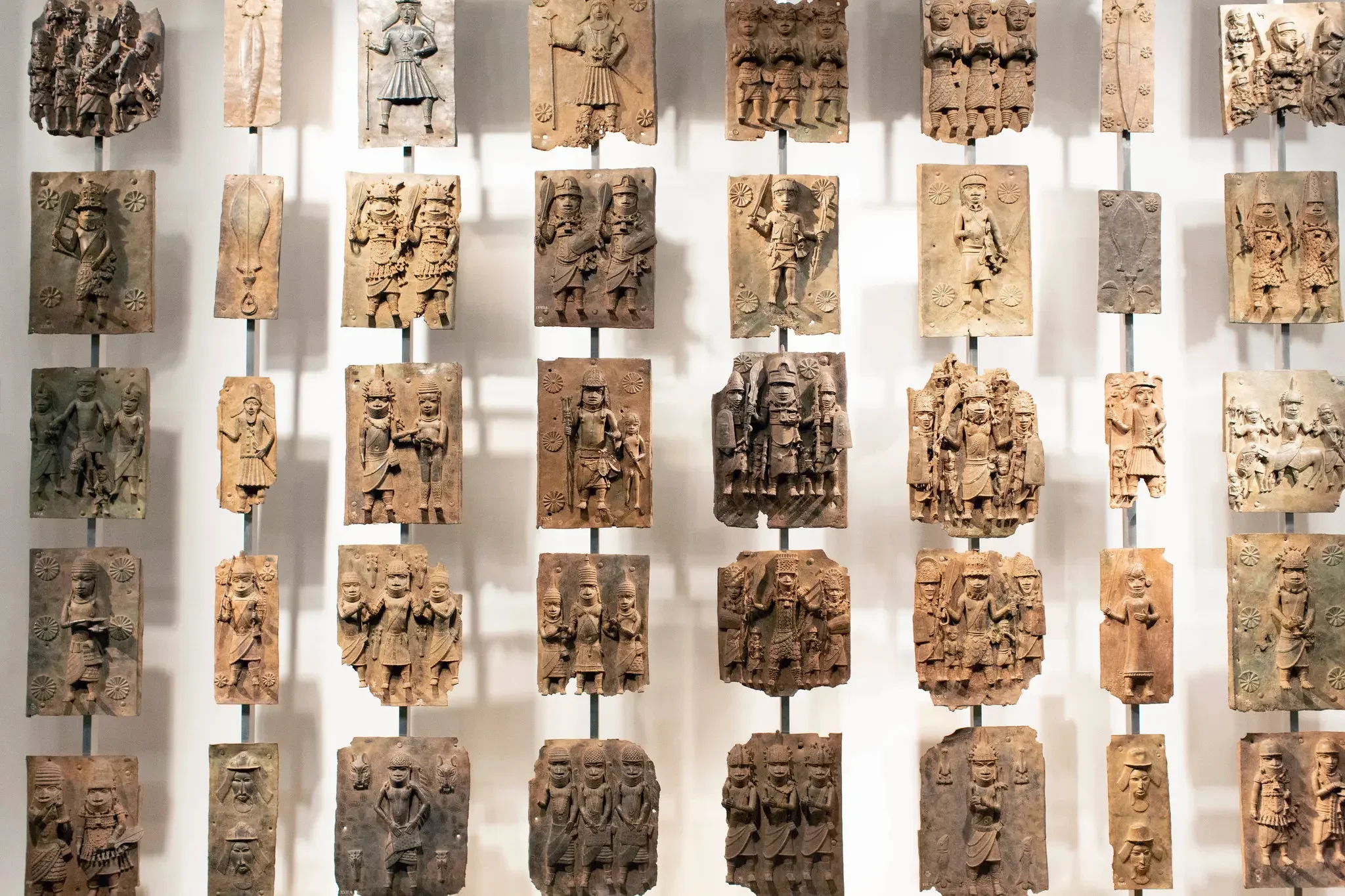
The Benin Bronzes on display at the British Museum, London
Image courtesy of The New York Times.
This month, the University of Zurich agreed to return fourteen Benin Bronzes to Nigeria. This movement comes after a formal restitution claim for the objects filed by Nigeria’s National Commission for Museums and Monuments on behalf of the Nigerian government in March 2024.
The Benin Bronzes are sculptures and artefacts, including plaques, animal, and human figures, created from the 1500s through to the nineteenth century in Benin, which hold significant cultural and religious value. Their spiritual significance has given the debate moral weight. Created by a specialist guide working at the royal court of the Oba in Benin City, the artefacts were violently looted from the Royal Palace of Benin by British troops in 1897 and sold to private collectors or museums worldwide, including the British Museum.
In response to Nigeria’s claim for the Bronzes, Switzerland’s Federal Office of Culture determined that eleven of the sixteen works held by the Museum Rietberg were looted and should be returned. Corine Mauch, mayor of Zurich, apologised and promised action. ‘The city of Zurich takes its responsibility seriously. We are convinced that a fair treatment of items of cultural heritage means admitting and actively rectifying past injustices.’ This sentiment was reflected in the joint statement of the directors of three major Swiss museums, who believed that this return ‘represents a necessary stage in coming to terms with history’, allowing Nigeria to ‘preserve and share its own history’.
This restitution has similarly occurred in Germany, where 1,100 artefacts were returned to Nigeria in 2022, and the Netherlands, who returned 119 objects in 2025. Yet, the British Museum remains startlingly silent and has not suggested any motion towards return. Part of this may be that they’re constrained by the provisions of the 1963 British Museum Act, which forbids the trustees from disposing of objects unless duplicated or damaged.
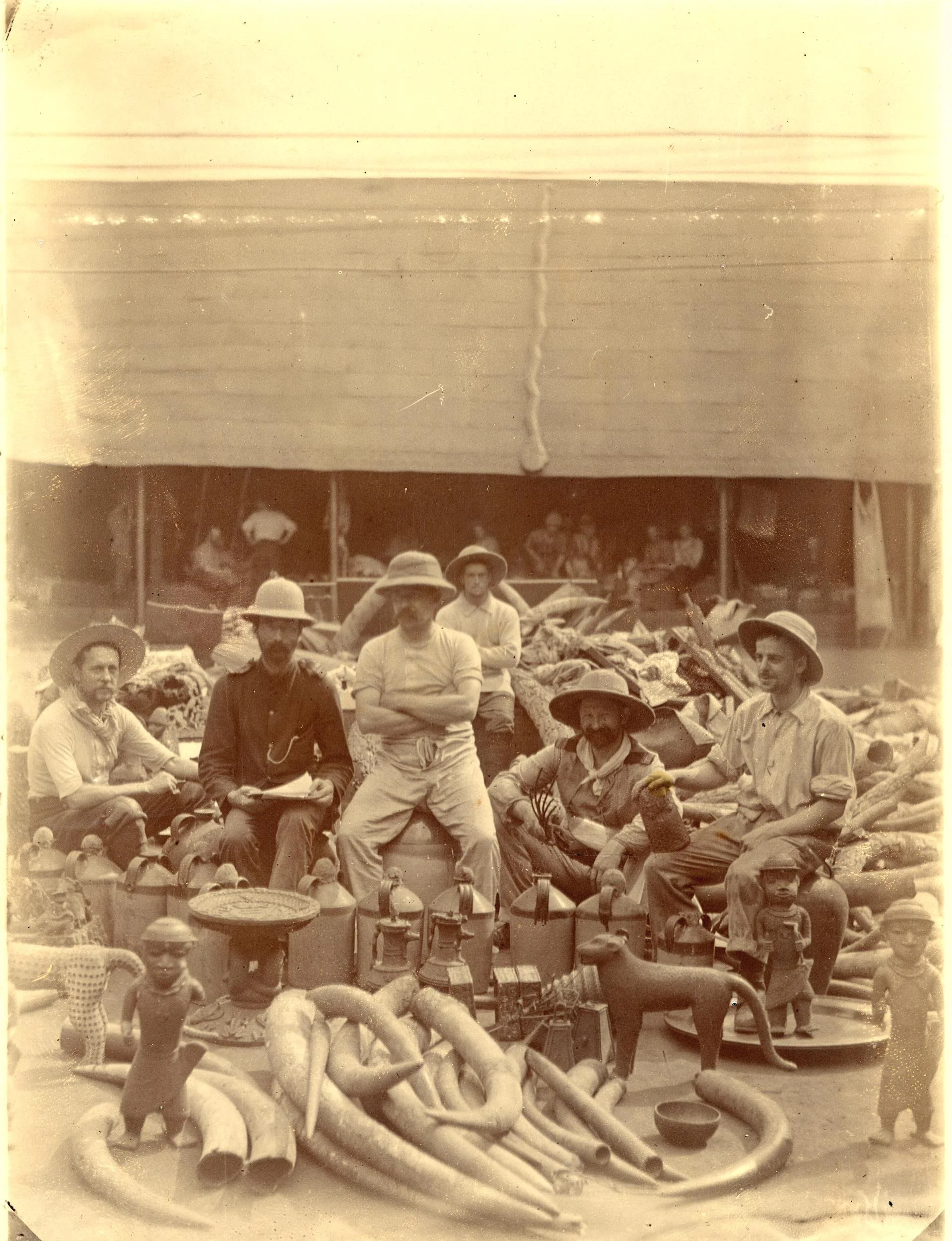
Dr Robert Allman, British soldiers sitting in the compound of the palace in Benin City, 1897, photograph, London.
Image courtesy of The British Museum.
Another reason behind different national responses to artefact reparation may be in their cultural perspectives. Institutions like the British Museum keep these objects to preserve their purpose as a ‘microcosm’ of the world. Whereas cultural nationalists argue objects should be returned to fulfil their part in building cultural identity and correcting colonial imbalances.
With the colonial past inherent to their presence in such galleries, restitution has been argued against as an erasure of history. This, however, misrepresents the debate. The return of the Benin Bronzes demonstrates that repatriation does not remove their colonial past but instead acknowledges the violence of their looting. While critics argue that keeping the Bronzes in museums like the British Museum preserves global access, this assumes such access must be centred in Europe. With growing museum infrastructure and increasing digital accessibility, engagement will be redistributed, rather than lost.
Ultimately, the return of the Benin Bronzes is not about rewriting history, but correcting how it is presented, shifting authority back to the culture from which these objects were taken.
Bibliography
Lesseliers, Alec. “Repatriation of the Benin Bronzes: An Ethical and Legal Discussion? - Centre for Art Law.” Centre for Art Law. June 19, 2023. https://itsartlaw.org/art-law/repatriation-of-the-benin-bronzes-an-ethical-and-legal-discussion/.
Kupemba, Danai Nesta. “Benin Bronzes: Netherlands to Return Stolen Benin Statues to Nigeria.” BBC News, February 19, 2025. https://www.bbc.co.uk/news/articles/cly8397e7gno.
Doran, Anne. “Zurich Transfers Ownership of Looted Benin Bronzes to Nigeria.” ARTnews.com. March 24, 2026. https://www.artnews.com/art-news/news/zurich-transfers-ownership-looted-benin-bronzes-to-nigeria-1234778646/.
Kelly, Philippa. “Switzerland’s Rietberg Museum to Return Benin Bronzes.” Ocula. March 19, 2026. https://ocula.com/magazine/art-news/benin-bronzes-to-be-returned-by-switzerland/.
The British Museum. “Benin Bronzes.” The British Museum. 2025. https://www.britishmuseum.org/about-us/british-museum-story/contested-objects-collection/benin-bronzes.
“UZH Returns Benin Bronzes to Nigeria.” News.uzh.ch. March 20, 2026. https://www.news.uzh.ch/en/articles/media/2026/Benin.html.