What War Leaves Behind: the Modigliani Verdict
By Aglaïa S. Rozental
When a bomb falls on a city, no one rushes to save the paintings. The priority, rightly, is people. But once the dust settles, the absence of what was lost weighs heavy. Eighty years after the end of World War II, a New York court ruling over a stolen Modigliani calls into question how we might remedy the cultural consequences of war.
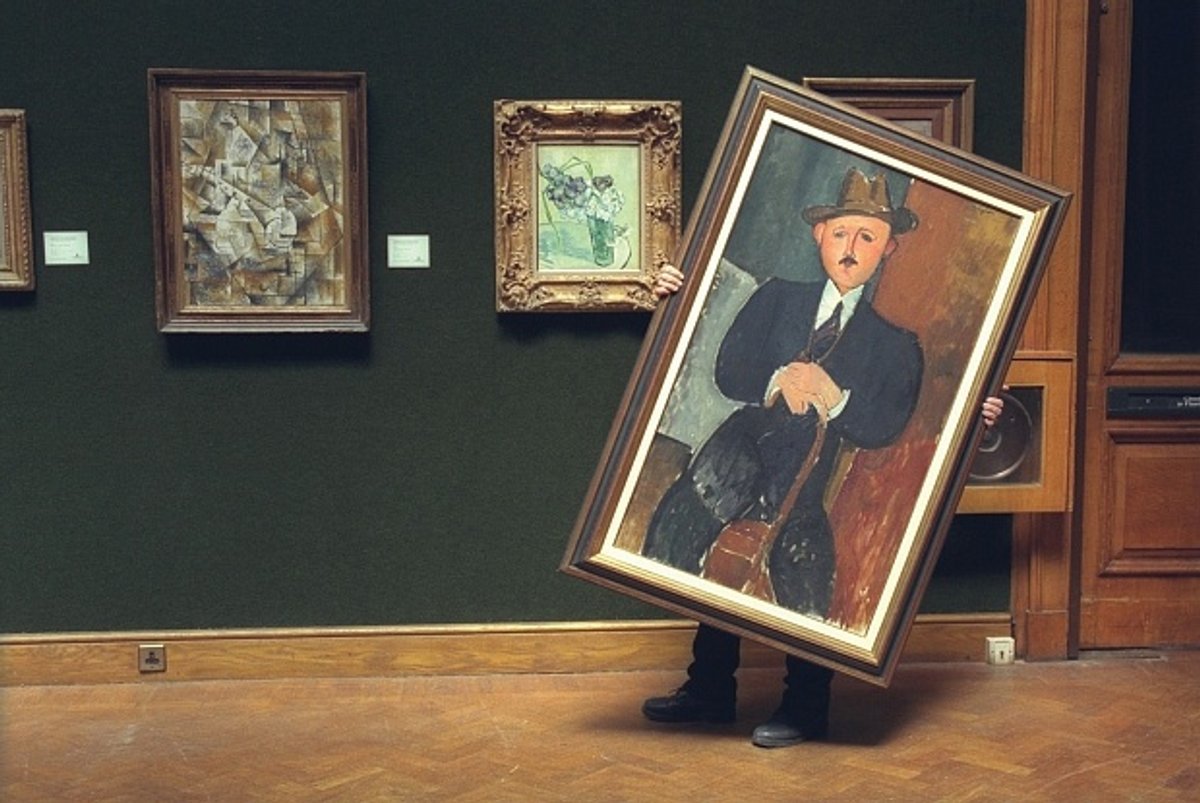
Amedeo Modigliani, Seated Man with a Cane, 1918, oil on canvas, 126x75cm
Courtesy of Brian Smith, The Art Newspaper
Last week, the New York Supreme Court ruled that art dealer David Nahmad must return Seated Man with a Cane (1918) to the heirs of Oscar Stettiner, who was a Jewish art dealer. The portrait by Amedeo Modigliani, valued at up to thirty million dollars, was seized with all Stettiner’s collection by the Nazis during the occupation of France.
The painting was not destroyed – simple taken, hidden and sold again - until Stettiner’s grandson Philippe Maestracci opened a court case which has now lasted over a decade. Judge Joel M. Cohen ruled that Stettiner ‘never voluntarily relinquished’ the painting, citing a 1946 French court claim filed by Stettiner himself. Nahmad, who purchased the work at Christie’s in 1996 for three point two million dollars, has long argued the painting was not the same one looted. A claim the judge found unsupported by evidence.
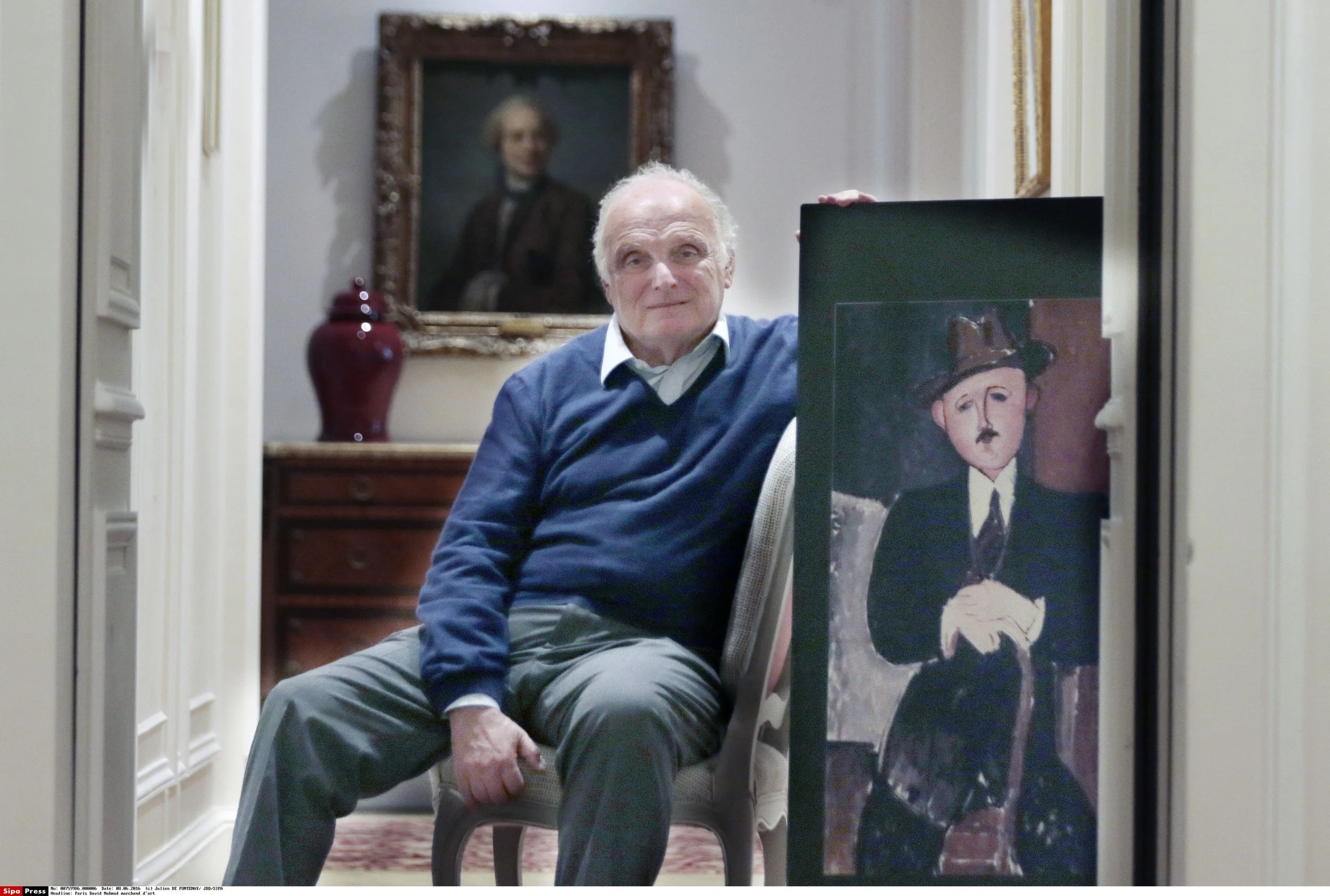
David Nahmad
Courtesy of Julien de Fontenay, The Art Newspaper
The Nahmad case is not an anomaly. Thousands of works looted during WWII remain in private hands, museums, and storage facilities worldwide. Firms like Mondex have built entire practices around this problem, combining genealogical research, probate law, and international legal expertise to trace stolen property and reunite it with descendants who may not even know what was taken. The work is painstaking and often depends on a surviving will, a shipping record, or a single auction catalogue entry.
But the Nazi theft was, in a specific sense, organized. It was documented. Records were kept, catalogues were made, provenance can sometimes be traced. What worries historians and preservation advocates today is a different kind of loss: the chaotic destruction of war, where no record survives.
In Ukraine, Russian strikes have damaged or destroyed dozens of museums and cultural sites since 2022. In Sudan, libraries and archives have burned during the ongoing civil war. In Gaza, centuries-old mosques and archeological sites have been reduced to rubble. There are no Christie’s auction records for what disappears this way, no Mondex file to open, the loss is simply permanent.
The Modigliani ruling, then, is both a victory and a reminder of its own limits. It answers the question of what can be done when something was stolen and not returned. It offers no answer for what is simply gone. Heritage is fragile and legal solutions can only work so far.
Bibliography
Goukassian, Elena. “Judge Rules Dealer David Nahmad Must Return $30m Nazi-Looted Modigliani.” The Art Newspaper, April 6, 2026. https://www.theartnewspaper.com/2026/04/06/judge-rules-dealer-david-nahmad-must-return-nazi-looted-modigliani.
Mondex Corporation. “Our Services: Research.” https://www.mondexcorp.com/our-services/research/.
Forbes. “David Nahmad.” https://www.forbes.com/profile/david-nahmad/.
HENI. “News: Oscar Stettiner.” https://heni.com/news?artist=%20Oscar%20Stettiner.
Seymour, Tom. “Sudan Conflict: Pro-Democracy Artists under Attack and Museums at Risk of Looting, Sources Say.” The Art Newspaper, April 27, 2023. https://www.theartnewspaper.com/2023/04/27/sudan-conflict-pro-democracy-artists-under-attack-and-museums-at-risk-of-looting-sources-say.
Geranpayeh, Sarvy. “Dreams of Rebuilding Gaza: Five Culture Workers Share Their Stories.” The Art Newspaper, February 29, 2024. https://www.theartnewspaper.com/2024/02/29/dreams-of-rebuilding-gaza-five-culture-workers-share-their-stories.