By Sadie McGraw

Juergen Teller, Young Pink Kate. 1998. Image courtesy of Tate Britain.
As the first exhibition exploring the visual culture of the 1990s, the Tate Britain has a big reputation to live up to. Characterized by its youthful attitude and energy, the 90s served as a foundational time period for Britain to emerge with leading contemporary artists, from Damien Hurst to Alexander McQueen. The exhibition, hosting nearly seventy artists, spans art, fashion, and photography, documenting subjects from body horror to illegal raves. However, some critics argue the Tate’s show misses the mark, often comparing it to their 2024 predecessor, The 80s: Photographing Britain. The Guardian recently published, “This is not a real exhibition. It’s a magazine spread.”
The 90s was a decade of rebellion and liberation and no other piece captures that spirit quite like Sarah Lucas disgustingly intriguing photograph, Chicken Knickers (1997). Lucas, sporting a particularly vile pair of granny panties, positions a raw, whole chicken directly over her vagina. The dramatic lighting, paired with the chicken’s coloring unsettling close to that of Lucas’s, creates an unnervingly thin line between chicken and vagina. I feel that this evocative, yet disquieting tone is core to truly stand-out works from the 90’s. You’re supposed to stare. You’re supposed to wince until you get it.

Sarah Lucas, Chicken Knickers, 1997. Image courtesy of Tate Britain.
However, despite a few slightly edgy pieces like Chicken Knickers, The 90s vision of the decade is stylish, yet relatively subdued. The show highlights a collection of big names and pieces from the decade, but many blame the curatorial choices as the reason why some of these prominent artists and works fell flat. Following her recent success at the Tate Modern, The 90s only features one Tracey Emin neon, boldly questioning, “Is Anal Sex Legal? Is Legal Sex Anal?” Even Damien Hirst’s contribution, Two Similar Swimming Forms in Endless Motion, does not quite achieve the emotional punch of his bigger pieces. Critics argue that the exhibit does not accurately represent the influence of Emin and Hirst, thus placing their artistic reputation on the few, less renowned pieces in the exhibition. Other defining artists, such as Helen Chadwick, have small, inconsequential pieces, where others are noticeably absent, like Jeremy Deller and Mat Collishaw.
Another major curatorial oversight is the lack of work of the BritPop phenomenon. A defining feature of Britain’s contribution to the artistic world of the 90s, yet there is no mention of it in the supposedly all-encompassing 90s exhibition, with a particular focus on “Cool Britannia.” Despite this omission, the photography of the show functions to cover where the lack of BritPop fails, documenting the club and dance music scene. Imbued with the most authenticity, I would argue that these works are the highlight of the show. They’re gritty, messy, and sweaty and if you stare long enough, you can smell the particular blend of tequila slammers and B.O. lingering in the club. Subjects range from the acid house’s inception, documented by photographer Dave Swindell, to joyful queer club nights shot by Poulomi Desai. It’s these pictures that elicit the most emotional response for me. There’s an underlying yearning for a time where people unabashedly danced at a club without fear of embarrassment, and these photos capture a liberation that is scarce to come by now.
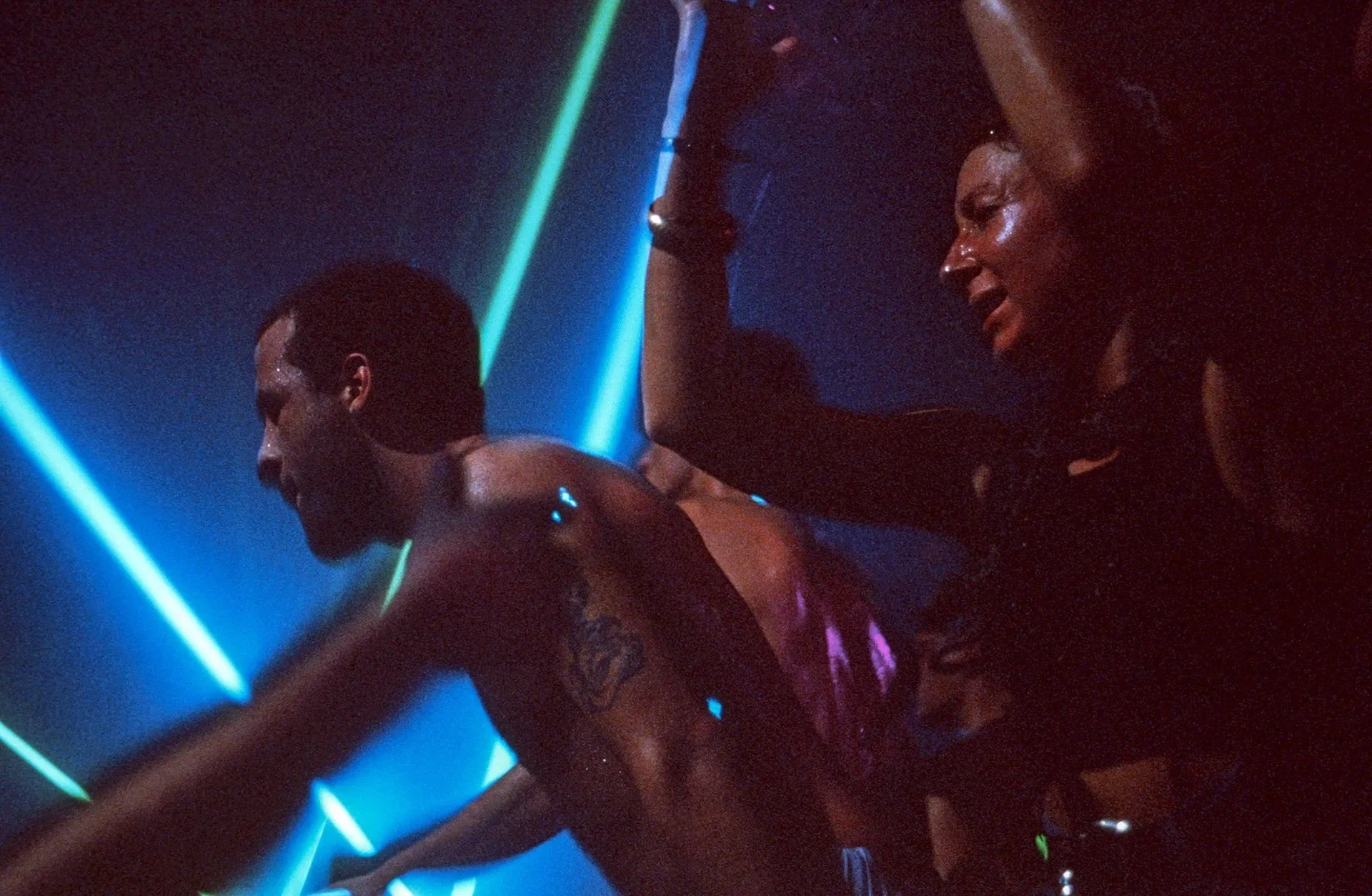
Dave Swindells, Laser Lovers at the Spectrum Night in Heaven, 1998. Image courtesy of Metal Magazine.
The exhibition closes with artists’ incorporation of Britain’s past into their contemporary designs. For a fashion lover, this exhibition is quite successful, including some of Alexander McQueen and Vivienne Westwood’s most influential pieces. Most notably, McQueen’s Joan of Arc (1998) dress is featured on display, accompanied by a video of the iconic runaway walk. Similarly, Yinka Shonibare and Maud Sulter both draw inspiration from European history to present modern questions of representation, and the two draw clear parallels to fashion history in their pieces.

Alexander McQueen, Joan of Arc, 1998. Image courtesy of Tate Britain.
This show is curated by former British Vogue editor, Edward Enniful. Enniful, if anyone, should be able to nail the tone and aesthetic of the 90s but some missing elements and general mood has left viewers feeling just a bit … off. To his credit, the 90s is an especially difficult decade to characterize accurately. While those who lived through it, many have a tender nostalgia for the decade, with hindsight clouding their ability to reproduce its effect. However, the younger generations have formed an idealized vision of the 90s, filled with sexual liberation and hazy clubs, an equally inhibiting projection of the decade. Overall, this exhibition is worth a visit, even without a holistic representation.
Bibliography:
Britain, Tate. 2026. “The 90s: Art and Fashion.” Tate Britain . https://www.tate.org.uk/press/press-releases/the-90s-art-and-fashion.
Jones, Jonathan. 2026. “The 90S: Art and Fashion Review – This Isn’t an Exhibition, It’s a Magazine Spread.” The Guardian, The Guardian, October 6. https://www.theguardian.com/artanddesign/2026/oct/06/the-90s-art-and-fashion-review-tate-britain-london.
Khimicheva, Elizaveta. 2023. “ALEXANDER MCQUEEN - DARKNESS and DREAMS: Analysing Joan of Arc FW98.” GATA, December 15. https://gatamagazine.com/articles/fashion/alexander-mcqueen-a-detailed-look-at-joan-of-arc-ss98.
McGarvey, Amelia. 2026. “The 90S Art and Fashion Review.” Because Magazine, October 8. https://becauselondon.com/articles/experience/autumn-2026/tate-britain-the-90s-art-and-fashion/.