Art Through a Child’s Eyes- A Journey through the Scottish National Galleries at The National
By Fiona McAllister
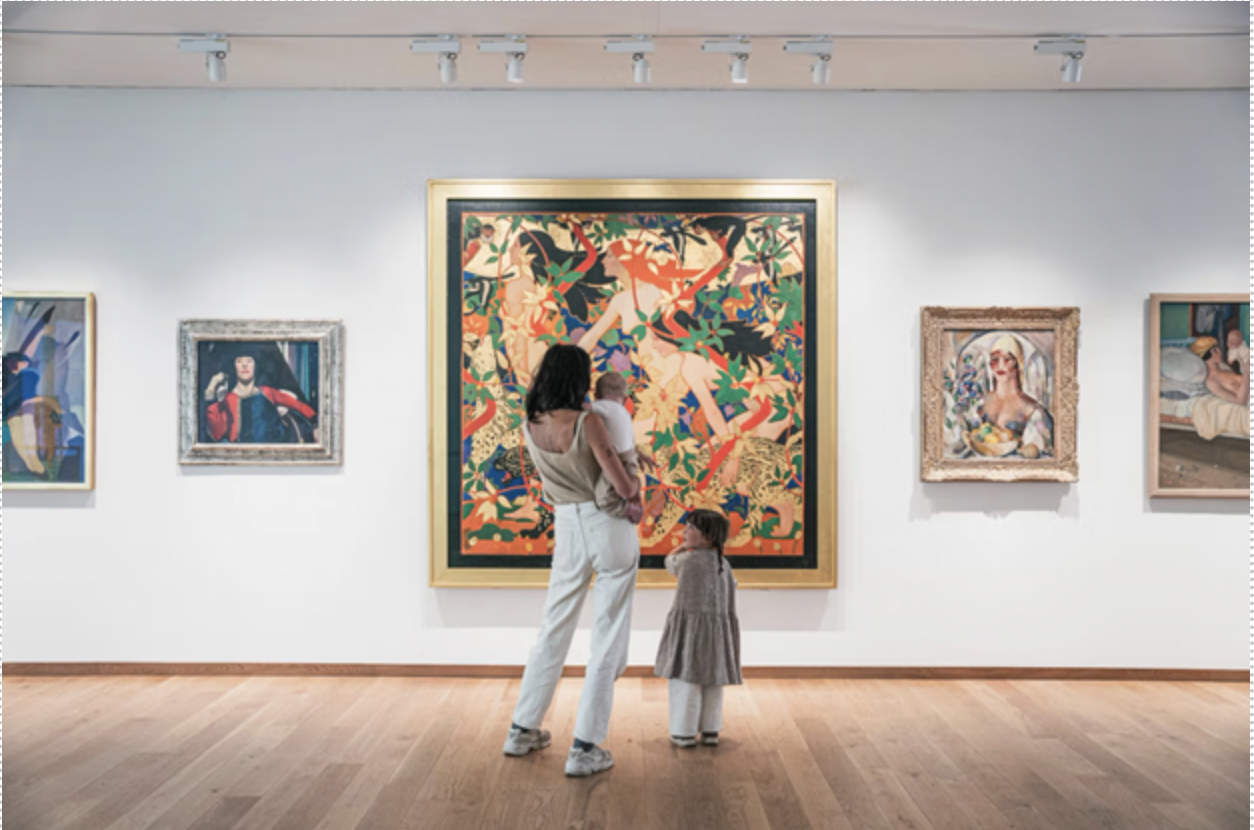
Image credit: Campbell Donaldson, Ralia Media
Every excellent art gallery visit can be exemplified by unexpected, serendipitous interactions with the pieces. Upon a recent revisit to The National in Edinburgh, I had such interactions with several works in the Scottish Gallery on the second floor. Beside many of the paintings was a small plaque with an additional description from a Scottish primary school-aged child. Their insight made each work shine a little more, as it breathed excitement into the gallery’s more technical analysis.
This was such a charming and unexpected addition to my visit to the gallery, so I thought I’d share my favourite analysis from Scotland’s burgeoning young critics. Their eye for unexpected detail reminded me of the importance of approaching art with an open and curious perspective.
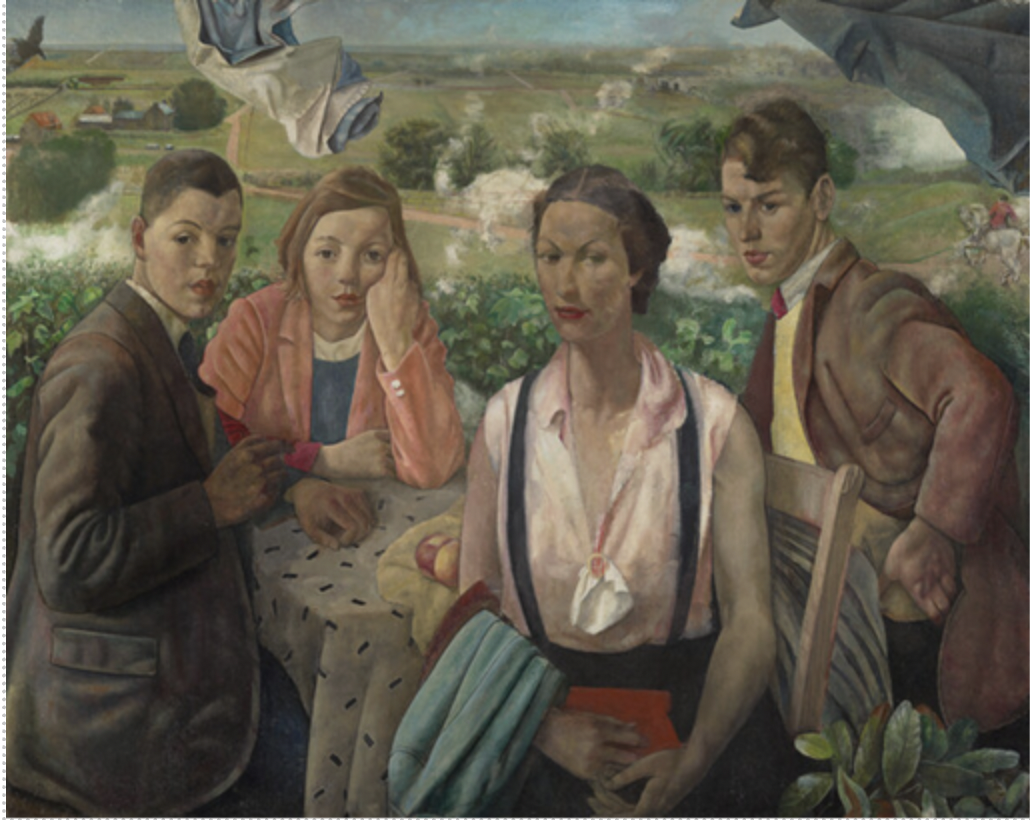
James Cowie, A Portrait Group, c. 1933/ about 1940. Oil on canvas. Scottish National Gallery at National Galleries of Scotland: The National. Image courtesy of the National Galleries of Scotland.
One such example can be found on a plaque below James Cowie’s A Portrait Group (1886-1956). Conrard, a primary school pupil from the Orkney Islands, has given this analysis of the work: ‘The lady is not the children’s mum. The artist painted over another child to paint the lady.’ In the description provided by the gallery, we learn that ‘Cowie decided to replace one of the girls with the image of an adult woman whose portrait he painted in 1935.’ Perhaps Conrad learned about this when he visited the gallery, but his description illucidates how there is seemingly no familial connection between the sitters.
Conrad writes: ‘Wait a minute! There are buildings in two corners!’, almost as if you are piecing together this work with him in real time. Conrad also noticed how: ‘There is a guy on a horse. He seems to be going down the path. He is going fast!’ Upon initial observation, I did not notice this lone rider in the background, but Conrad conducted a much more careful study of this work than I did. His delightful analysis emphasized the uniqueness and peculiarity of A Portrait Group.
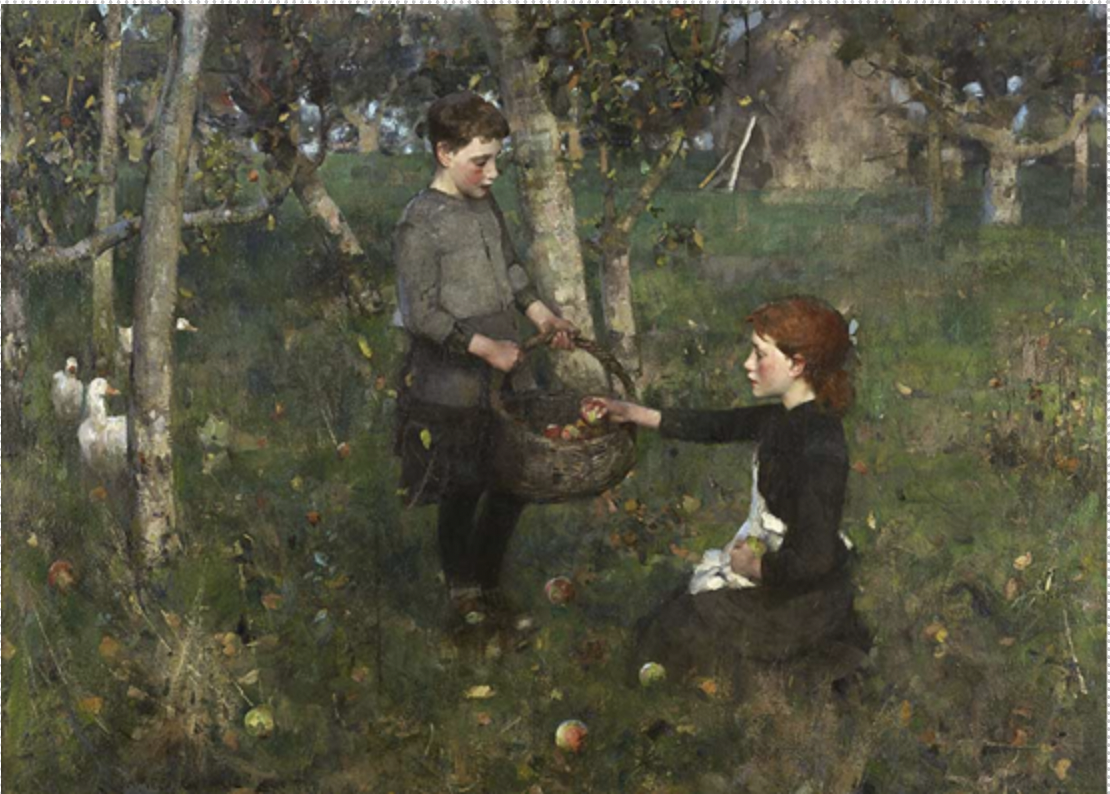
Sir James Guthrie, In the Orchard, c. 1886. Oil on canvas. Scottish National Gallery at National Galleries of Scotland: The National. Image courtesy of the National Galleries of Scotland.
Another such description can be found beneath Sir James Guthrie’s In the Orchard from Hamish, another primary school pupil from the Orkney Islands. Hamish has astutely pointed out how, ‘in the background, you can see a big brown block which is supposedly a house or a barn or a woolly mammoth depending on what you see.’ Hamish has brought a whimsical lens to this work, allowing the viewer to be burdened only by the limits of their imagination. He emphasized the value of subjectivity in considering a piece, along with the joy of childlike wonder.
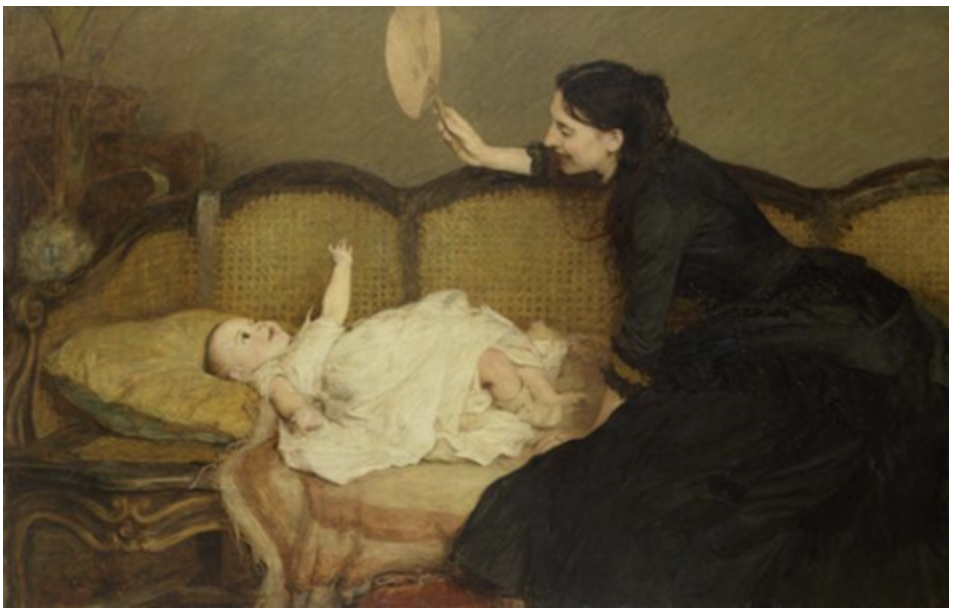
Sir William Quiller Orchardson, Master Baby, c. 1886. Oil on canvas. Scottish National Gallery at National Galleries of Scotland: The National. Image courtesy of the National Galleries of Scotland.
Declan, a primary school pupil from West Lothian, has provided a multi-sensory description of Sir William Quiller Orchardson’s Master Baby. Declan’s analysis immerses you directly in the scene: ‘If I was in the painting I would smell straw and plants.’ Furthermore, he describes how ‘that pillow looks comfortable.’ The gallery describes Orchardson’s piece as ‘a candid snapshot of family life.’ Declan’s description breathes life into this ‘candid snapshot,’ making a charming family scene even more touching.
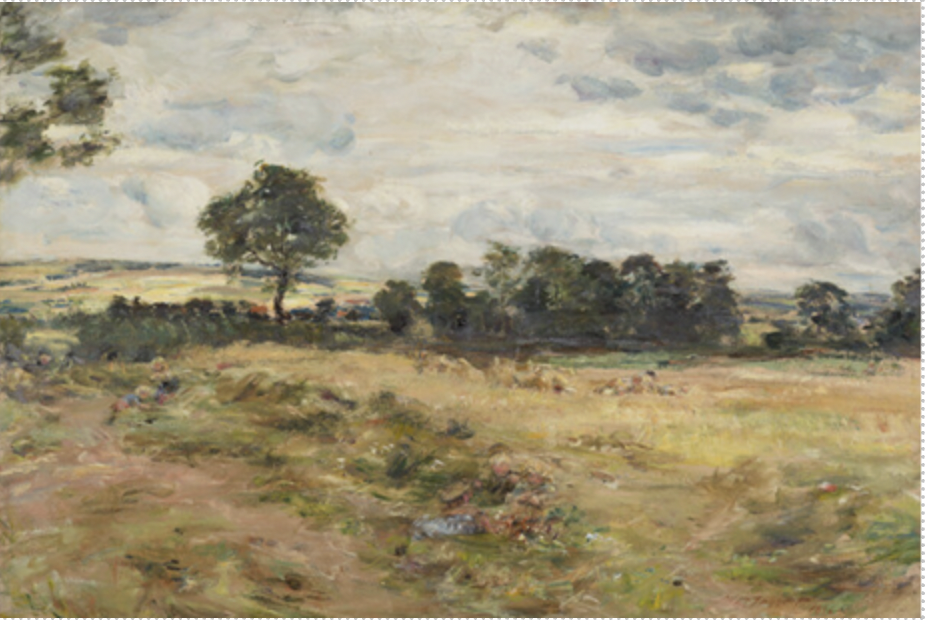
William McTaggart, Harvest at Broomieknowe, c. 1896. Oil on canvas. Scottish National Gallery at National Galleries of Scotland: The National. Image courtesy of the National Galleries of Scotland.
Freya and Aria, two primary school pupils from Fife, have an interesting perspective on William McTaggart’s Harvest at Broomieknowe. On this windswept late summer day, the viewer could almost miss the children playing in the foreground. However, Freya and Aria have seen ‘kids playing in the grass.’ However, they have judged that ‘I think the kids are playing to look like grass.’ I would not have assumed that the children in Harvest at Broomieknowe would be intentionally trying to blend into the landscape. Perhaps a child’s frame of mind is a much more interesting and useful analysis than one who has forgotten the ways of childhood play.
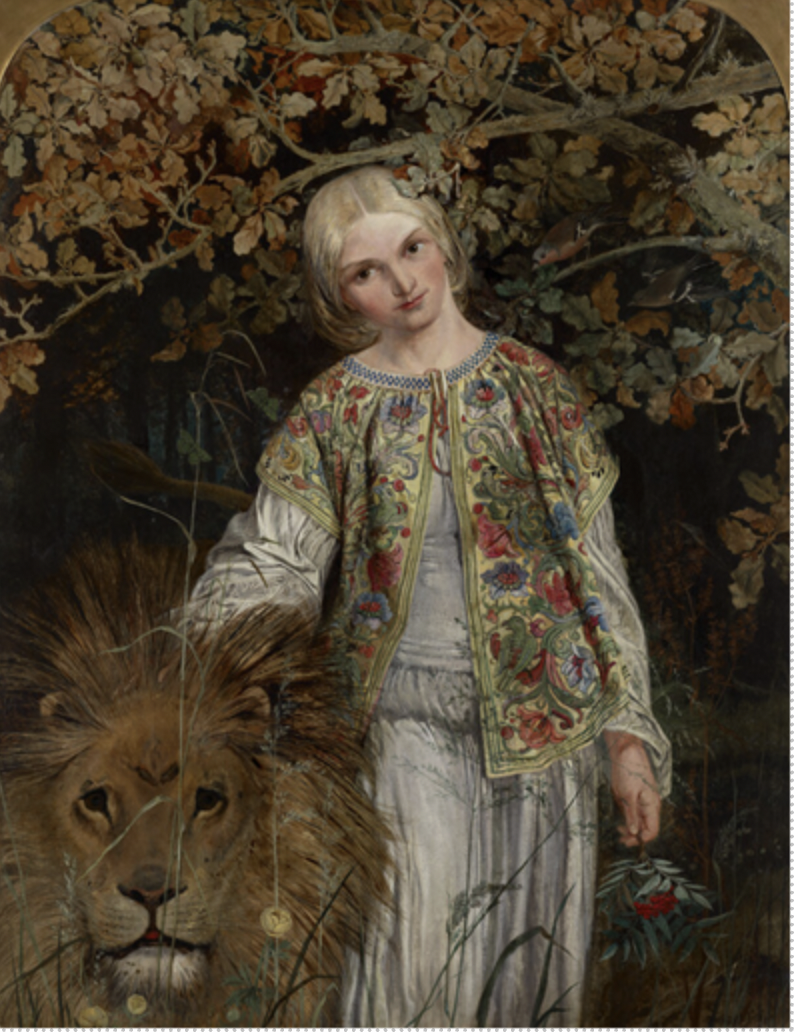
William Bell Scott, Una and the Lion, c. 1859-60. Oil on canvas. Scottish National Gallery at National Galleries of Scotland: The National. Image courtesy of the National Galleries of Scotland.
‘Is that Lucy and Aslan? No, it’s Una. Who is Una? For the millionth time, Una is a princess.’ Nia, a primary school pupil from West Lothian, appears frustrated with the viewer who would think this painting to be a scene from Narnia. This Pre-Raphaelite painting is inspired by Edmund Spenser’s The Faerie Queen, not a work by C.S Lewis, as Nia so aptly points out. Nia’s charm and flair for the dramatic stuck with me, as her hyperbolic language reminded me so much of myself when I was younger.
After exiting the Scottish National Gallery, I was reminded of this quote from Henri Matisse: ‘Look at life with the eyes of a child.’ I was inspired by the innate wonder, creativity, and possibility inherent in a child’s perspective. This was a refreshing addition to my visit to The National, and I would highly recommend looking out for these plaques on your next visit.