Between Art and Landscape: Louisiana Museum of Modern Art
By Ava Palermo
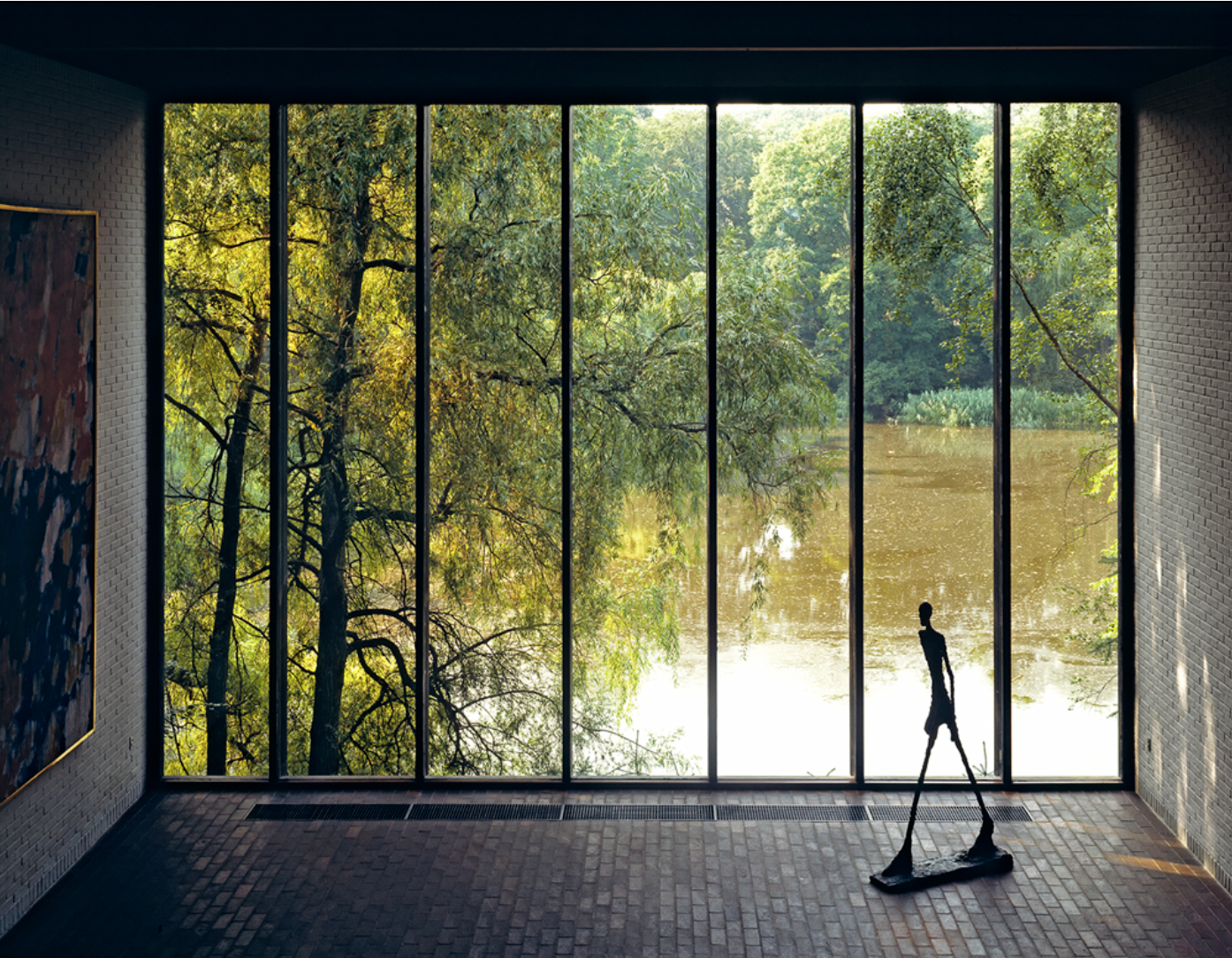
Giacometti Gallery. Photo: Jens Frederiksen.
Just thirty minutes north of Copenhagen, the Louisiana Museum of Modern Art sits quietly along the Øresund coast, almost retreating from the idea of the museum as an institution. Rather than announcing itself through scale or spectacle, it unfolds gradually—low, glass-walled pavilions stretching through trees and down towards the sea. It is less a destination than an experience of movement: one that resists being consumed quickly.
Founded in 1958, Louisiana was conceived not as a container for art, but as a site in which art could exist in dialogue with its surroundings. This principle is immediately apparent. The museum does not impose a singular route or narrative; instead, it encourages a kind of wandering spectatorship. You move between interior galleries and exterior spaces almost without noticing, drifting from a Giacometti sculpture to a corridor framing the water, then into rooms where contemporary installations sit alongside postwar masters. The boundaries between inside and outside—and between artwork and environment—begin to dissolve.
What makes Louisiana particularly striking is its use of architecture as a curatorial tool. The long glass corridors, which connect the museum’s separate wings, interrupt the act of looking in subtle but deliberate ways. Just as you begin to engage with a work, your attention is redirected outward—to the shifting light on the sea, to the silhouettes of sculptures against the horizon. These moments feel less like distractions than reminders: art is not isolated, but embedded within a broader sensory world.
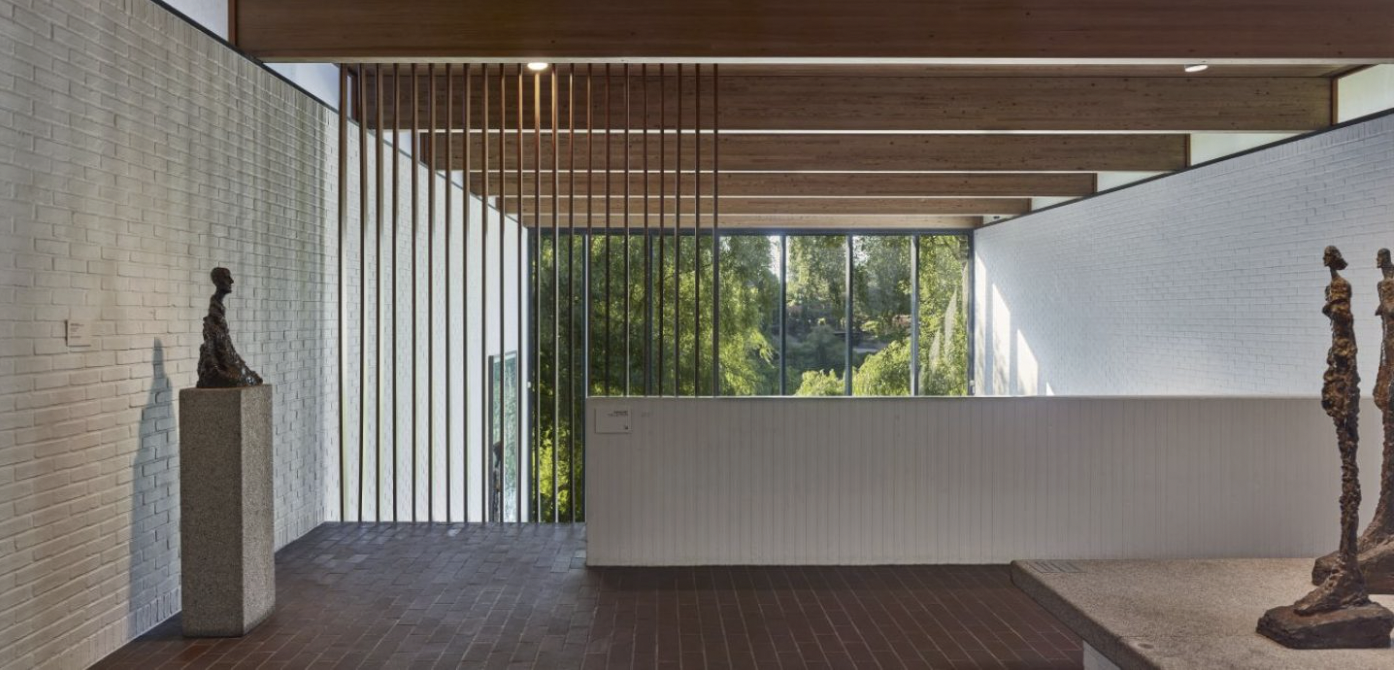
North Wing - two-storey exhibition space with sculptures by Alberto Giacometti. Photo: Kim Hansen. Credit: Louisiana Museum of Modern Art.
Nowhere is this more effective than in the sculpture garden. Works by artists such as Henry Moore and Alexander Calder are not positioned as focal points but dispersed across the landscape, inviting discovery rather than dictating attention. A Calder mobile moves almost imperceptibly in the coastal wind; a Moore figure echoes the curvature of the surrounding terrain. In these moments, the distinction between sculpture and environment becomes increasingly ambiguous. The works do not simply occupy the space—they seem to belong to it.
Yet this harmony is not without its complications. Louisiana’s atmosphere of calm and coherence, while undeniably beautiful, can risk softening the disruptive potential of the artworks it houses. Contemporary pieces that might provoke discomfort in more conventional gallery settings are here absorbed into an overall aesthetic of tranquillity. The museum’s emphasis on balance and integration occasionally feels at odds with the tension, conflict, or critique embedded within much modern and contemporary art.
This raises a broader question about the role of the museum itself. Is Louisiana offering a more holistic, immersive way of encountering art—or is it, in some sense, aestheticising it into quiet neutrality? The answer seems to lie somewhere in between. While the museum may smooth over certain frictions, it also opens up new modes of engagement that are less didactic and more experiential. Rather than instructing the viewer how to interpret, it invites them to reflect, to pause, and to become aware of their own movement through space.
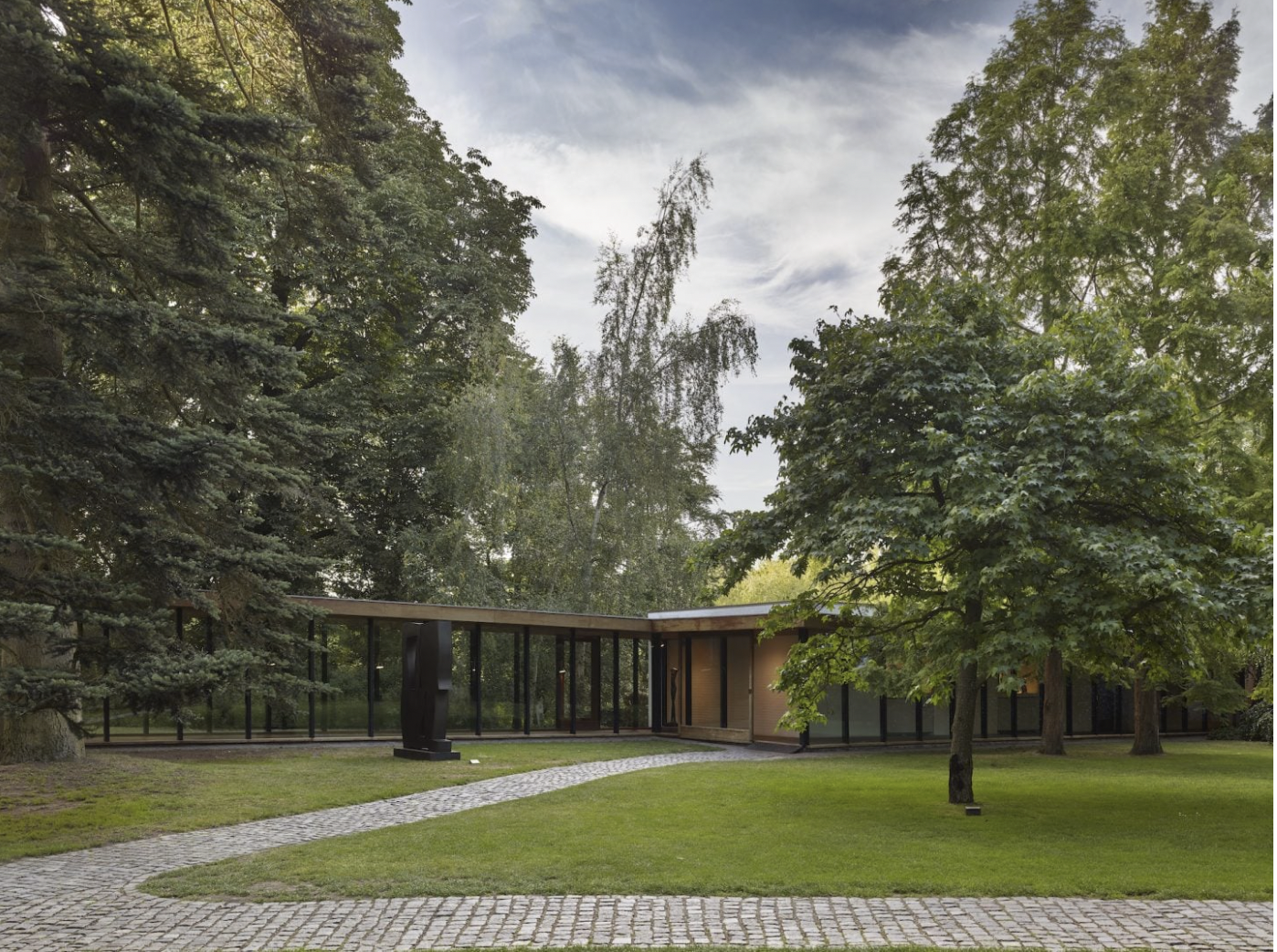
The North Wing as seen from the Sculpture Park. Image © Jeremy Jachym
In this sense, Louisiana feels distinctly aligned with Copenhagen itself—a city often characterised by its balance of design, restraint, and understated elegance. Like the city, the museum does not overwhelm. Instead, it operates through subtlety, privileging atmosphere over spectacle and experience over explanation.
What lingers after leaving Louisiana is not a single artwork or exhibition, but a sensation: of light, of space, of the quiet interplay between art and landscape. It is a museum that resists easy summarisation precisely because it is not attempting to make a singular statement. Instead, it offers something more elusive—a way of seeing that extends beyond its walls.
Bibliography
Louisiana Museum of Modern Art. Official Website. https://louisiana.dk
Louisiana Museum of Modern Art. “Architecture and History.” https://louisiana.dk/en/about/architecture/
VisitDenmark. “Louisiana Museum of Modern Art.” https://www.visitdenmark.com