
Yayoi Kusama at Museum Ludwig
By: Fiona McAllister
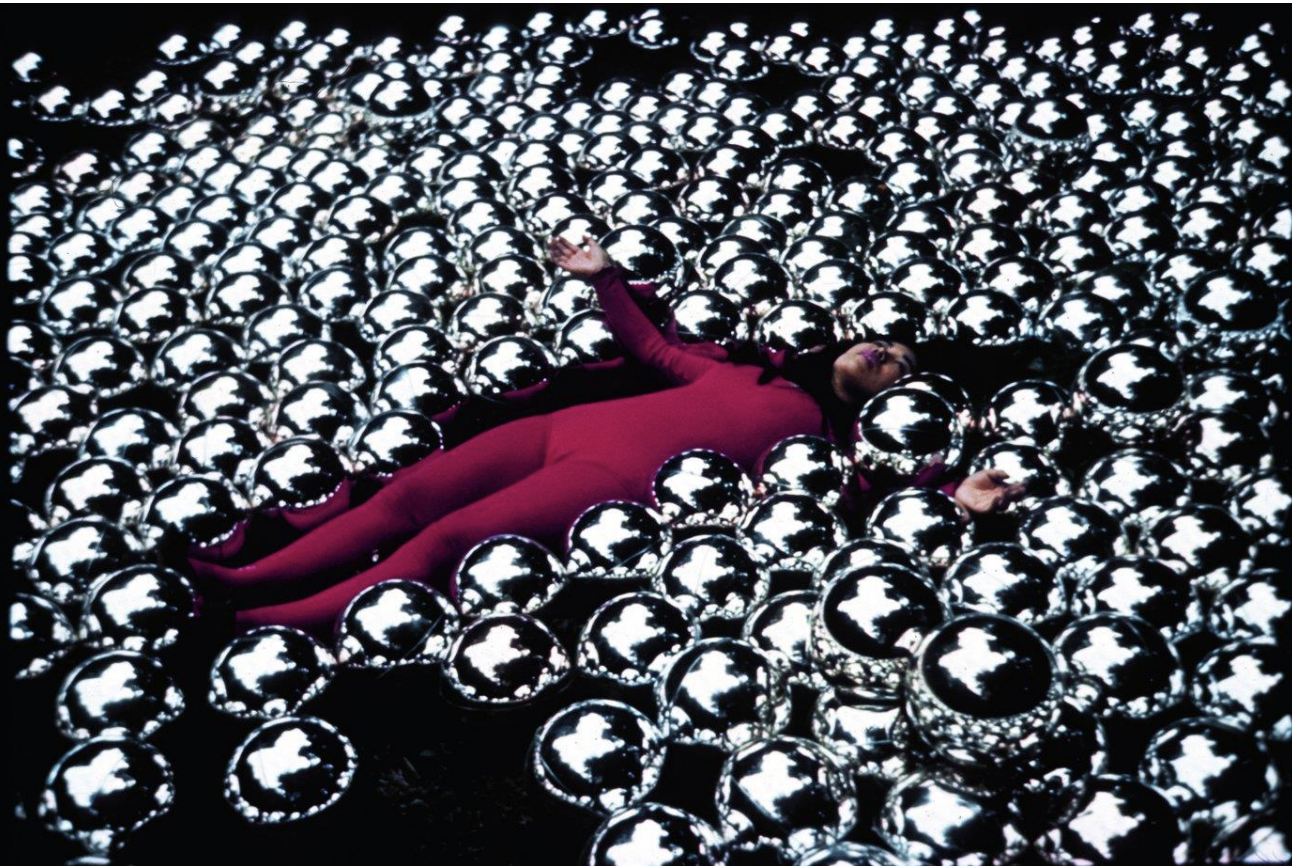
Fig 1. Yayoi Kusama, amidst her installation, Narcissus Garden, at the 33rd Venice Biennale, 1966, © YAYOI KUSAMA.
In a somewhat spontaneous trip to Cologne’s Museum Ludwig, I had the pleasure of visiting a temporary exhibition dedicated to the Japanese multi-media artist, Yayoi Kusama. I did not know Kusama before this exhibit, but I was captivated by the vivid colours and mesmerising patterns emblematic of her work. Curated by Stephan Diederich, the exhibition features works from throughout Kusama’s oeuvre, with ‘more than three hundred works’ featured, spanning ‘a wide range of media that includes painting, drawing, sculpture, installation, fashion, performance, and literature’ [1]. Visitors enter the exhibition through Kusama’s iconic Narcissus Garden, first featured as an unofficial exhibition at the 33rd Venice Biennale in 1965. Conceived in reaction to her excursion from the Biennale, Kusama set up 1,500 mirrored balls on the lawn outside of the Italian Pavilion, selling ‘your narcissism’ for a mere $2.00. [2]. Art historian Jody Cutler writes how ‘narcissism is both the subject and cause of Kusama’s art’. Therefore, this was a clever entrance to Kusama’s works, as visitors — such as me — couldn’t help but check out their reflection in the endless orbs scattered across the floor. Kusama’s works are endlessly Instagram-able, with her ‘iconic polka dots, pumpkin sculptures, and Infinity Mirror Rooms becom[ing] a kind of trademark.’ [1] Therefore, when you bend over to take a photo of Narcissus Garden, you only see yourself emulating the kind of performativity and fascination with one’s own image that is reflected — no pun intended — throughout Kusama’s oeuvre.
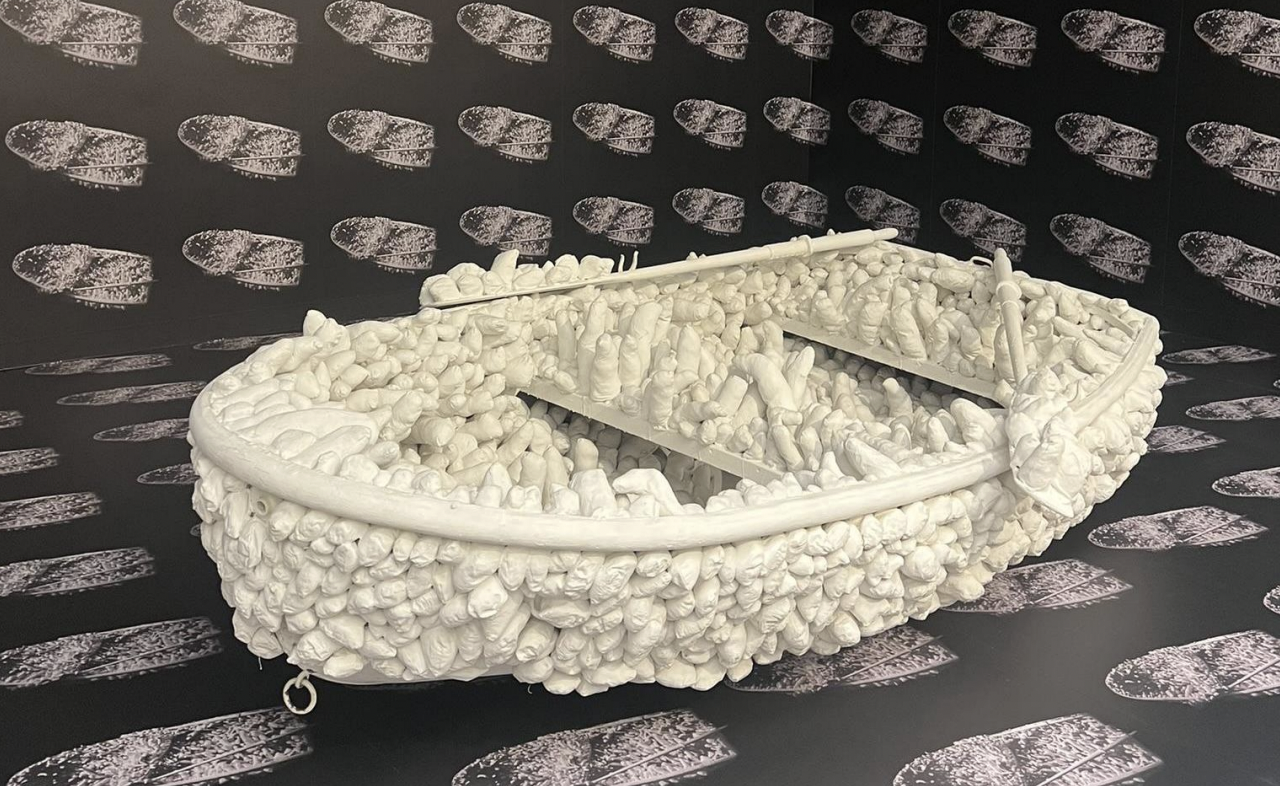
Fig 2. Yayoi Kusama, Aggregation: One Thousand Boats Show, c. 1963. Rowboat and oars covered by plaster castings in white cotton, a pair of women's shoes, and 999 black and white offset posters on paper. Museum Ludwig Cologne. Image courtesy of Fiona McAllister.
After progressing through sketches from her youth, I came across Kusama’s first installation, Aggregation: One Thousand Boats Show, exhibited in New York in 1963. This boat is covered in countless white phallic protrusions, with the motif repeated in miniature on the wallpaper surrounding it. Kusama was plagued with an aversion to sex, a phobia stemming from her upbringing in Japan’s strict, patriarchal culture [1]. Aggregation, therefore, manifests as an attempt to anchor Kusama’s fears, to moor her mind to something solid rather than a boat adrift in the sea. Aggregation’s protrusions also evoke barnacles sprouting on a shipwreck, gesturing to decay as well as the virility of the phallus. The motif repeated around the sculpture, from a distance, resembles bacterial cells. This is characteristic of many of Kusama’s works, as she is fascinated by the innate macrocosm's connection to microcosms in the natural world.
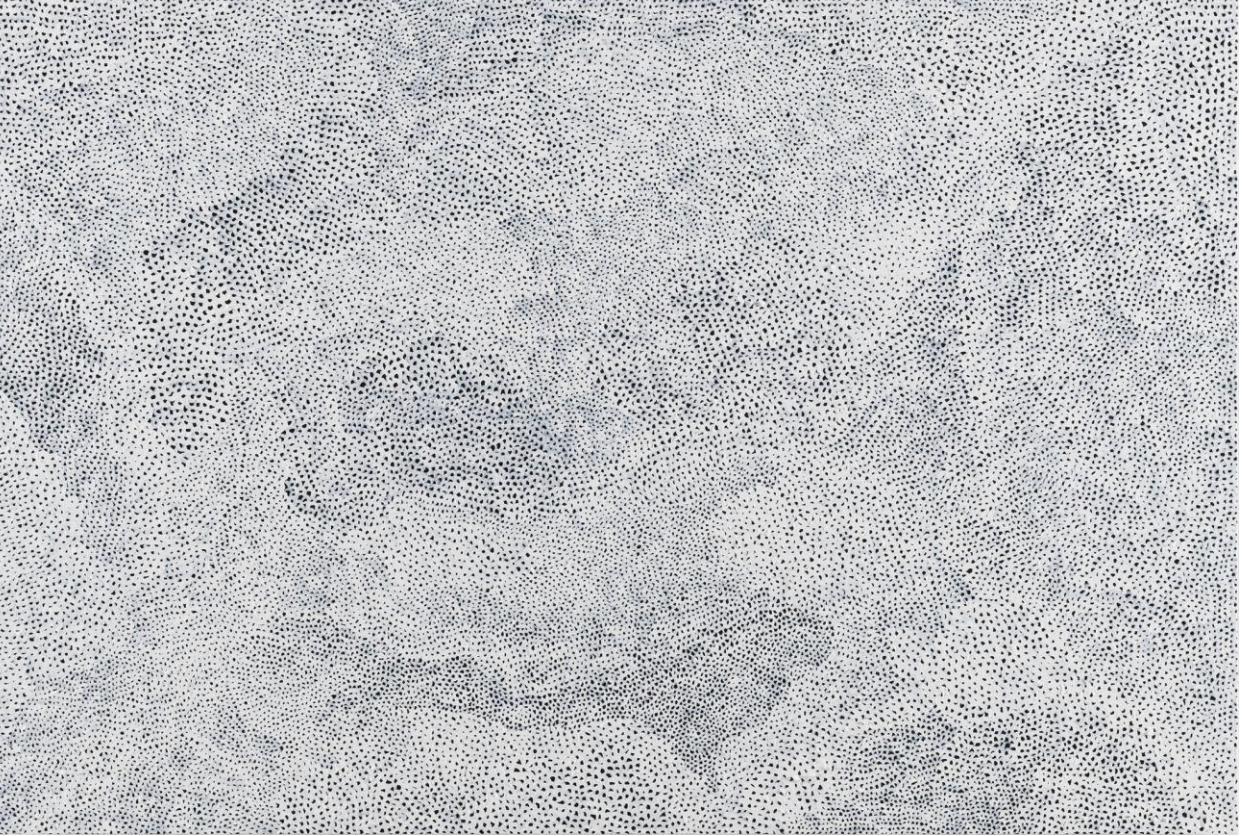
Fig 3. Yayoi Kusama, Infinity Nets, c. 2002. Acrylic on canvas. Museum Ludwig Cologne. Image courtesy of David Zwirner. https://www.davidzwirner.com/exhibitions/2017/infinity-nets
In this section, the exhibition also has many paintings from Kusama’s series — Infinity Nets, paintings covered in repeated net-like structures. Each dot bends together to create the illusion of a uninterrupted whole instead of minuscule indentations in the acrylic paint. When flying from Japan to the United States, Kusama was inspired by the Pacific Ocean warping and bending below her. I was reminded of a passage from Tony Kushner’s Angels in America, one in which, aboard an airplane, Harper witnesses the spirits of the dead ‘float[ing] up like skydivers in reverse, limbs all akimbo, wheeling and spinning… form[ing] a web, a great net of souls.’ [3] Keeping Kushner’s prose in mind, witnessing the giant paintings filled with minute detail evokes a sublime fear, as we are confronted with our own insignificance when we see the multitudinous whole. We are all but a speck of dust! Harper’s vision of a ‘great net of souls’ reflects the ‘painful progress’ of modernity. Through Harper, Kushner also echoes Kusama’s fear and fascination with abundance, particularly of food in the economically booming United States.
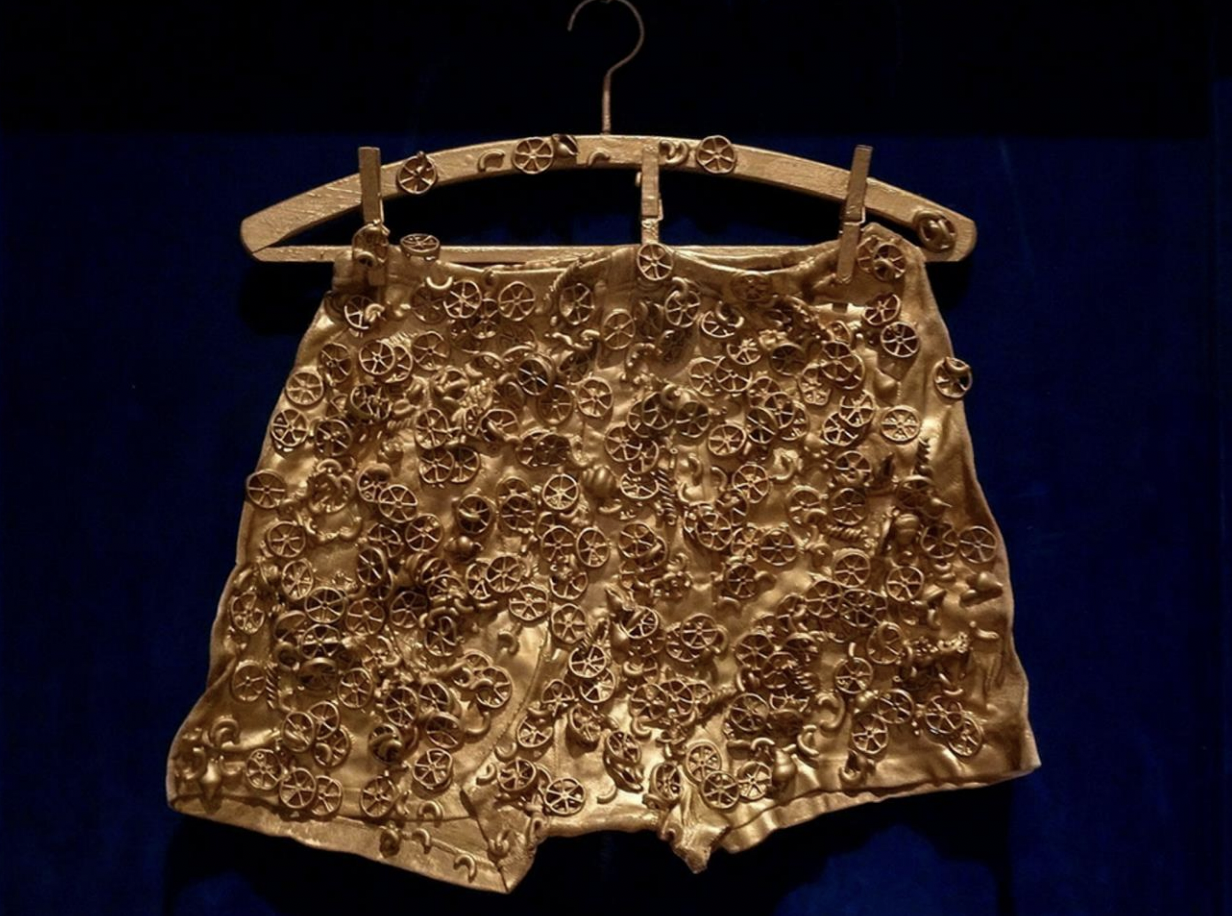
Fig 4. Yayoi Kusama, Macaroni Pants, c. 1968. Shorts, macaroni, clothes hanger, paint. Museum Ludwig Cologne. Image courtesy of David Zwirner. https://www.davidzwirner.com/artworks/yayoi-kusama-macaroni-pants-41b95
Inspired by the superabundance of food in the States, Kusama used dried macaroni to adorn items of women’s clothing. One such example is her Macaroni Pants (Fig 4). This piece reminded me of the macaroni crafts I’d make for my parents in primary school, all gluey and crunchy — which obviously didn’t get binned when my back was turned. Considering Kusama’s restrictive upbringing and strained parental relationships, her macaroni series perhaps also draws parallels to Western excess in childhood. After progressing through more of her iconic works, such as her Infinity Mirror Rooms, visitors end up surrounded by Kusama’s vibrant My Eternal Soul series. This exhibition features a handful of the 800+ paintings from this series, and is centered around The Universe as Seen from the Stairway to Heaven, an immersive mirrored box in which visitors peep in to see a space inside that seems to go on forever.
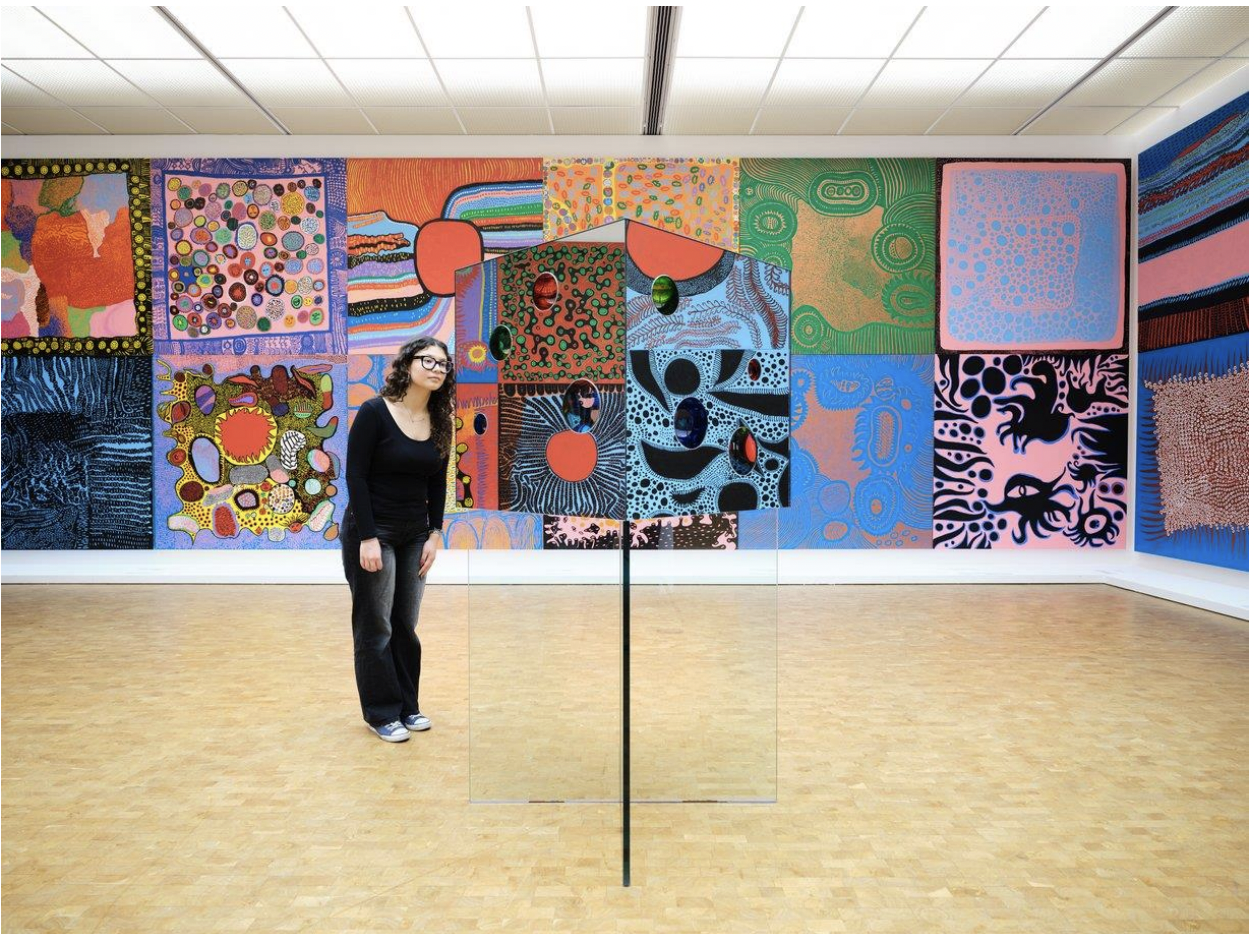
Fig 5. Installation view of Yayoi Kusama at Museum Ludwig Cologne, 2026. Yayoi Kusama, My Eternal Soul Series, c. 2009-2021 and The Universe as Seen from the Stairway to Heaven, c. 2021. Image credit courtesy of the Historical Archive of the City of Cologne with Rhineland Image Archive, Marc Weber.
Mirrored installations are an integral feature of Kusama’s oeuvre, particularly on social media. Therefore, the space surrounding The Universe as Seen from the Stairway to Heaven was quite crowded compared to the massive paintings surrounding it, which reflects a fascination with witnessing what is obfuscated from immediate view. An additional joy of Kusama’s exhibitions is witnessing how visitors interact with her pieces — lining up to photograph the mirrored rooms, only to end up capturing themselves. To see Kusama’s art is to confront your own narcissism, but in true narcissistic fashion, this carries its own inherent beauty. You see yourself — you see everything. Her work is simultaneously transcendental yet spiritually grounding, as you see yourself and others from both an objective and obscured view, like a funhouse mirror (literally, in some cases). Yayoi Kusama’s exhibition is on display in Cologne until August 2nd. So, if you happen to find yourself in this beautiful, brutalist German city, pay Museum Ludwig a visit.
Sources:
[1] “Yayoi Kusama,” Yayoi Kusama at Museum Ludwig. Accessed March 26, 2026. https://www.museum-ludwig.de/en/home/exhibitions/yayoi-kusama.
[2] Jody Cutler. 2011. “Narcissus, Narcosis, Neurosis: The Visions of Yayoi Kusama,” in Contemporary Art and Classical Myth, edited by Isabelle Loring Wallace, Jennie Hirsh (London: Ashgate Publishing Ltd), pp. 88- 109.
[3] Tony Kushner, Angels in America: A Gay Fantasia on National Themes (New York: Theatre Communications Group, 1995), p. 275.